Osteospermum, Genus, moniliferum, Species,
- Genus & species
Bietou
Overview
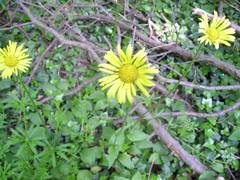
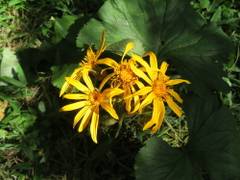
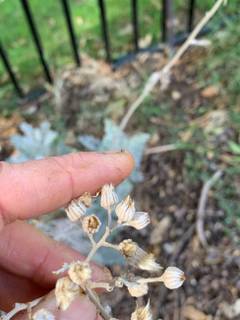
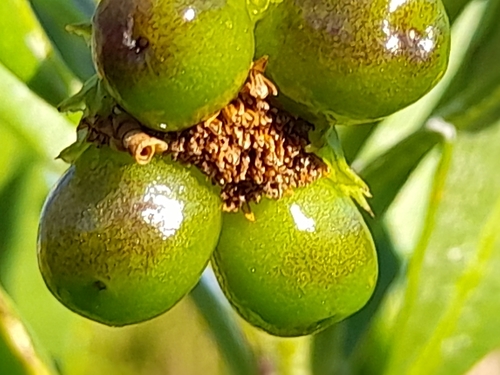
Osteospermum moniliferum is an evergreen shrub reaching 3-10 feet (1-3 m) tall, with a sprawling to upright habit and many branches from the base. Leaves are alternate, oval to elliptic, 1-3 inches (2.5-7.5 cm) long, with slightly toothed margins and a leathery texture; young stems and leaves are covered in white woolly hairs that wear off with age. Yellow daisy-like flower heads 0.8-1.2 inches (2-3 cm) across appear singly at branch tips, each with 5-13 ray florets surrounding a yellow disc. Flowering occurs over a long period, mainly in winter and spring. Fruit is a fleshy berry-like structure 0.2-0.3 inch (5-8 mm) in diameter, green ripening to black, each containing a single hard seed. Plants grow rapidly and produce large seed crops dispersed by birds. O. moniliferum (also treated as Chrysanthemoides monilifera) is declared an invasive weed across coastal eastern and southern Australia and parts of New Zealand, where it displaces native vegetation; it is regulated under state biosecurity laws in New South Wales, Victoria, and other states.
Native Range
Native to southern Africa, from South Africa to Mozambique. Occurs in coastal dunes, scrub, and forest margins in sandy soils. Introduced and naturalized in Australia, New Zealand, and other regions with Mediterranean and subtropical climates.Suggested Uses
In its native range it is used for coastal dune stabilization and informal screening in sandy soils, spaced 3-6 feet (1-1.8 m) apart. It is not planted in Australia or New Zealand, where it is a regulated invasive species. Where grown, it suits exposed, salt-affected coastal sites.How to Identify
Appearance
Size & Dimensions
Height3' - 10'
Width/Spread5' - 10'
Bloom Information
Flowers mainly from May to October in the southern hemisphere, with scattered flowering year-round in mild coastal climates. Individual heads last about 1 week; the overall display extends across several months. Warmth and adequate moisture extend the flowering period.
Detailed Descriptions
Foliage Description
grey-green to greenGrowing Conditions
Sun Requirements
Requires 6-10 hours of direct sunlight daily
• Full Sun: 6+ hours of direct sunlight
• Partial Shade: 3-6 hours of direct sunlight
• Full Shade: Less than 3 hours of direct sunlight
Care & Maintenance
Care Guide
Grows in full sun in sandy, free-draining soils and tolerates salt spray and coastal exposure. Established plants withstand extended dry periods and need no supplementary watering in temperate coastal climates. Growth is rapid and plants self-seed prolifically, producing seedlings well beyond the planting site. In regions where the species is declared invasive, cultivation is prohibited and existing plants are subject to control requirements. Few pests or diseases affect it. Plants are short-lived, typically declining after 10-15 years.Pruning
Tolerates hard pruning and regenerates from the base after cutting. Removal of spent flower heads reduces seed set and bird-dispersed spread. Cutting to ground level can stimulate rapid regrowth from the rootstock.Pruning Schedule
Prune: October–November
spring