Origanum, Genus, dictamnus, Species,
- Genus & species
dittany of crete
Crete (Greece) - endemic; protected species in native habitat
Overview
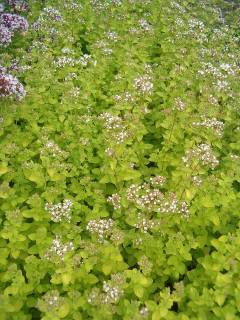
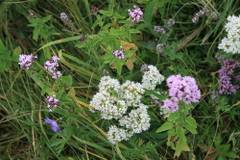
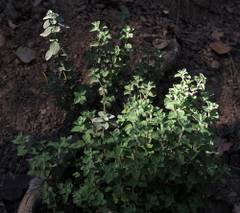
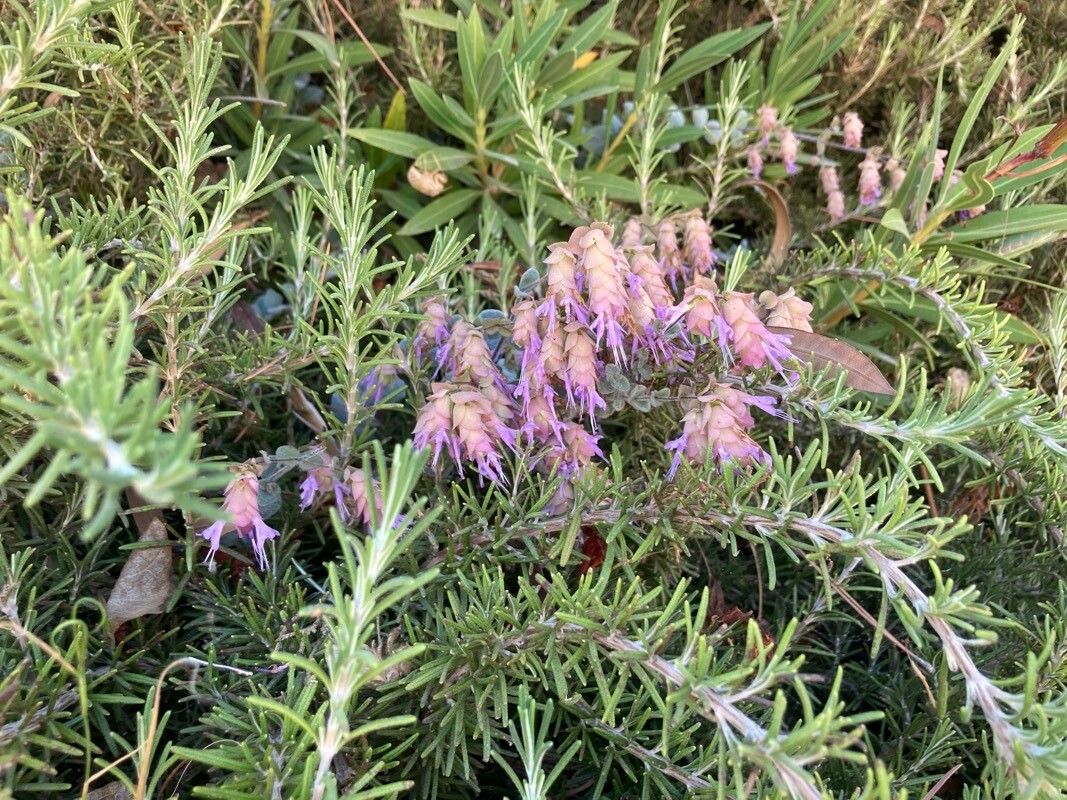
Origanum dictamnus is a small aromatic evergreen subshrub in the family Lamiaceae, endemic to the rocky gorges, limestone cliffs, and mountain slopes of Crete, where it occupies crevices up to 5,000 feet (1,500 m) in elevation. Plants form compact rounded mounds 8-12 inches (20-30 cm) tall and wide with small nearly circular leaves 0.5-0.75 inch (1.5-2 cm) across densely coated in thick white-woolly hairs that produce a silver-white felted appearance. From midsummer through early fall, slender arching stems carry pendant hop-like clusters of papery overlapping pink to rose-purple bracts 1-1.5 inches (2.5-4 cm) long, from which tiny pink tubular flowers emerge; the flowering effect resembles small decorative hops. All parts release a pungent oregano-like fragrance on contact. Historical medicinal use in Crete dates to antiquity, with records from Aristotle and Hippocrates. Hardy in USDA zones 8-11; container cultivation with frost-free overwintering is the standard approach in colder regions. Sharp drainage is a hard requirement: crown rot in wet winter conditions is the primary loss mode. Non-toxic; leaves are used locally as an herbal tea in Crete.
Native Range
Origanum dictamnus is endemic to Crete (Greece), exclusively on rocky limestone gorges, cliffs, and steep mountain slopes in well-drained, poor, often calcareous soils in full sun. The species has no other native range and is protected in its native habitat.Suggested Uses
Planted in rock gardens, raised beds, dry walls, and Mediterranean-style plantings at 12-18 inch (30-45 cm) spacing. Container cultivation on patios and terraces suits the species in zones below 8 and allows frost-free overwintering. The silver-woolly foliage paired with the pendant hop-like flower clusters sets the species apart visually from other Mediterranean herbs. The historical medicinal record of the species spans approximately 2,000 years of use in Crete. Heavy clay soils and consistently wet sites fall outside the use range.How to Identify
Appearance
Size & Dimensions
Height8" - 1'
Width/Spread1' - 1'6"
Bloom Information
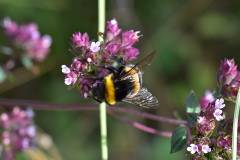
Pendant hop-like clusters of pink to rose-purple papery bracts 1-1.5 inches (2.5-4 cm) long enclosing tiny pink tubular flowers, borne July through September in zones 8-11. The papery bracts remain ornamental for several weeks after the tubular flowers themselves fade, extending the visual effect past the actual bloom window. In mild Pacific Northwest gardens (zones 8-9), reliable bloom July-September in a warm sheltered well-drained position. In colder zones, plants are container-grown and brought indoors before first frost.
Detailed Descriptions
Flower Description
Pink to rose-purple papery hop-like bracts 1-1.5 inches (2.5-4 cm) enclosing tiny pink tubular flowers; pendant clusters; July-SeptemberFoliage Description
Silver-white with a felted appearance; small nearly circular 0.5-0.75 inch (1.5-2 cm); densely coated in thick white-woolly hairs; evergreen; pungent oregano-like aroma on contactGrowing Conditions
Sun Requirements
Requires 6-8 hours of direct sunlight daily
• Full Sun: 6+ hours of direct sunlight
• Partial Shade: 3-6 hours of direct sunlight
• Full Shade: Less than 3 hours of direct sunlight
Care & Maintenance
Care Guide
Grows in full sun in very poor sharply drained neutral to alkaline soil at pH 6.5-8.5. Hardy to USDA zone 8. Rocky, calcareous, or sandy soils suit the species. Sharp drainage is a hard requirement; standing water or persistently wet soil produces crown rot, the primary cause of plant loss, especially in winter. Pacific Northwest placements use raised beds, rock gardens, or container cultivation with gritty fast-draining mix. In zones below 8, container cultivation with frost-free overwintering indoors at 40-50 F (4-10 C) and minimal winter watering is the standard approach. Fertilization is omitted; poor soil maintains compact habit and flower production.Pruning
Spent flower clusters are removed after bloom and stems are trimmed lightly to maintain compact form; cutting into old woody stems is avoided because regrowth from old wood is unreliable. Hard cutbacks damage the plant. Dead or damaged stems are removed in spring after new growth begins. In container plantings, a light spring trim shapes the plant. Propagation is by stem cuttings taken in early summer.Pruning Schedule
Prune: April & September–October
fallearly spring
Container Growing
Suitable for container growing
Minimum container size: 3 gallons