Hemerocallis, Genus, 'Night Whispers', Cultivar,
- Genus
- Cultivar
night whispers daylily
Garden origin (genus native to eastern Asia)
Overview
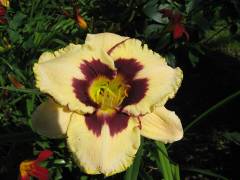
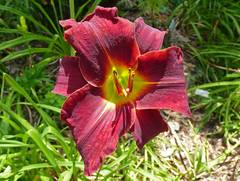
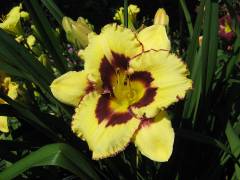
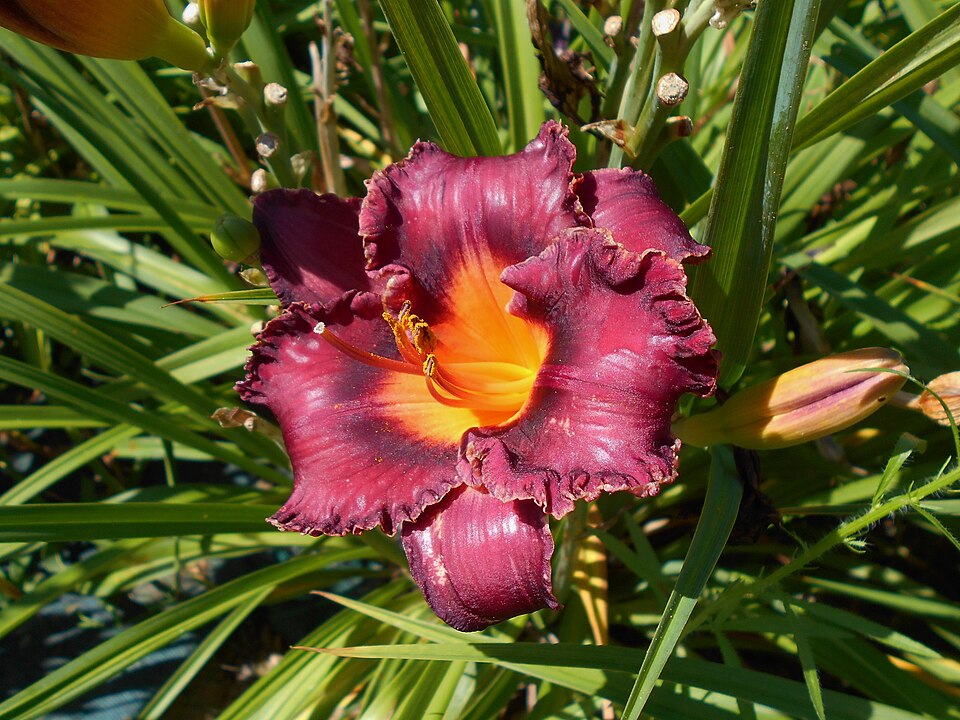
Hemerocallis 'Night Whispers' is a clump-forming herbaceous perennial reaching 26-30 inches (66-76 cm) tall in flower with a basal foliage mound 18-22 inches (45-56 cm) tall and 22-28 inches (56-71 cm) wide. Strap-shaped leaves arch outward, mid to deep green throughout the growing season and yellowing at first hard frost. Branched flower scapes carry 4-6 buds each; flowers measure 5-6 inches (13-15 cm) across with deep blackish-purple to near-black tepals and a contrasting yellow-green throat. Each flower lasts a single day, opening at dawn and closing by dusk. Bloom continues for 4-6 weeks in mid summer in zones 4-7, with rebloom occasionally in zones 6-8 if scapes are removed promptly. Dark flower color may bleach to dusty purple under direct afternoon sun in zones 8-9; partial afternoon shade preserves color. Foliage may show leaf streak (a fungal disease) in humid conditions; this is cosmetic and does not affect plant survival. Crowns expand outward by short rhizomes, forming dense fans that benefit from division every 4-5 years. Daylily rust (Puccinia hemerocallidis) occurs on susceptible cultivars in the southeastern United States; 'Night Whispers' has not been formally rated for rust resistance.
Native Range
Garden origin. The genus Hemerocallis is native to eastern Asia (China, Korea, Japan, eastern Russia), where wild species grow in meadows, woodland edges, and along streams from sea level to 6,500 feet (2,000 m) elevation. Modern cultivars including 'Night Whispers' are hybrids derived primarily from H. fulva, H. lilioasphodelus, and H. citrina crossed in cultivation since the late 19th century.Suggested Uses
Used in mixed perennial borders at 22-28 inch (56-71 cm) spacing, in mass plantings, and in cut-flower production for short-vase use. Suited to containers of at least 5 gallons (19 L); flower count drops in containers under 7 gallons (26 L). Dark flower color contrasts at distance with light-foliaged companions such as silver-leaved Artemisia or chartreuse Hosta cultivars.How to Identify
Appearance
Size & Dimensions
Height2'2" - 2'6"
Width/Spread1'10" - 2'4"
Bloom Information
Mid summer in zones 4-7, typically late June through early August. In warmer zones 8-9, bloom may begin in early June and end by mid July; flower color tends to bleach faster in hot zones. Individual flowers last one day; total scape bloom extends 3-4 weeks per scape, with the planting in flower for 4-6 weeks. Removing spent scapes after flowering can prompt a second flush in zones 6-8 in cool, moist late summers.
Detailed Descriptions
Flower Description
Deep blackish-purple to near-black tepals with yellow-green throatFoliage Description
Mid to deep greenGrowing Conditions
Sun Requirements
Requires 6-8 hours of direct sunlight daily
• Full Sun: 6+ hours of direct sunlight
• Partial Shade: 3-6 hours of direct sunlight
• Full Shade: Less than 3 hours of direct sunlight
Care & Maintenance
Care Guide
Plant crowns 1 inch (2.5 cm) below soil level in spring or early fall. Water weekly during the first growing season; established clumps tolerate 2-3 weeks without rain but flower size decreases under prolonged drought. Apply 1 inch (2.5 cm) of compost in early spring as a slow-release nutrient source. Daylily rust (Puccinia hemerocallidis) appears as orange-yellow pustules on leaf undersides in southeastern U.S. summers; foliage can be cut back to crown level to reduce inoculum. Aphids may colonize emerging scapes in spring; populations typically collapse with the first heavy rain. Divide clumps in early spring or after bloom every 4-5 years when flowering decreases noticeably.Pruning
Cut spent flower scapes to the basal foliage after the last flower opens to redirect energy to crown buildup. Remove yellowing or rust-affected leaves at the base in late summer. Cut foliage to within 2-3 inches (5-8 cm) of the crown after the first hard frost in autumn, or leave standing as winter mulch and cut back in early spring before new growth emerges.Pruning Schedule
Prune: March & November
fallearly spring
Container Growing
Suitable for container growing
Minimum container size: 7 gallons