Musa, Genus, ×, Hybrid, paradisiaca, Species,
- Genus & species
- Hybrid
plantain
Garden origin; parent species from Southeast Asia and the western Pacific
Overview
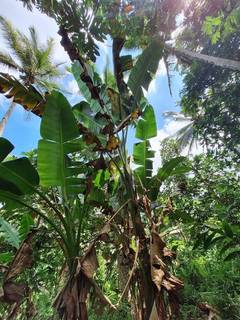
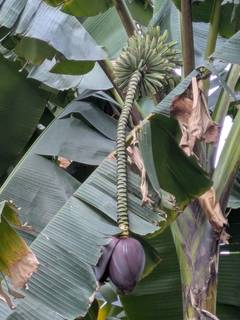
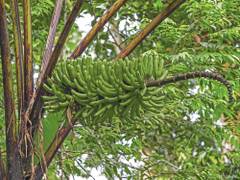
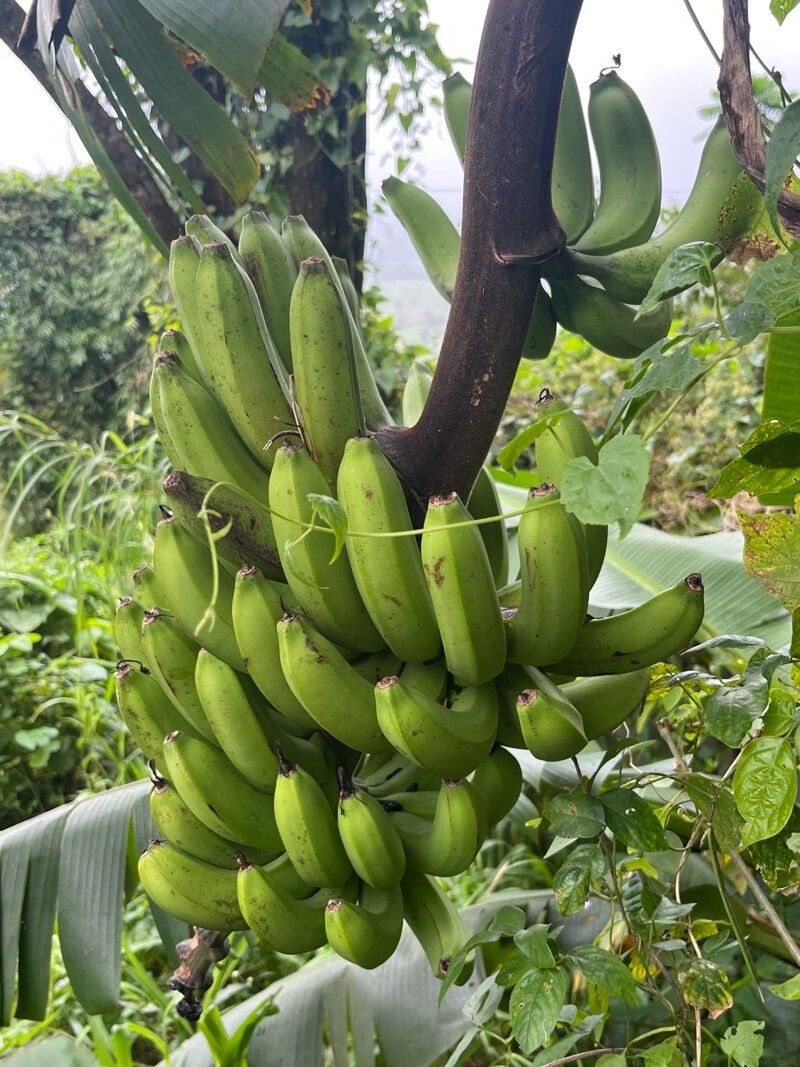
Musa × paradisiaca is a large herbaceous perennial reaching 10–25 feet (3–7.5 m) tall, a hybrid between Musa acuminata and Musa balbisiana. What looks like a trunk is a pseudostem formed by the tightly rolled bases of the leaves; the true stem is underground. Broad, paddle-shaped leaves 5–9 feet (1.5–2.7 m) long and 1–2 feet (30–60 cm) wide unfurl from the center and tear into segments along the veins in wind. A drooping flower spike emerges from the top, bearing rows of small flowers within purple bracts, followed by hands of elongated fruit. The starchy-fruited forms are called plantains and are cooked, while sweeter forms are eaten raw as bananas. Each pseudostem flowers once, fruits, then dies, replaced by suckers from the base. The plant needs heat and steady moisture and is damaged by frost, with foliage killed below about 32°F (0°C) and the corm below about 22°F (−6°C). Wind shreds the large leaves and can topple plants in exposed sites.
Native Range
Musa × paradisiaca is a cultivated hybrid of ancient garden origin, derived from two wild banana species native to Southeast Asia and the western Pacific. It has no wild range of its own and is propagated from suckers and corm divisions. It is grown throughout the tropics and subtropics for food.Suggested Uses
Grown as a fruit crop and as a bold-foliage plant in tropical and subtropical gardens, spaced 8–12 feet (2.4–3.7 m) apart. In cooler regions it is used as a fast-growing container or summer accent for its large leaves. The pseudostem, leaves, and fruit are used in cooking and food wrapping in many cuisines.How to Identify
Appearance
Size & Dimensions
Height10' - 25'
Width/Spread6' - 12'
Bloom Information
Flowering is not seasonal but follows the maturing of each pseudostem, often 10–15 months after a sucker emerges in warm climates. A drooping spike pushes out from the top, opening rows of tubular flowers shielded by peeling purple bracts. Female flowers near the base develop into fruit without pollination. The whole process from flower spike to ripe fruit takes three to six months.
Detailed Descriptions
Flower Description
cream within purple bractsFoliage Description
greenGrowing Conditions
Sun Requirements
Requires 6-12 hours of direct sunlight daily
• Full Sun: 6+ hours of direct sunlight
• Partial Shade: 3-6 hours of direct sunlight
• Full Shade: Less than 3 hours of direct sunlight
Care & Maintenance
Care Guide
Full sun, heat, and deep, fertile, well-drained soil rich in organic matter at pH 5.5–7.0 suit Musa × paradisiaca. The plant is a heavy feeder and drinker, needing steady moisture and regular feeding through the growing season, though standing water rots the corm. It is hardy outdoors only in USDA zones 9–11, and in cooler zones the corm is grown in containers or lifted and stored over winter. A sheltered position reduces wind damage to the leaves. Suckers are thinned to one or two per clump so the main stem can fruit. Mulch and a winter cover help the corm survive where light frost occurs.Pruning
Old leaves are cut off as they brown and hang against the pseudostem. After a stem fruits, it is cut to the ground, since it will not fruit again, making room for the next sucker. Removing extra suckers concentrates growth into one or two stems.Container Growing
Suitable for container growing
Minimum container size: 15 gallons