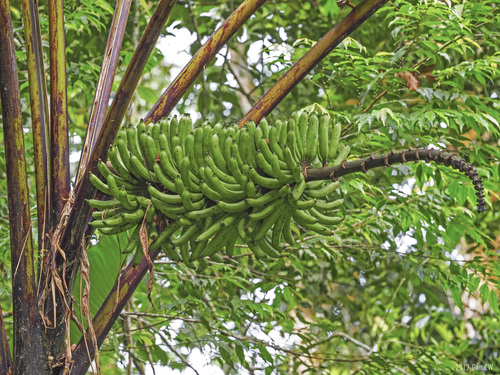
Musa, Genus, acuminata, Species,
- Genus & species
dwarf banana plant
Southeast Asia — Malaysia, Indonesia, Philippines; {Musa acuminata} is the primary ancestor of all edible bananas
Overview
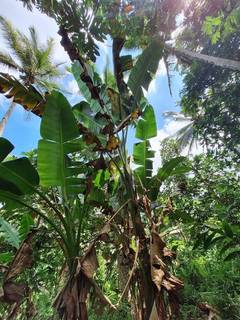
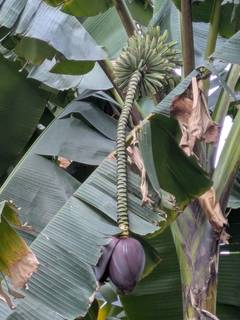
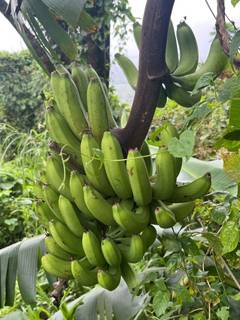
Musa acuminata is the species from which most edible banana cultivars derive, growing 48–96 inches (120–240 cm) indoors in dwarf selections. Bright green paddle-shaped leaves reach 24–36 inches (60–90 cm) long and 10–15 inches (25–38 cm) wide. The apparent trunk is a pseudostem — a cylinder of tightly overlapping leaf bases, not true wood. Each pseudostem produces leaves from a central growing point and, if conditions allow, a single terminal inflorescence with a pendant red-purple bract. After fruiting, that pseudostem dies; offsets (pups) from the rhizome base produce replacement pseudostems. Indoor fruiting requires 6+ hours of direct sun, consistent warmth above 60°F (16°C), heavy feeding, and high humidity — dwarf cultivars such as 'Super Dwarf Cavendish' at 48–60 inches (120–150 cm) are most likely to produce fruit indoors. Leaves naturally split along lateral veins under air movement; this is a structural adaptation, not damage. Non-toxic — fruit is edible. Requires frequent watering and heavy fertilization during active growth. Cold-sensitive: foliage damage occurs below 50°F (10°C).
Native Range
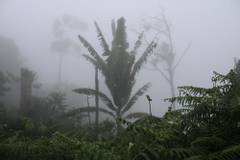
Musa acuminata is native to Southeast Asia — Malaysia, Indonesia, and the Philippines.Suggested Uses
Grown as an indoor foliage plant in containers of 15+ gallons (57+ liters) in bright, warm locations. Outdoors in zones 9–11 as a landscape plant. Dwarf cultivars such as 'Super Dwarf Cavendish' are suited to indoor fruit production with sufficient light.How to Identify
Appearance
Size & Dimensions
Height4' - 8'
Width/Spread3' - 5'
Colors
Bloom Information
Pendant red-purple bract inflorescence produced terminally on mature pseudostems. Requires 10–15 months of uninterrupted warm growth to initiate flowering. Rarely blooms indoors without direct sun and supplemental lighting.
Detailed Descriptions
Flower Description
Red-purple large drooping bract with yellow tubular flowers (rare indoors without ideal conditions)Foliage Description
Bright green, enormous paddle-shaped, up to 36 inches (90 cm) long — the iconic tropical banana leafGrowing Conditions
Sun Requirements
Requires 6-12 hours of direct sunlight daily
• Full Sun: 6+ hours of direct sunlight
• Partial Shade: 3-6 hours of direct sunlight
• Full Shade: Less than 3 hours of direct sunlight
Care & Maintenance
Care Guide
Full sun to bright indirect light; 6+ hours of direct sun for fruiting. Keep soil consistently moist during active growth — banana plants transpire heavily through large leaf surfaces. Fertilize every 2 weeks during the growing season with a balanced fertilizer. Maintain humidity above 50% to reduce brown leaf margins. Cold-sensitive: move indoors before temperatures drop below 50°F (10°C). Non-toxic.Pruning
Remove browned or spent lower leaves by peeling from the pseudostem. Cut fruited pseudostems to ground level. Allow 1–2 replacement pups to develop from the rhizome; remove excess pups to concentrate growth.Container Growing
Suitable for container growing
Minimum container size: 15 gallons