Musa, Genus, spp., Multiple species,
- Genus
- Multiple species
bananas
Tropical and subtropical Asia, northern Australia, and the western Pacific
Overview
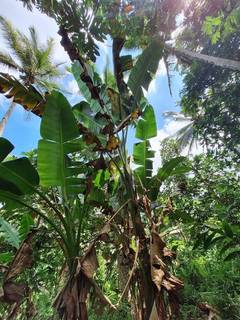
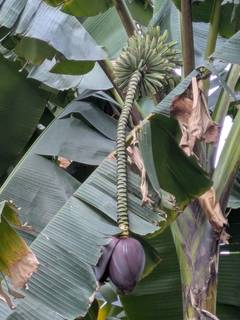
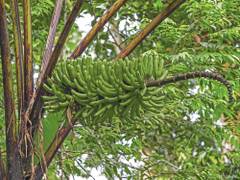
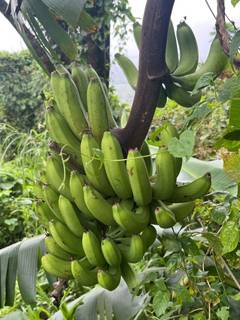
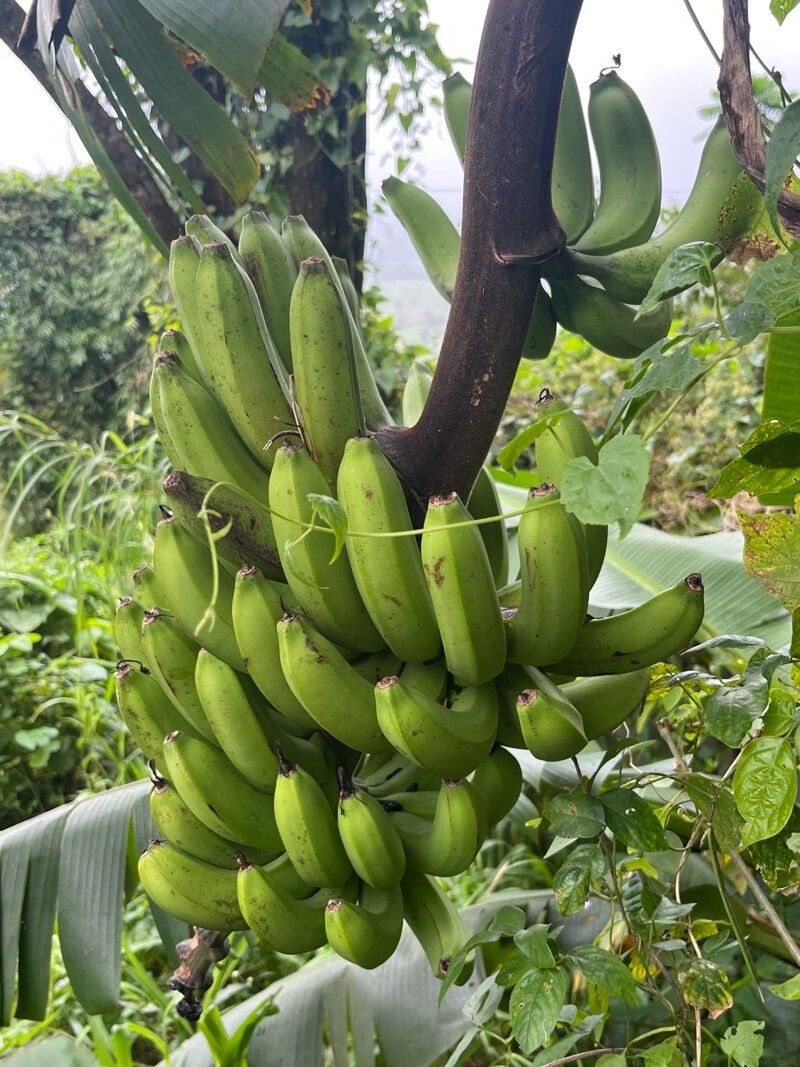
Musa is a genus of about 70 species of large herbaceous perennials in the family Musaceae, native to tropical and subtropical Asia, northern Australia, and the western Pacific. Although tree-like in size, plants have no woody trunk; the apparent stem, called a pseudostem, is a tight column of overlapping leaf sheaths rising 2-9 m (6.5-30 ft). The leaves are very large, oblong paddles up to 3 m (10 ft) long, which tear along the veins in wind. Each pseudostem flowers once, producing a pendent or erect inflorescence with rows of flowers protected by large purple bracts, then dies back while suckers from the base continue the clump. The fruit is an elongated berry; cultivated bananas and plantains are largely seedless forms derived mainly from M. acuminata and M. balbisiana. Wild species bear fruit packed with hard seeds. Musa grows quickly in heat and moisture and is killed back by frost, though some species resprout from the rootstock after cold. Plants are grown for fruit, fibre, and bold foliage.
Native Range
Native to tropical and subtropical Asia, from India and southern China through Southeast Asia to northern Australia and the western Pacific. The wild ancestors of cultivated bananas, M. acuminata and M. balbisiana, originate in this region. Musa is not native to North America but is grown in frost-free parts of it.Suggested Uses
Grown for fruit in tropical and subtropical gardens, and for large, bold foliage as a summer feature in containers and warm borders elsewhere. Hardy species are used to give a tropical look in temperate gardens with winter protection.How to Identify
Appearance
Size & Dimensions
Height6'6" - 30'
Width/Spread5' - 12'
Bloom Information
In frost-free climates a pseudostem flowers about 9 to 18 months after it emerges, at any time of year once mature. The inflorescence opens over many weeks as bracts lift to reveal successive rows of flowers. Each pseudostem flowers only once, then dies back.
Detailed Descriptions
Flower Description
cream with purple bractsFoliage Description
greenGrowing Conditions
Sun Requirements
Requires 6-12 hours of direct sunlight daily
• Full Sun: 6+ hours of direct sunlight
• Partial Shade: 3-6 hours of direct sunlight
• Full Shade: Less than 3 hours of direct sunlight
Care & Maintenance
Care Guide
Bananas grow in full sun in deep, fertile, moisture-retentive soil with steady warmth and high humidity. They are frost-tender, with foliage damaged at 0 C (32 F), though hardy species such as M. basjoo resprout from the roots after the top is frozen. Heavy feeding and ample water sustain the fast leaf growth. Wind shreds and browns the large leaves, so a sheltered position keeps them intact. In containers and cool climates, plants are moved under cover for winter.Pruning
Old leaves are removed as they brown, and a pseudostem is cut to the ground after it has fruited or been killed by frost. Suckers are thinned to leave one or two strong shoots per clump for the next cycle. No other pruning is needed.Pruning Schedule
Prune: October–November
fall
Container Growing
Suitable for container growing
Minimum container size: 20 gallons