Musa, Genus, textilis, Species,
- Genus & species
abacá, manila hemp
Philippines (eastern Visayas and Mindanao); commercially cultivated in Philippines, Ecuador, Costa Rica
Overview
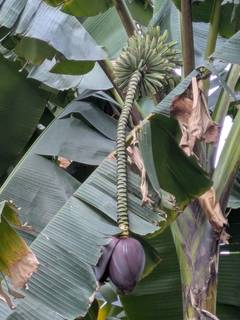
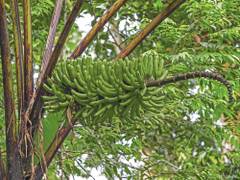
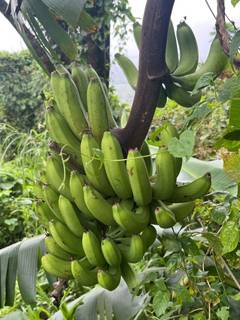
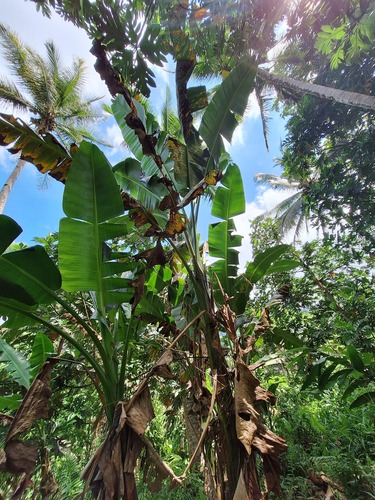
Musa textilis is a large herbaceous banana-like perennial in the family Musaceae growing 10-20 feet (3-6 m) tall from a rhizomatous corm. Like all bananas, the apparent trunk is a pseudostem: a tightly rolled cylinder of overlapping leaf sheaths 4-8 inches (10-20 cm) in diameter. Leaves are oblong, 4-8 feet (1.2-2.4 m) long and 8-12 inches (20-30 cm) wide, bright green, with a prominent midrib. Unlike the common banana (Musa acuminata), the leaves of M. textilis are more upright and narrower, and the fibers within the leaf sheaths are exceptionally long and strong, the primary reason for cultivation. Abacá fiber, extracted from the pseudostem sheaths, has a tensile strength approximately three times that of cotton and greater salt-water resistance than other plant fibers. The Philippines produces approximately 85% of the world's abacá, used in marine cordage, tea bags, filter paper, banknote paper, and specialty textiles. The inflorescence is a pendant cluster of tubular flowers that produces small inedible fruit 2-3 inches (5-8 cm) long carrying hard dark seeds. Frost-tender: foliage damage occurs below 40°F (4°C) and plant death below 28°F (-2°C). In the Pacific Northwest, the species is grown only as a greenhouse or conservatory specimen.
Native Range
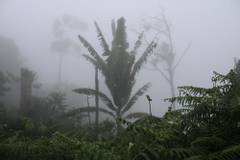
Musa textilis is native to the Philippines and is believed to have originated in the eastern Visayas and Mindanao. The species occurs in tropical rainforest understory and forest margins at low to moderate elevations, up to approximately 3,300 feet (1,000 m). Cultivated commercially in the Philippines, Ecuador, and Costa Rica.Suggested Uses
Grown as a tropical specimen in heated greenhouses and conservatories in the Pacific Northwest. In USDA zones 10-12, planted outdoors as a specimen or in tropical garden designs. Commercially cultivated in the Philippines and Central America for fiber extraction. The large banana-like foliage gives a tropical aesthetic in conservatory and interior plantscapes. Not suited to outdoor cultivation in zones below 10.How to Identify
Appearance
Size & Dimensions
Height10' - 20'
Width/Spread6' - 10'
Bloom Information
In tropical conditions, the pendant inflorescence emerges from the top of the pseudostem after 18-24 months of growth. Tubular flowers are arranged in clusters along the pendant rachis. Small angular seedy fruit develop but are not edible. In temperate greenhouse cultivation, flowering is uncommon without sustained tropical temperatures and humidity.
Detailed Descriptions
Flower Description
Yellow-green to cream; pendant cluster of tubular flowers; produces small inedible seedy fruitFoliage Description
Bright green; oblong 4-8 feet (1.2-2.4 m) long and 8-12 inches (20-30 cm) wide; prominent midrib; more upright and narrower than common banana; evergreenGrowing Conditions
Sun Requirements
Requires 6-10 hours of direct sunlight daily
• Full Sun: 6+ hours of direct sunlight
• Partial Shade: 3-6 hours of direct sunlight
• Full Shade: Less than 3 hours of direct sunlight
Care & Maintenance
Care Guide
In the Pacific Northwest, the species is grown in a heated greenhouse or large conservatory. Planted in a container (minimum 15 gallons / 57 L) in rich well-drained potting mix at pH 5.5-7.0. Temperatures are maintained above 60°F (15°C) year-round, with optimal growth at 75-85°F (24-29°C). Bright indirect light to full sun is required; a south-facing greenhouse is optimal. Watered copiously during the growing season, keeping soil consistently moist but not waterlogged. Fed every 2 weeks with a high-nitrogen liquid fertilizer during active growth. Humidity is maintained above 60%. Watering is reduced in winter if growth slows. Suckers (pups) from the rhizome are separated for propagation when they reach 12 inches (30 cm) tall.Pruning
Yellowing or dead outer leaves are removed at the pseudostem base as they decline. After a pseudostem has flowered and fruited, it dies and is cut to the base. Suckers from the rhizome replace the spent pseudostem. No other pruning is required.Container Growing
Suitable for container growing
Minimum container size: 15 gallons