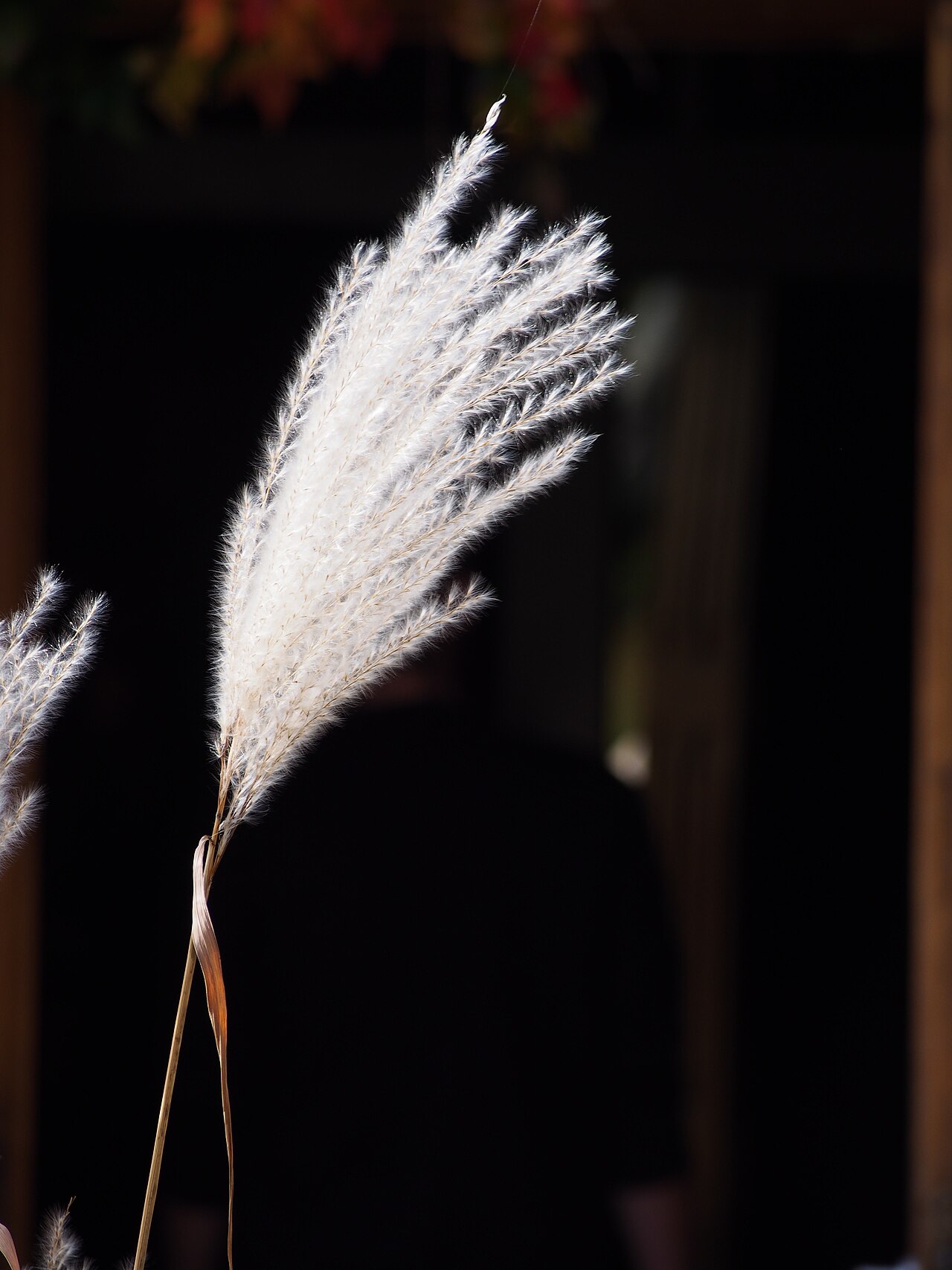
Miscanthus, Genus, sacchariflorus, Species,
- Genus & species
Amur silver grass
Eastern Asia (Japan, Korea, northeastern China, Russian Far East)
Overview
Miscanthus sacchariflorus is a deciduous, rhizomatous perennial grass that forms spreading colonies of upright stems 5–8 feet (1.5–2.4 m) tall, occasionally reaching 10 feet (3 m) in favorable conditions. Leaf blades are linear, 0.4–1 inch (1–2.5 cm) wide and 12–30 inches (30–75 cm) long, with a white midrib and arching tips. Silvery-white to pale pink panicles 8–12 inches (20–30 cm) long emerge in August–October above the foliage and persist as feathery seedheads through winter. Foliage turns golden tan in fall and remains upright until cut back in late winter. Thick, creeping rhizomes spread outward, and colonies widen by 1–2 feet (30–60 cm) per year. Growth rate is fast once established, and stems reach full height in a single season. Stems lean or lodge in shade and under heavy snow. The species spreads beyond planting areas by rhizomes and has naturalized in parts of the eastern and midwestern United States. Hardy in USDA zones 4–8.
Native Range
Native to eastern Asia, including Japan, Korea, northeastern China, and the Russian Far East along the Amur River. Grows in moist grassland, riverbanks, and forest margins.Suggested Uses
Grown as a screen, in large borders, and along ponds and stream banks, spaced 4–6 feet (1.2–1.8 m) apart. Used for bank stabilization where rhizome mats bind soil. Dried panicles are used in cut arrangements.How to Identify
Appearance
Size & Dimensions
Height5' - 8'
Width/Spread3' - 6'
Bloom Information
Panicles emerge from August to October in zones 4–8. Panicles open silvery pink to white and are 8–12 inches (20–30 cm) long, and seedheads persist for 3–5 months into winter. Flowers are wind-pollinated, and plants in shade flower sparsely or not at all.
Detailed Descriptions
Flower Description
Silvery white to pale pinkFoliage Description
Green with white midrib, golden tan in fallGrowing Conditions
Sun Requirements
Requires 6-8 hours of direct sunlight daily
• Full Sun: 6+ hours of direct sunlight
• Partial Shade: 3-6 hours of direct sunlight
• Full Shade: Less than 3 hours of direct sunlight
Care & Maintenance
Care Guide
Grows in full sun in moist to average, well-drained soil of pH 5.5–7.5, and tolerates clay and periodic flooding. Newly planted divisions need 1 inch (2.5 cm) of water weekly during the first growing season, and established colonies tolerate short dry periods. Rhizomes spread outward, and barriers 24–30 inches (60–75 cm) deep or annual edge cutting limit colony size. Stems lean or lodge in shade, in heavy rain, and under snow. Rust and leaf spots occur occasionally. Clumps are divided in spring every 3–5 years.Pruning
Stems are cut to 3–6 inches (8–15 cm) above ground in late winter, before new growth emerges. Cutting in fall removes the winter seedheads along with the stems. Stems are 5–8 feet (1.5–2.4 m) long and leaf edges are sharp enough to cut skin.Pruning Schedule
Prune: February–March
winterearly spring
Toxicity: Not assessed
UnknownRelated Miscanthus species
 MiscanthusMiscanthus sinensis
 Gracillimus maiden grassMiscanthus sinensis 'Gracillimus'
 Morning light maiden grassMiscanthus sinensis 'Morning Light'
 Silver feather maiden grassMiscanthus sinensis 'Silberfeder'
 Cosmopolitan maiden grassMiscanthus sinensis 'Cosmopolitan'
 Variegated maiden grassMiscanthus sinensis 'Variegatus'