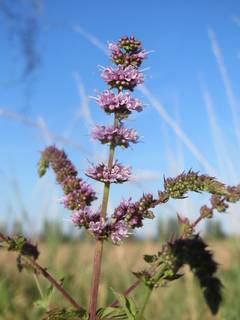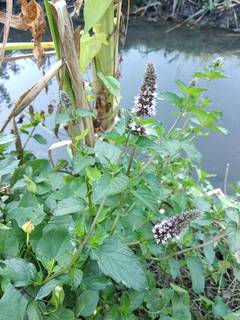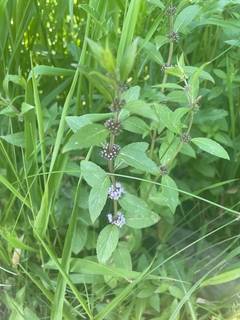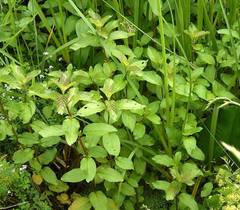
Mentha, Genus, pulegium, Species,
- Genus & species
pennyroyal
Overview
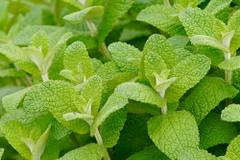
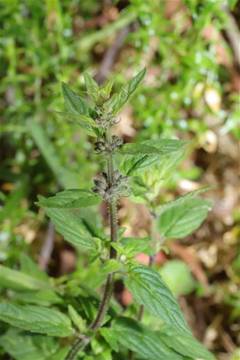
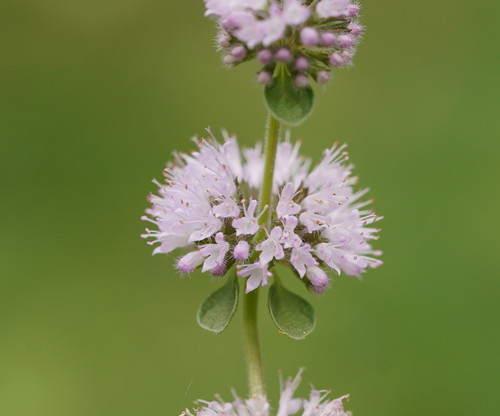
Mentha pulegium is a low, creeping, strongly aromatic perennial herb of the mint family native to Europe, North Africa, and western Asia, and naturalized in North America, Australia, and beyond. It grows 4-16 inches (10-40 cm) tall, with prostrate to ascending square stems that root at the nodes and form spreading mats, often broader than tall. The small, oval, grey-green leaves are 0.2-1 inch (5-25 mm) long and release a sharp, peppermint-like scent when crushed. From midsummer into autumn it bears dense whorls of small lilac to pale purple two-lipped flowers clustered along the upper stems, drawing bees and other pollinators. The foliage contains pulegone, an essential-oil compound toxic to people and animals; ingestion or concentrated oil can cause serious liver damage and has been linked to poisonings, so it is treated as a toxic herb. It also spreads quickly by rooting stems and seed and is listed as an invasive or noxious weed in parts of the western United States and Australia. In cultivation it is grown in herb gardens, as a fragrant groundcover or lawn substitute, and between paving in damp, sunny spots.
Native Range
Native to Europe, North Africa, and western Asia, and widely naturalized in North America, South America, and Australia. It grows in damp meadows, pond and ditch margins, seasonally wet ground, and disturbed moist soils.Suggested Uses
Used in herb gardens, as an aromatic groundcover or lawn substitute, and between stepping stones in damp, sunny areas. Historically the foliage was used as an insect-repelling strewing herb, though its toxicity limits modern use.How to Identify
Appearance
Size & Dimensions
Height4" - 1'4"
Width/Spread1' - 2'
Colors
Foliage Colors
Bloom Information
Detailed Descriptions
Flower Description
lilac to pale purpleFoliage Description
grey-greenGrowing Conditions
Sun Requirements
Requires 4-10 hours of direct sunlight daily
• Full Sun: 6+ hours of direct sunlight
• Partial Shade: 3-6 hours of direct sunlight
• Full Shade: Less than 3 hours of direct sunlight
Care & Maintenance
Care Guide
Grow in full sun to part shade in moist, fertile soil that does not dry out; the species favors damp ground and tolerates seasonal wetness. Water in dry spells to keep the soil moist, as it wilts in drought. It spreads quickly by rooting stems and can overrun beds or escape into wild areas, so confining it to a container or a bed with barriers helps control it. Shear after flowering to keep the mat dense. All parts contain pulegone and are toxic if eaten, and the concentrated oil is hazardous. It is hardy in USDA zones 6-9.Pruning
Shear or mow lightly after flowering to keep growth dense and remove spent flower stems. Cut back runners through the season to limit spread. Old growth can be cleared in late winter before new shoots appear.Pruning Schedule
Prune: February & August
summerwinter
Container Growing
Suitable for container growing
Minimum container size: 2 gallons