Rosa, Genus, 'Maurice Utrillo', Cultivar,
- Genus
- Cultivar
Maurice Utrillo rose
Overview
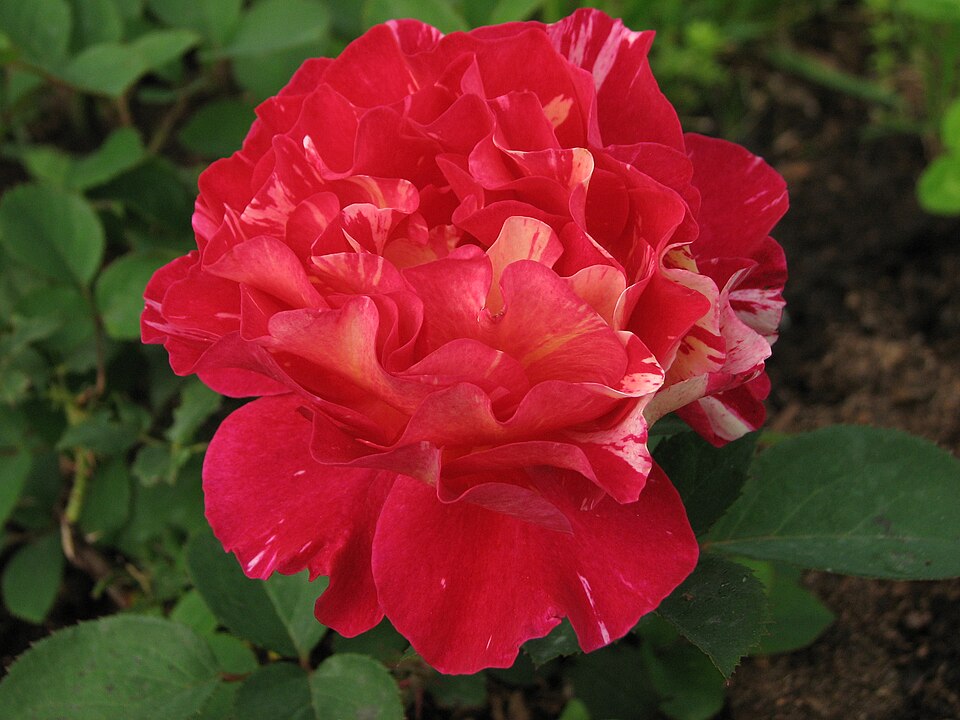
Rosa 'Maurice Utrillo' is a large-flowered garden rose from the Delbard breeding house in France, one of its Painters series of striped roses. It forms an upright, bushy shrub 36-48 inches (90-120 cm) tall and 24-36 inches (60-90 cm) wide. The double blooms are about 4-5 inches (10-13 cm) across and are striped and splashed in vivid red, pink, and cream, with a yellow base and reverse, so no two flowers are marked alike. The blooms have a moderate fruity fragrance and appear singly or in small clusters. Foliage is dark green and semi-glossy on upright stems. Flowering repeats from early summer to autumn. As with other striped roses, the markings vary with weather and can be less defined in extreme heat, and the dense blooms give pollinating insects limited access to pollen. Blackspot pressure is moderate in humid climates. It is grown in rose beds, mixed borders, and as a cut flower in USDA zones 6-9.
Native Range
This cultivar is a garden hybrid of complex parentage with no wild range; it was raised in France. The genus Rosa is distributed across the temperate and subtropical Northern Hemisphere.Suggested Uses
Used in rose beds, mixed borders, and as a cut flower, where the striped blooms stand out in arrangements. It also grows in large containers of at least 12 gallons (45 L). Its moderate disease resistance makes airflow around the plant useful.How to Identify
Appearance
Size & Dimensions
Height3' - 4'
Width/Spread2' - 3'
Bloom Information
Detailed Descriptions
Flower Description
Striped red, pink, and cream over yellowFoliage Description
Dark green, semi-glossyGrowing Conditions
Sun Requirements
Requires 6-8 hours of direct sunlight daily
• Full Sun: 6+ hours of direct sunlight
• Partial Shade: 3-6 hours of direct sunlight
• Full Shade: Less than 3 hours of direct sunlight
Care & Maintenance
Care Guide
Full sun with six or more hours of direct light and fertile, well-drained loam suit this rose. Soil pH from 6.0 to 7.0 is appropriate. Roughly 1-2 inches (2.5-5 cm) of water per week sustains it during dry spells, with base watering rather than overhead to limit blackspot. A spring mulch of compost and a balanced rose feed after the first flush support repeat flowering. Open spacing for airflow reduces leaf disease. Blackspot and aphids are the main problems in warm, humid regions.Pruning
Pruning in late winter or early spring, cutting stems back by about one-third to outward-facing buds, keeps the shrub bushy and productive. Dead, thin, and crossing wood is removed to open the center. Cutting spent blooms back to a strong leaf speeds the next flush.Container Growing
Suitable for container growing
Minimum container size: 12 gallons