Malva, Genus, arborea, Species,
- Genus & species
tree mallow
Western and southern Europe and the Mediterranean
Overview
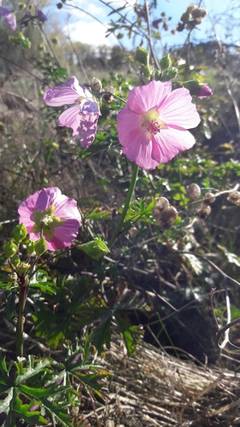
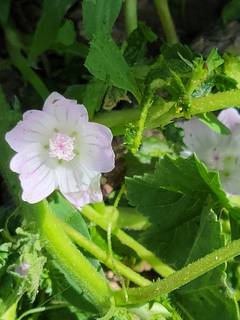
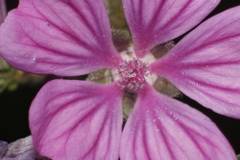
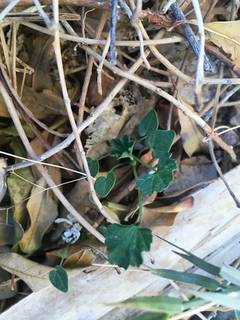
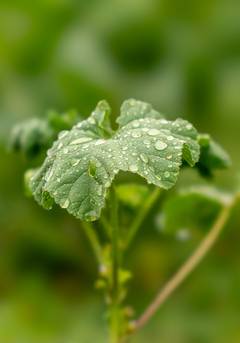
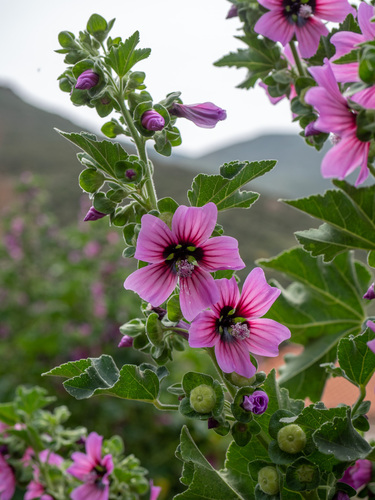
Malva arborea is a tall biennial or short-lived perennial reaching 3-10 feet (1-3 m) tall, with a stout, woody-based stem that gives the plant a shrub-like form in its second year. The leaves are large, soft, and downy, 3-8 inches (8-20 cm) wide, rounded with five to seven shallow lobes and a felted texture. From late spring through summer it produces clusters of five-petalled flowers 1.5-2 inches (4-5 cm) across in pink to purple-mauve, each petal marked with darker veins toward the base. The flowers give way to ring-shaped clusters of dry single-seeded segments. Native to rocky and disturbed coasts, it tolerates salt spray, wind, and poor sandy soils, often growing near seabird colonies on nutrient-rich ground. It usually flowers in its second year and then dies, persisting by self-seeding. A limitation is its short life and tendency to become leggy and top-heavy, often needing replacement every two to three years.
Native Range
Malva arborea is native to the rocky coasts of western and southern Europe and the Mediterranean. It grows on sea cliffs, shingle, and disturbed coastal ground, frequently near seabird colonies where the soil is enriched.Suggested Uses
Malva arborea is used in coastal and seaside gardens, gravel plantings, and exposed sites where salt and wind limit other plants. Its rapid growth gives quick height and summer color in new or temporary plantings. The flowers supply nectar for bees and other pollinators.How to Identify
Appearance
Size & Dimensions
Height3' - 10'
Width/Spread2' - 4'
Bloom Information
Detailed Descriptions
Flower Description
pink to purple-mauveFoliage Description
grey-greenGrowing Conditions
Sun Requirements
Requires 6-10 hours of direct sunlight daily
• Full Sun: 6+ hours of direct sunlight
• Partial Shade: 3-6 hours of direct sunlight
• Full Shade: Less than 3 hours of direct sunlight
Care & Maintenance
Care Guide
Malva arborea grows in full sun in light, freely drained sandy or stony soil and tolerates exposed, salt-laden coastal sites. It withstands a soil pH from about 6.0 to 8.0 and copes with low fertility and drought once established. Plants grow quickly from seed, forming a leafy rosette in the first year and flowering stems in the second. In cold inland gardens hard frost can kill the plant, which is hardy only to around 20 F (-7 C). Self-sown seedlings usually maintain a colony without intervention. Shelter from the strongest winds reduces stem breakage on tall specimens.Pruning
Little pruning is needed beyond removing dead or broken stems. Cutting back the flowered stems in autumn tidies the plant and can prolong the life of a perennial specimen. Spent plants are pulled out once they die after seeding.Container Growing
Suitable for container growing
Minimum container size: 5 gallons