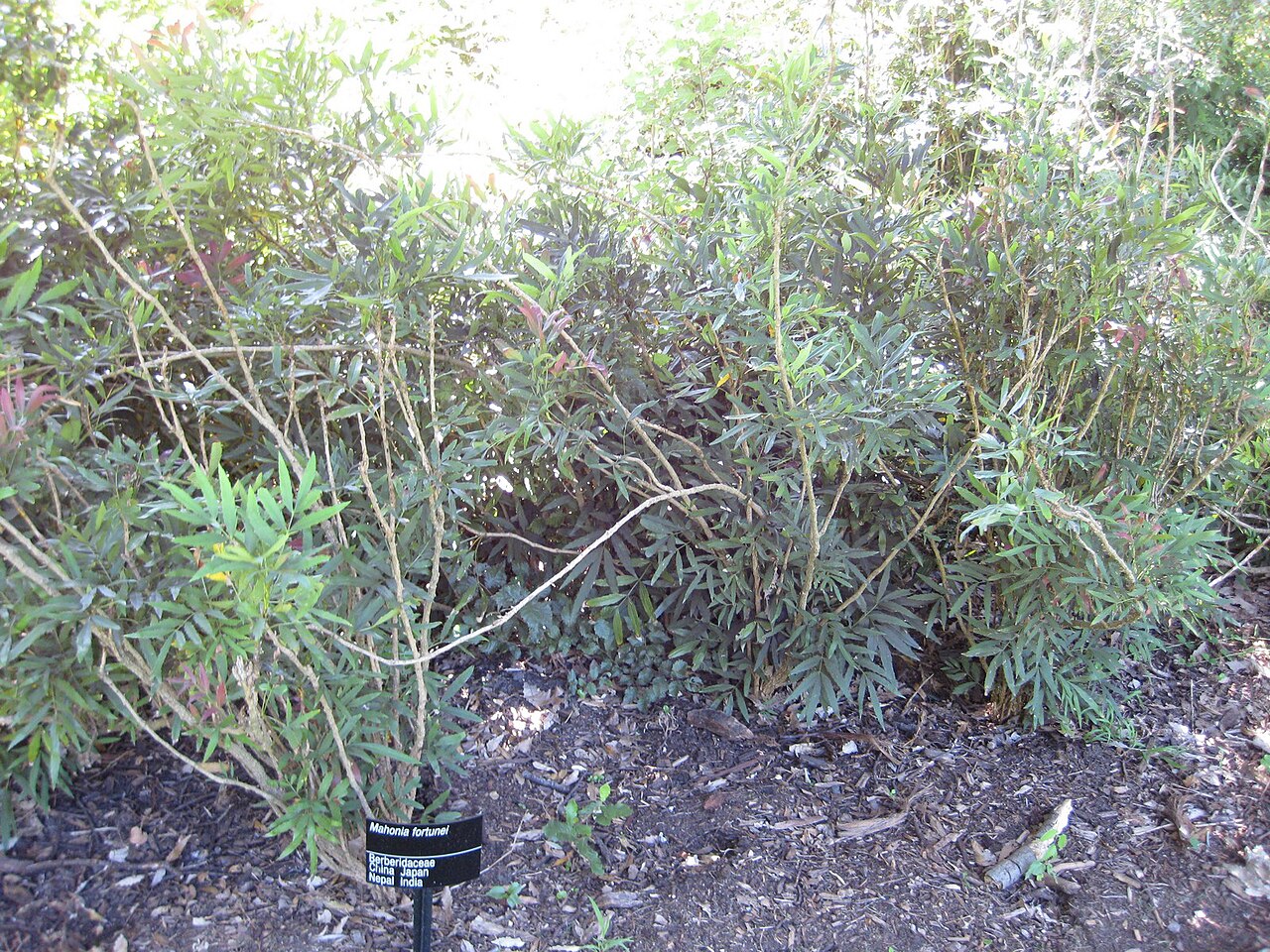
Evergreen Shrub
Mahonia, Genus, fortunei, Species,
- Genus & species
Chinese mahonia
Overview
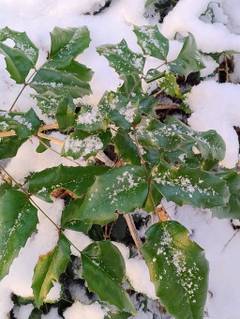
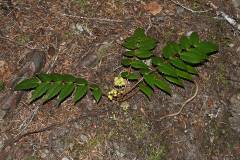
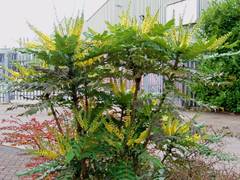
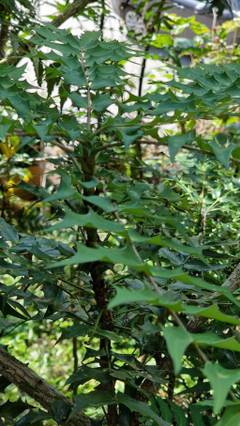
Mahonia fortunei is an upright, clumping evergreen shrub that grows 3–6 feet (0.9–1.8 m) tall and 3–5 feet (0.9–1.5 m) wide, with stiff, sparsely branched stems. Leaves are pinnately compound, 6–12 inches (15–30 cm) long, with 5–9 narrow, lance-shaped leaflets 2–5 inches (5–13 cm) long, each with 6–13 spine-tipped teeth per side. New growth is bronze-tinted, and mature leaves are dark green above and yellow-green beneath, and may turn purple-bronze in winter sun and cold. Flowers are yellow, 0.25 inch (6 mm) across, in upright racemes 2–4 inches (5–10 cm) long, clustered at the stem tips in fall and winter. Fruits are blue-black, powdery berries 0.25 inch (6 mm) across, ripening in spring. The shrub is hardy in USDA zones 7–9, and leaves are damaged by drying winter wind at the cold end of that range. Spiny leaf margins make the plant uncomfortable to handle, and growth is slow, adding 6–12 inches (15–30 cm) per year. The genus contains the isoquinoline alkaloid berberine in roots, stems, and berries.
Native Range
Mahonia fortunei is native to central and eastern China, where it grows in forest understories and on shaded slopes. It has been cultivated in Europe and North America since the mid-19th century, after collection by Robert Fortune.Suggested Uses
Mahonia fortunei is used in shaded borders, woodland gardens, and foundation plantings, with spacing of 3–4 feet (0.9–1.2 m) between plants. The spiny foliage is used as a barrier planting under windows.How to Identify
Appearance
Size & Dimensions
Height3' - 6'
Width/Spread3' - 5'
Bloom Information
Detailed Descriptions
Foliage Description
Dark green above, yellow-green beneath, purple-bronze in winter sunGrowing Conditions
Sun Requirements
Requires 2-4 hours of direct sunlight daily
• Full Sun: 6+ hours of direct sunlight
• Partial Shade: 3-6 hours of direct sunlight
• Full Shade: Less than 3 hours of direct sunlight
Care & Maintenance
Care Guide
Mahonia fortunei grows in part shade to full shade, with 2–4 hours of direct light, in humus-rich, moist, well-drained soil of pH 5.5–7.0. Plants in sun of 6 or more hours show leaf scorch and yellowing. Established plants tolerate short dry periods, and 1 inch (2.5 cm) of water weekly is applied in the first 2 years. Hardiness is USDA zones 7–9, with foliage burn in cold, drying wind. A 2–3 inch (5–8 cm) mulch layer limits root drying. Leaf spots, rust, and scale insects occur occasionally.Pruning
Pruning takes place after flowering in late winter or early spring. Leggy stems are cut to 12–18 inches (30–45 cm) above the ground, or to a basal bud, and regrowth appears within one season. Stems are cut at different heights to avoid removing all flower buds in one year. Spiny leaves remain sharp after cutting.Pruning Schedule
Prune: February–March
early spring
Container Growing
Suitable for container growing
Minimum container size: 5 gallons