Mahonia, Genus, spp., Multiple species,
- Genus
- Multiple species
mahonia
Overview
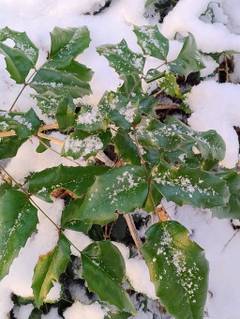
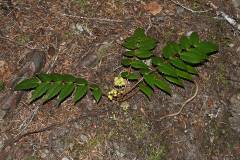
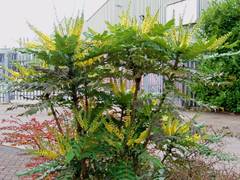
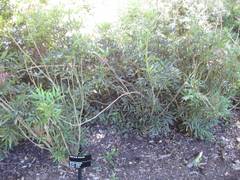
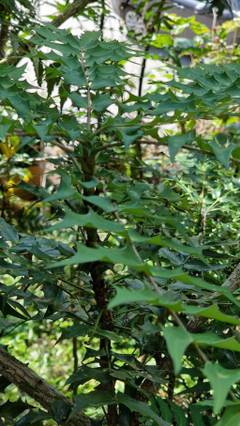
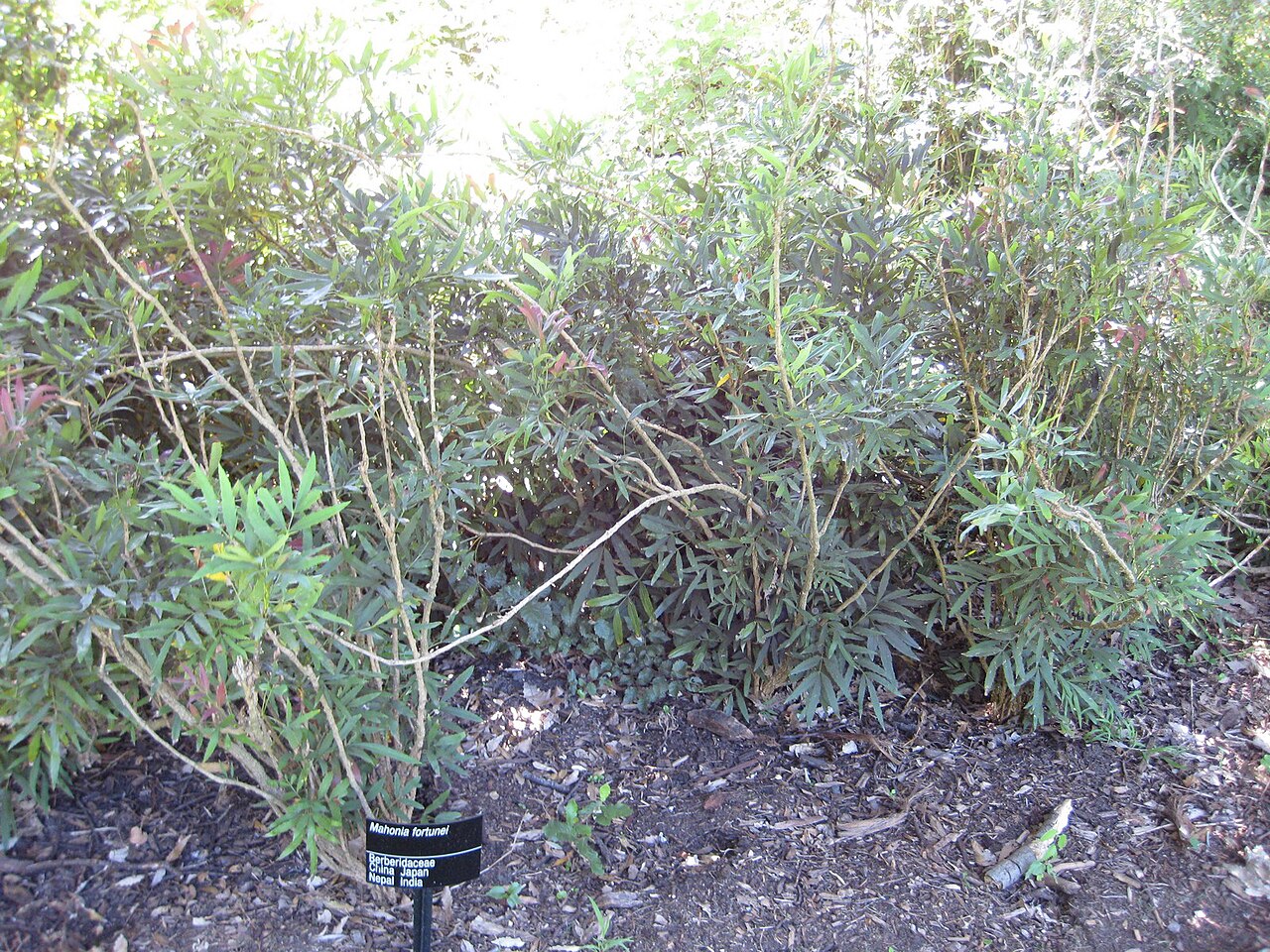
Mahonia is a genus of about 70 species of evergreen shrubs in the barberry family (Berberidaceae), native to eastern Asia, the Himalayas, and North and Central America; some botanists merge it into Berberis. Plants range from low, suckering groundcovers 1 foot (30 cm) tall to upright shrubs 10 feet (3 m) or more, with pinnate, leathery leaves whose leaflets bear spiny, holly-like teeth. Dense racemes or clusters of small yellow flowers, often scented, open from late autumn through spring depending on species, followed by clusters of blue-black, grape-like berries with a waxy bloom. M. aquifolium, the Oregon grape, is a compact western North American species, while the taller Asian M. japonica and M. bealei flower in winter. The leaves of many species turn bronze or purplish in cold weather. Plants grow in part shade to shade in moist, well-drained soil and tolerate dry shade once established. The early flowers are a nectar source for bees, and birds eat the berries. The spiny foliage can deter foot traffic and is sharp to handle.
Native Range
Native to eastern and southern Asia, the Himalayas, and the Americas from western North America through Mexico and Central America. M. aquifolium and M. nervosa grow in the forests of the Pacific Northwest, while many of the winter-flowering species come from China.Suggested Uses
Grown in shade and woodland gardens, shrub borders, and as low hedging or groundcover, where the spiny evergreen foliage gives winter structure and the early flowers add cold-season color. The taller species are used as specimens and informal barriers, and the low kinds for underplanting beneath trees. Berries and flowers support bees and birds.How to Identify
Appearance
Size & Dimensions
Height1' - 10'
Width/Spread2' - 6'
Bloom Information
Flowering occurs from late autumn through spring, varying by species: the Asian M. japonica and M. bealei bloom in winter, while M. aquifolium flowers in early to mid-spring. The yellow flowers, often lightly scented, last several weeks. Blue-black berries ripen in summer and can persist into autumn.
Detailed Descriptions
Foliage Description
greenGrowing Conditions
Sun Requirements
Requires 2-6 hours of direct sunlight daily
• Full Sun: 6+ hours of direct sunlight
• Partial Shade: 3-6 hours of direct sunlight
• Full Shade: Less than 3 hours of direct sunlight
Care & Maintenance
Care Guide
Grows in part shade to full shade in moist, humus-rich, well-drained soil with a pH of about 5.5 to 7.0, and tolerates dry shade and clay once established. Full sun is tolerated in cool, moist climates but can scorch or bronze the foliage in hot, dry sites. Established plants withstand drought, and the suckering kinds spread slowly to form colonies. Cold, drying winds can damage the evergreen leaves in exposed positions. Few serious pests occur, though rust and leaf spot appear in damp conditions. Plants need little care beyond occasional renewal of old stems.Pruning
Pruning is done after flowering. Leggy or bare stems can be cut back to the base to encourage bushy regrowth, as plants resprout readily from old wood. Suckers can be removed to limit spread in the running species.Container Growing
Suitable for container growing
Minimum container size: 5 gallons