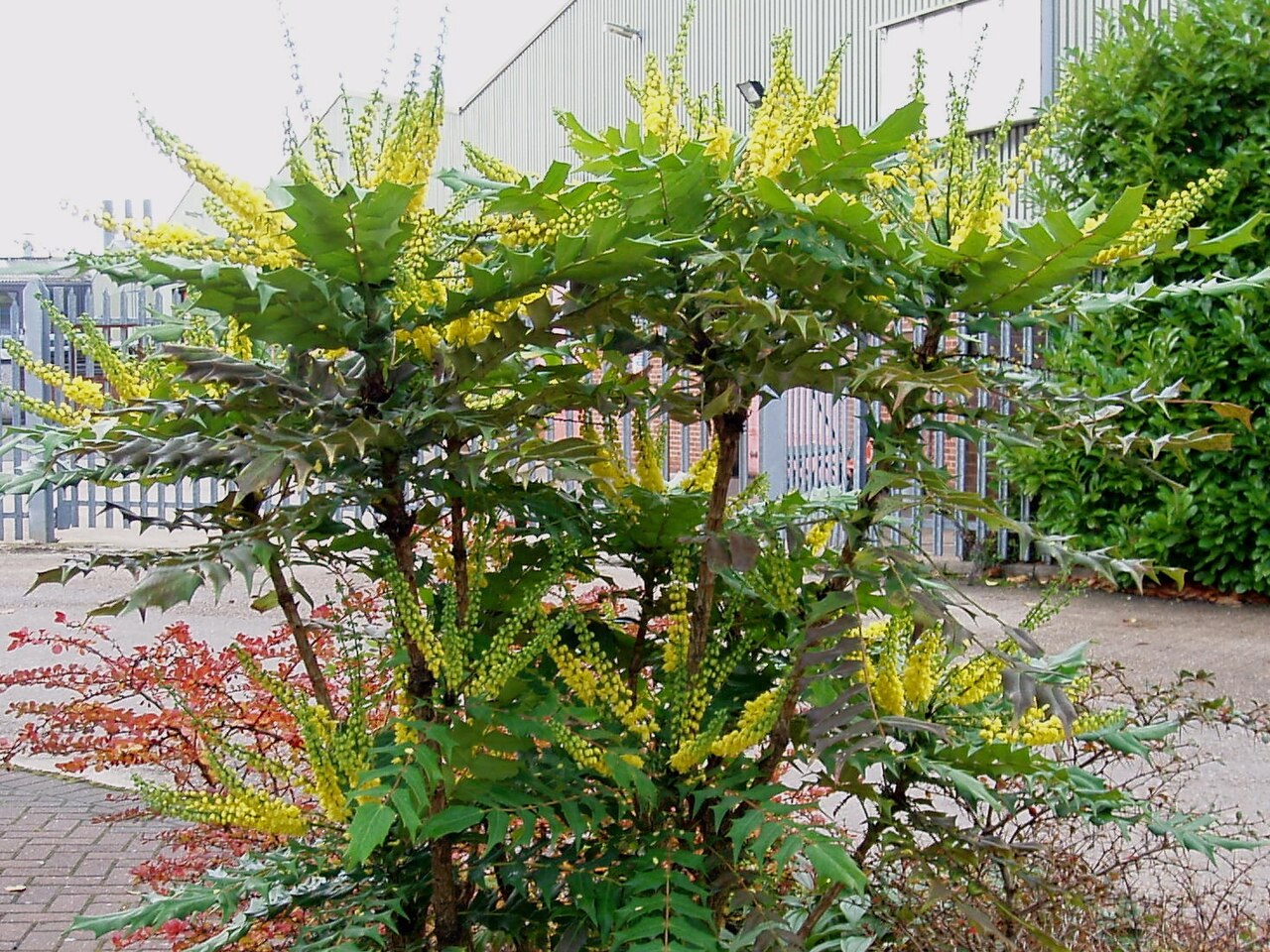
Mahonia, Genus, ×, Hybrid, media, Species,
- Genus & species
- Hybrid
hybrid mahonia
Hybrid of garden origin — {Mahonia japonica} (Japan, Taiwan, China) × {Mahonia lomariifolia} (Yunnan province of China and northern Myanmar); the hybrid arose in cultivation and does not occur in the wild
Overview
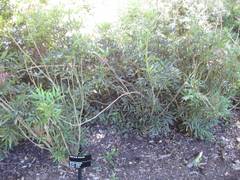
Mahonia × media is an upright broadleaf evergreen hybrid shrub in the family Berberidaceae growing 6–12 feet (1.8–3.6 m) tall and 4–8 feet (1.2–2.4 m) wide from a multi-stemmed base that produces stout upright stems carrying tiered whorls of pinnately compound leaves at the stem tips and a bold architectural silhouette unlike any other hardy broadleaf evergreen shrub in cultivation. The hybrid is the cross between the Japanese M. japonica (a moderate-sized winter-flowering Mahonia native to Japan, Taiwan, and parts of China with shorter pendant racemes and broader hardiness through zone 6) and the Chinese M. lomariifolia (a tender Yunnan and northern Myanmar species with long erect-to-spreading flower racemes and limited hardiness to about zone 8). The hybrid combines the long racemes of the Chinese parent with the cold hardiness and the moderate stature of the Japanese parent, producing a hardy garden shrub with the singular long pendant flower racemes that became the hybrid's primary ornamental character. The first crosses were made by Lionel Fortescue at his garden in Devon, England in the late 1950s, and the named cultivars 'Charity' (the original 1953 selection by Sir Eric Savill at Windsor Great Park from a chance cross), 'Lionel Fortescue' (more upright form with very long racemes), and 'Winter Sun' (more compact form with deep yellow scented flowers) are the standard commercial selections in the British and North American nursery trade. Leaves are dark green to blue-green and pinnately compound with 13–21 spiny-margined leaflets 3–5 inches (7–13 cm) long each, arranged in tiered whorls at the stem tips. Bright yellow small flowers open in long pendulous terminal racemes 6–14 inches (15–35 cm) long that radiate outward and downward from the tiered whorls of foliage from November through February across an 8-week bloom period — the long pendant raceme form is not matched by any other commonly cultivated Mahonia species, and the deepest-winter bloom timing across November, December, January, and February supplies a critical winter nectar source for honeybees and other pollinators that emerge from dormancy on warm winter days when virtually no other shrubs are in bloom. The flowers carry a moderate sweet lily-of-the-valley scent that is detectable across a several-foot radius around the plant. Dusty blue-black berry clusters with a powdery glaucous bloom develop in late winter and early spring and are dispersed by birds. Limitation: like the related M. bealei, the hybrid tends to become leggy and top-heavy with age as the lower leaves drop away and bare stems are left below the tiered-whorl canopy at the top of each stem — periodic renovation pruning to remove the oldest stems at the base is the cultural intervention that maintains a fuller form. Drought-tolerant once established. Non-toxic. Deer-resistant.
Native Range
Hybrid of garden origin — the cross between Mahonia japonica (native to Japan, Taiwan, and parts of China) and Mahonia lomariifolia (native to Yunnan province of China and northern Myanmar). The hybrid arose in cultivation and does not occur in the wild. The first crosses were made in British gardens in the early 1950s — 'Charity' was the original 1953 selection by Sir Eric Savill at Windsor Great Park from a chance cross at the Slieve Donard Nursery in Northern Ireland, and the cultivar 'Lionel Fortescue' was selected by Lionel Fortescue at his garden in Devon, England in the late 1950s. The hybrid bears the cultivar name × media in formal recognition that the hybrid is intermediate (Latin medius) between the two parent species in stature, raceme length, and cold hardiness.Suggested Uses
Used in shade gardens, woodland understory plantings under high deciduous canopy, mixed shade borders, architectural specimen positions where the bold tiered-whorl foliage and the long pendant winter flower racemes supply year-round structure and seasonal interest, winter-interest gardens, and container specimens in containers of at least 15 gallons (57 L) at 48–96 inch (120–240 cm) spacing between plants in USDA zones 6 through 9. The 8-week winter bloom (November through February) of long pendant fragrant bright yellow flower racemes — flowering during the deepest winter months when virtually no other shrubs bloom — and the year-round bold architectural tiered-whorl evergreen foliage combine to make the hybrid a high-value winter-interest shrub for shaded garden positions where most other broadleaf evergreens decline. Compact cultivar 'Winter Sun' is the practical selection for tighter garden positions where the full 12-foot mature height of 'Lionel Fortescue' is too large.How to Identify
Appearance
Size & Dimensions
Height6' - 12'
Width/Spread4' - 8'
Colors
Bloom Information
Bright yellow small flowers open in long pendulous terminal racemes 6–14 inches (15–35 cm) long that radiate outward and downward from the tiered whorls of foliage at the stem tips from November through February across an 8-week bloom period. The flowers carry a moderate sweet lily-of-the-valley scent that is detectable across a several-foot radius around the plant. The deepest-winter bloom timing across November, December, January, and February supplies a critical winter nectar source for honeybees and other pollinators that emerge from dormancy on warm winter days, and the hybrid is among the few cultivated shrubs that supplies pollinator nectar in the depths of winter in temperate gardens. Dusty blue-black berry clusters with a powdery glaucous bloom develop in late winter and early spring and are dispersed by birds.
Detailed Descriptions
Flower Description
bright yellow small flowers carried in long pendulous terminal racemes 6-14 inches (15-35 cm) long that radiate outward and downward from the tiered whorls of foliage at the stem tips; the long pendant raceme form is not matched by any other commonly cultivated Mahonia species; November through February bloom window across an 8-week period; fragrant with a sweet lily-of-the-valley scent that carries across a several-foot radius around the plant; followed by dusty blue-black berry clusters in late winter and early springFoliage Description
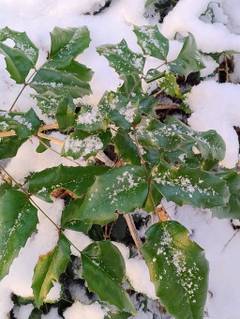
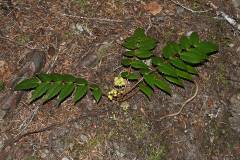
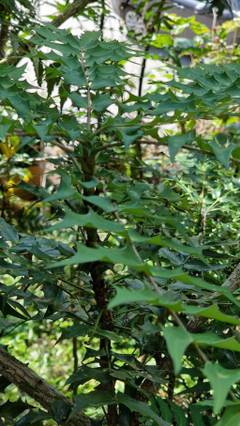
dark green to blue-green pinnately compound leaves with 13-21 spiny-margined leaflets 3-5 inches (7-13 cm) long each, arranged in tiered whorls at the stem tips that produce a bold architectural silhouette unlike any other hardy broadleaf evergreen shrub in cultivation; the tiered-whorl leaf arrangement is the hybrid's primary identifying character; evergreen year-roundGrowing Conditions
Sun Requirements
Requires 2-5 hours of direct sunlight daily
• Full Sun: 6+ hours of direct sunlight
• Partial Shade: 3-6 hours of direct sunlight
• Full Shade: Less than 3 hours of direct sunlight
Care & Maintenance
Care Guide
Site in part shade to full shade with 2–5 hours of direct sun per day in well-drained loam or clay soil with a pH of 5.5–7.0. Drought tolerance develops once the root system is established. Like the related M. bealei, the hybrid tends to become leggy and top-heavy with age as the lower leaves drop away — periodic renovation pruning to remove the oldest stems at the base every 4–6 years is the cultural intervention that maintains a fuller form. Pruning is done in late winter or early spring (February or March) immediately after the bloom finishes. Non-toxic and deer-resistant. Hardy in USDA zones 6–9 — the cold hardiness is inherited from the Japanese parent M. japonica, while the long pendant flower racemes are inherited from the Chinese parent M. lomariifolia.Pruning
Pruning is done in late winter or early spring (February or March) immediately after the bloom finishes, to remove the oldest leggy stems at the base and to encourage fresh basal growth that maintains a full form from top to base. The hybrid tolerates hard renovation pruning back to 12–18 inches (30–45 cm) above the ground when an overgrown plant has lost its lower foliage entirely, and regrowth from latent buds at the base produces a renewed multi-stemmed plant within 1–2 growing seasons — this periodic renovation prevents the top-heavy leggy habit that develops without intervention.Pruning Schedule
Prune: February–March
early spring
Container Growing
Suitable for container growing
Minimum container size: 15 gallons