Image 1 of 4
1 / 4
Mahonia repens
creeping mahonia
Western North America — British Columbia to South Dakota, south through the Rocky Mountains to New Mexico and Arizona; dry open forests, sagebrush steppe, and rocky slopes at 3,000-10,000 feet (900-3,000 m)
Overview
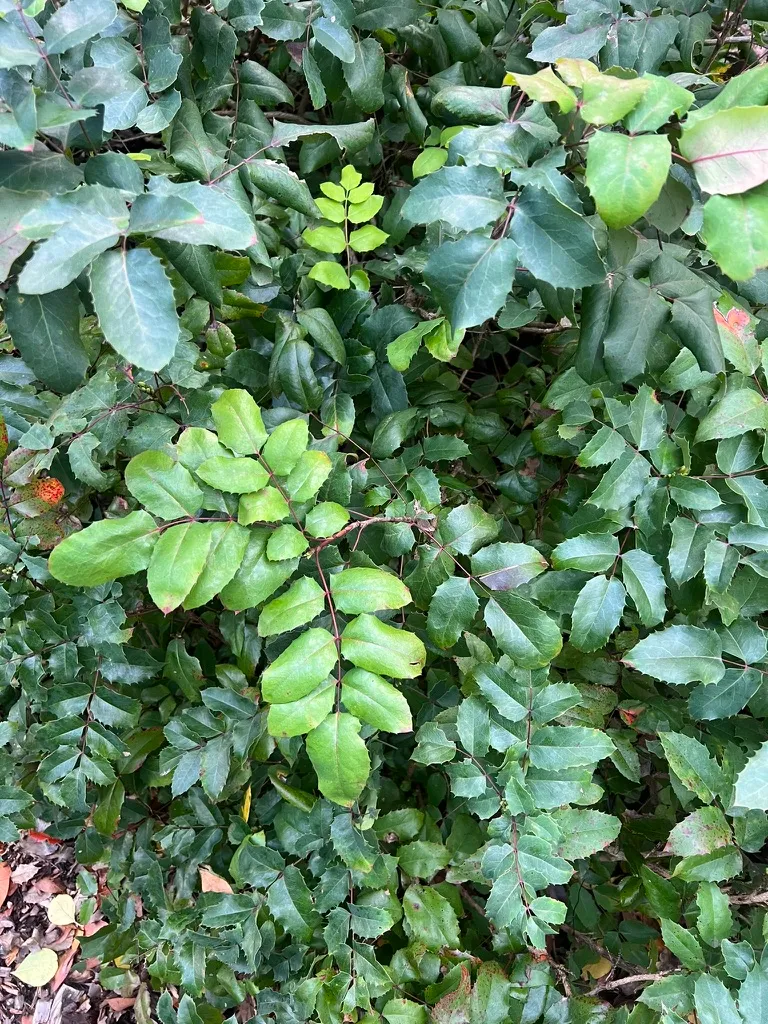
Mahonia repens is creeping mahonia (creeping barberry), a prostrate spreading evergreen shrub growing 6-12 inches (15-30 cm) tall and 2-4 feet (0.6-1.2 m) wide. Bright yellow flowers in dense terminal racemes 1-3 inches (2.5-7 cm) in April-May (3 weeks). Dusty blue-black edible berries 0.3 inch (8 mm). Pinnately compound leaves with 3-7 spiny-margined leaflets 1-2.5 inches (2.5-6 cm); bronze new growth, dull blue-green in summer, purple-red in winter. In Berberidaceae spp.. Repens = creeping. The hardiest Mahonia spp. (zone 4) and the most prostrate (6-12 inches / 15-30 cm). Native to the Rocky Mountain region — British Columbia to New Mexico at 3,000-10,000 feet (900-3,000 m). Spreads by underground rhizomes. The dull (non-glossy) leaf surface distinguishes M. repens from the glossy M. aquifolium. Slow to establish (3-5 years). Berries edible (tart). Drought-tolerant. Deer-resistant. Non-toxic. Zones 4-8. Part sun to full sun. Growth rate is slow (via rhizomes).
Native Range
Native to western North America — British Columbia to South Dakota, south through the Rocky Mountains to New Mexico and Arizona. Found in dry open forests, sagebrush steppe, and rocky slopes at 3,000-10,000 feet (900-3,000 m).Suggested Uses
Grown as a native evergreen ground cover, on dry slopes, in rock gardens, and in containers of at least 3 gallons (11 L), spaced 2-4 feet (0.6-1.2 m). Hardiest mahonia. Prostrate. Edible berries. Purple winter color. Non-toxic. Zones 4-8.How to Identify
Appearance
Size & Dimensions
Height6" - 1'
Width/Spread2' - 4'
Reaches mature size in approximately 5 years
Bloom Information
Mid to late spring (April-May). Bright yellow flowers in dense terminal racemes 1-3 inches (2.5-7 cm). 3 weeks. Bee-visited. Blue-black edible berries follow in summer.
Detailed Descriptions
Flower Description
Bright yellow, small, in dense terminal racemes 1-3 inches (2.5-7 cm); April-May; followed by dusty blue-black berries 0.3 inch (8 mm) — edible (tart)Foliage Description
Bronze new growth; dull blue-green to medium green in summer; purple to reddish-purple in winter; pinnately compound with 3-7 spiny-margined leaflets 1-2.5 inches (2.5-6 cm) — the dullest leaf surface of the common mahonias (less glossy than M. aquifolium)Growing Conditions
Sun Requirements
Requires 3-8 hours of direct sunlight daily
• Full Sun: 6+ hours of direct sunlight
• Partial Shade: 3-6 hours of direct sunlight
• Full Shade: Less than 3 hours of direct sunlight
Care & Maintenance
Care Guide
Part sun to full sun (3-8 hours). Well-drained soil pH 5.0-7.5. Drought-tolerant once established. Hardiest mahonia (zone 4). Spreads by rhizomes. Slow to establish (3-5 years). Berries edible. Deer-resistant. Non-toxic. Zones 4-8.Pruning
Minimal pruning needed. Remove old tattered foliage in early spring (March). Remove unwanted rhizome sprouts.Pruning Schedule
J
F
M
A
M
J
J
A
S
O
N
D
early spring
Container Growing
✓ Suitable for container growing
Minimum container size: 3 gallons