Magnolia, Genus, virginiana, Species,
- Genus & species
sweetbay magnolia
Eastern United States: Massachusetts south through coastal plain to Florida, west to Texas
Overview
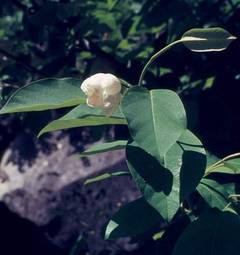
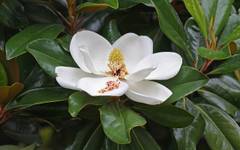
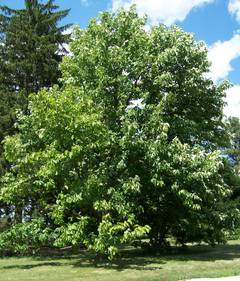
Magnolia virginiana is a deciduous to semi-evergreen tree in the family Magnoliaceae growing 15-35 feet (4.5-10.5 m) tall and 10-20 feet (3-6 m) wide with a narrow upright to pyramidal crown. Deciduousness varies with latitude: fully deciduous in northern populations (zones 5-6), semi-evergreen to evergreen in southern populations (zones 8-10). Leaves are alternate, simple, elliptic, 3-5 inches (8-13 cm) long, glossy dark green above and silvery-white beneath due to a dense pubescence. The two-toned leaves flash silver in wind, an ornamental effect that separates the species from other native magnolias. Flowers are cup-shaped, 2-3 inches (5-8 cm) across, creamy white, with 9-12 tepals and a sweet lemony fragrance perceptible from 15-20 feet (4.5-6 m), placing the species with the strongly fragrant native North American trees. Flowering is intermittent from late May through July, with occasional flowers into September. Fruit is a red aggregate follicle 1.5-2 inches (4-5 cm) long, with bright red seeds dangling from threads (funiculi) in autumn, consumed by birds and small mammals. The species is one of two magnolias native to the eastern United States (with M. grandiflora). Naturally occurs in wet habitats: swamps, bogs, stream margins, and wet woods, but tolerates average garden conditions. The silvery leaf undersides, sweet fragrance, and tolerance of wet soil are the primary horticultural values.
Native Range
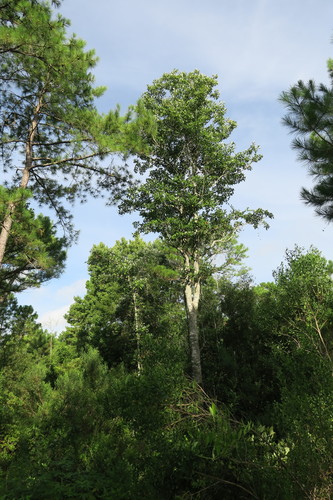
Magnolia virginiana is native to the eastern United States, from Massachusetts south through the coastal plain to Florida and west to Texas. Northern populations are scattered and disjunct; southern populations are continuous. It occurs in swamps, bogs, pocosins, stream margins, and wet lowland forests from near sea level to approximately 1,000 feet (300 m).Suggested Uses
Planted as a specimen tree, patio tree, or in wet-site plantings where other ornamental trees fail. The small size and narrow crown suit residential gardens, patios, and small-lot landscapes. The sweet fragrance near outdoor seating areas is a primary placement consideration. Suited to rain gardens, bioswales, and pond-margin plantings. In the Pacific Northwest, a reliable fragrant flowering tree for moist acidic sites.How to Identify
Appearance
Size & Dimensions
Height15' - 35'
Width/Spread10' - 20'
Bloom Information
Creamy white cup-shaped flowers 2-3 inches (5-8 cm) across open from late May through July, with sporadic flowers into September. Each flower lasts 2-3 days. Fragrance is sweet and lemony, strongest in warm still air. Pollinated by beetles (the ancestral pollinator group for magnolias). Red aggregate fruit develops by September, with red seeds dangling on threads.
Detailed Descriptions
Flower Description
Creamy white; cup-shaped 2-3 inches (5-8 cm); 9-12 tepals; sweet lemony fragrance; intermittent late May through JulyFoliage Description
Glossy dark green above; silvery-white beneath; alternate, simple, elliptic, 3-5 inches (8-13 cm) long; deciduous to semi-evergreenGrowing Conditions
Sun Requirements
Requires 4-8 hours of direct sunlight daily
• Full Sun: 6+ hours of direct sunlight
• Partial Shade: 3-6 hours of direct sunlight
• Full Shade: Less than 3 hours of direct sunlight
Care & Maintenance
Care Guide
Sited in full sun to partial shade in moist to wet acidic soil at pH 5.0-6.5. Tolerates seasonal flooding, clay soil, and boggy conditions. Spaced 10-15 feet (3-4.5 m) apart. Watered regularly; the species tolerates wet conditions that would kill most ornamental trees. Mulched with 3-4 inches (8-10 cm) of acidic organic material. Fed with an acid-forming fertilizer in early spring if soil is not naturally acidic. In the Pacific Northwest, hardy and well-adapted: thrives in the moist acidic conditions west of the Cascades. Northern selections (var. virginiana) are fully deciduous and hardy to zone 5; southern selections (var. australis, sometimes sold as 'Henry Hicks') are semi-evergreen to evergreen.Pruning
Pruned in late winter to early spring before new growth. Dead, crossing, and damaged branches are removed. The species is trained as a single-trunk tree or allowed to develop the natural multi-stemmed form. Tolerates moderate pruning. Suckers may develop at the base; removed if a single-trunk form is desired.Pruning Schedule
Prune: February–March
late winter
Container Growing
Suitable for container growing
Minimum container size: 15 gallons