Overview
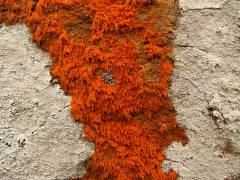
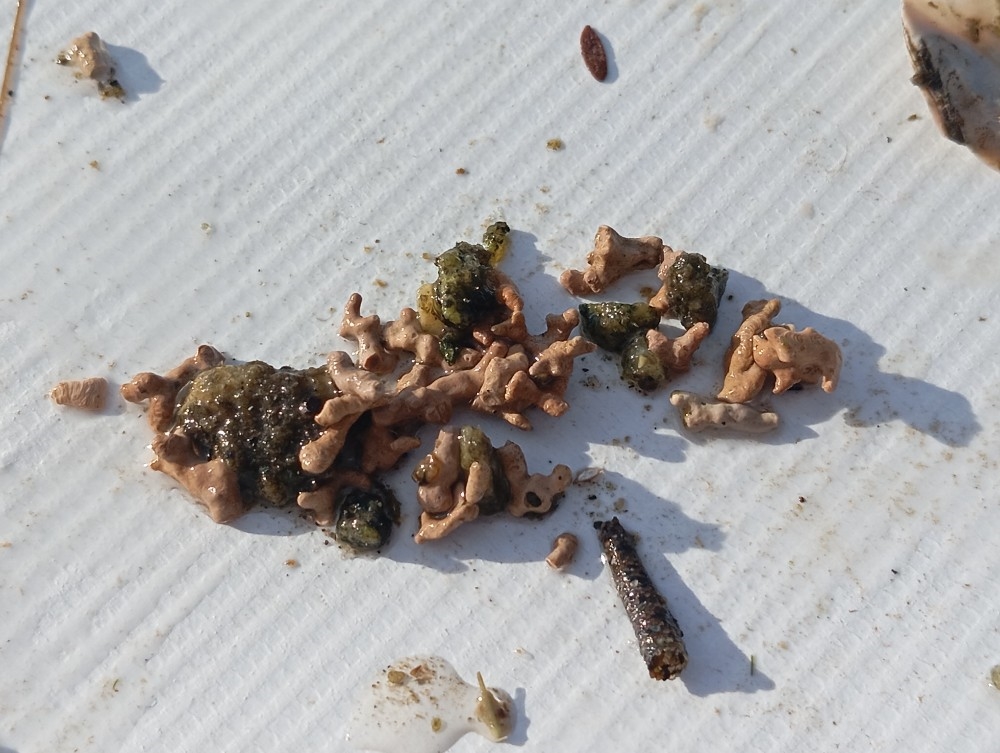
Lithothamnion is a genus of crustose coralline red algae in the family Hapalidiaceae, found in marine waters worldwide from the intertidal zone to depths of 200 m (660 ft) or more. The algae deposit calcium carbonate in their cell walls, forming hard, stony, pink to purple-red crusts and nodules over rock, shells, and other surfaces. Crusts range from a thin coating less than 0.04 inch (1 mm) thick to layered mounds several inches across, with a chalky texture and a surface marked by small wart-like bumps or low ridges. Some species form free-living rounded nodules called rhodoliths or maerl that accumulate into beds on the seabed. Growth is slow, often less than 0.04 inch (1 mm) per year, and individual crusts can persist for decades. The pink colour comes from the pigment phycoerythrin, which masks the green of chlorophyll. Lithothamnion beds build reef-like structures that shelter many marine animals, and the algae help cement coral reefs. Bleaching to white occurs when the alga dies and only the calcified skeleton remains. The genus is sensitive to ocean acidification, which dissolves its calcite skeleton.
Native Range
Lithothamnion occurs in oceans worldwide, from polar to tropical seas, on rocky reefs, in tide pools, and on the seabed down to the limit of light penetration. Maerl beds formed by the genus are widespread on the cool-water continental shelves of the North Atlantic and elsewhere.Suggested Uses
Maerl, the loose nodules formed by Lithothamnion and related algae, has been harvested as a soil conditioner and animal feed additive, and as a source of calcium and trace minerals. Coralline crusts are valued in reef aquariums for their colour and for stabilising live rock. Maerl beds are protected habitats in many regions because of their slow growth and ecological role.How to Identify
Appearance
Bloom Information
Lithothamnion does not flower. It reproduces by spores formed in small calcified chambers called conceptacles, which appear as raised pores or bumps on the crust surface. Reproduction can occur year-round in stable conditions, with some species releasing spores seasonally in response to temperature and light.
Growing Conditions
Water & Climate
Water Needs