Corallina, Genus, officinalis, Species,
- Genus & species
common coralline
North Atlantic rocky coasts: Europe, North Africa, and eastern North America
Overview
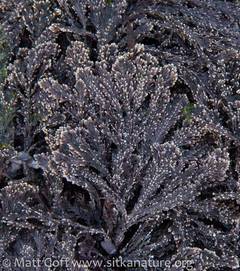
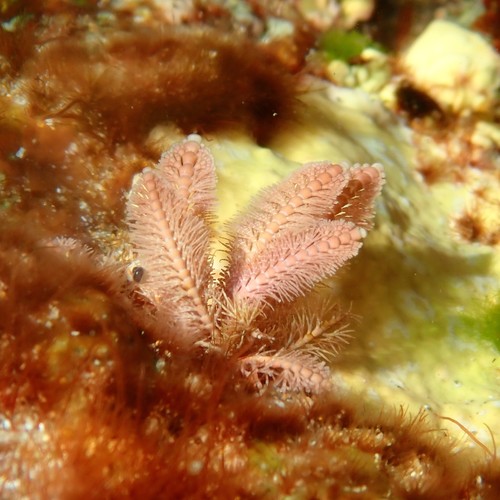
Corallina officinalis is a calcified red alga (seaweed) that forms stiff, pink to purple-red tufts 1-5 inches (2.5-12 cm) tall attached to rock by a crust-like holdfast. The upright fronds are jointed, built from short calcified segments separated by uncalcified flexible joints, which makes the branches both rigid and able to bend in moving water. Branching is mostly opposite and feather-like, giving each frond a pinnate outline. Calcium carbonate laid down in the cell walls gives the plant its hard, brittle texture and chalky pink colour, which bleaches to white when the alga dries, dies, or is stressed by strong light. Swollen reproductive structures (conceptacles) form at the tips of branches and release spores. It grows in dense turfs in rock pools and on the lower shore, where it shelters small marine animals among its branches. Colour fades and growth slows in very bright, warm, or low-water conditions. Fronds are long-lived, with the calcified base persisting and regrowing branches after damage.
Native Range
Found on rocky coasts of the North Atlantic, including the shores of Europe, North Africa, and eastern North America, with related populations recorded more widely. It grows attached to rock in tide pools and on the lower intertidal and shallow subtidal zones, favouring cool, well-oxygenated seawater.Suggested Uses
Found in the wild as a turf-forming alga of rock pools and the lower shore, where it stabilises surfaces and shelters small marine life. In cultivation it is limited to cold-water marine aquaria and reef displays. It has no use as a garden, pond, or terrestrial plant.How to Identify
Appearance
Size & Dimensions
Height1" - 5"
Bloom Information
As a marine alga, Corallina officinalis does not flower. It reproduces by spores released from swollen conceptacles at the branch tips, produced through the warmer months, alongside vegetative regrowth from the persistent calcified base.
Detailed Descriptions
Foliage Description
pink to purple-redCare & Maintenance
Care Guide
A wild marine species of cool temperate rocky shores, it lives permanently submerged or in tide pools and depends on regular wave action and cool, oxygenated seawater. It is kept only in cold-water marine aquaria, where it needs steady water movement, stable salinity, moderate light, and calcium for its calcified skeleton. Warm, still, or low-calcium water causes bleaching and dieback. It is not a garden or freshwater plant and does not grow in soil. Grazing snails and urchins feed on the turf in the wild, and damaged fronds regrow from the surviving crust-like base.Pruning
No pruning applies. In aquaria, dead or bleached white sections are removed by hand to keep the tuft clean, and the calcified base is left intact to regrow. In the wild it requires no management.Container Growing
Suitable for container growing