Overview
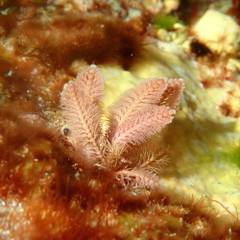
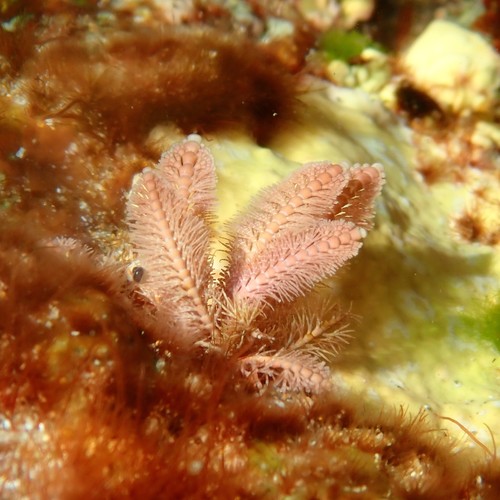
Corallina is a genus of calcified red algae in the family Corallinaceae, common on rocky shores and in tide pools of cool and temperate seas. Unlike crust-forming corallines, Corallina is articulated, meaning the upright fronds are built from chains of hard, calcified segments linked by flexible uncalcified joints that let the plant bend in waves without snapping. The fronds are feathery and much-branched, 1-4 inches (2.5-10 cm) tall, pink to purple-red, fading to white as they bleach when stressed or dead. They grow from an encrusting base attached to rock and often form dense pink turfs in tide pools and on wave-washed ledges. The calcite in the cell walls makes the plant stiff and chalky, and creates shelter and surfaces for small marine animals and other algae. Corallina reproduces by spores formed in small swollen tips or pores on the segments. The genus tolerates strong light and wave action and is a familiar pink turf of the mid- to lower-shore. Calcified red algae like Corallina are sensitive to ocean acidification, which weakens their skeletons.
Native Range
Corallina grows on rocky shores and in tide pools of cool and temperate seas worldwide, attached to rock from the mid-shore into the shallow subtidal zone. It is common on wave-exposed coasts of the North Atlantic, North Pacific, and beyond.Suggested Uses
Corallina forms pink turfs that shelter small marine animals and is studied as an indicator of shore conditions and ocean acidification. It is valued in reef aquaria as part of the coralline community on live rock. The calcified fronds are of interest in research on biomineralisation.How to Identify
Growing Conditions
Water & Climate
Water Needs