Liriope, Genus, muscari, Species, 'Variegata', Cultivar,
- Genus & species
- Cultivar
variegated lilyturf
Garden selection; species {Liriope muscari} is native to China, Japan, Korea, and Taiwan
Overview
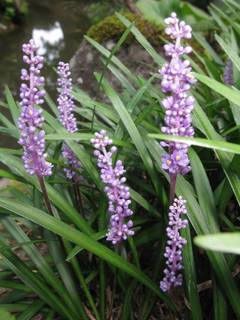
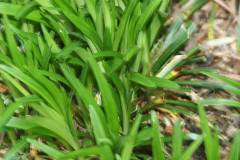
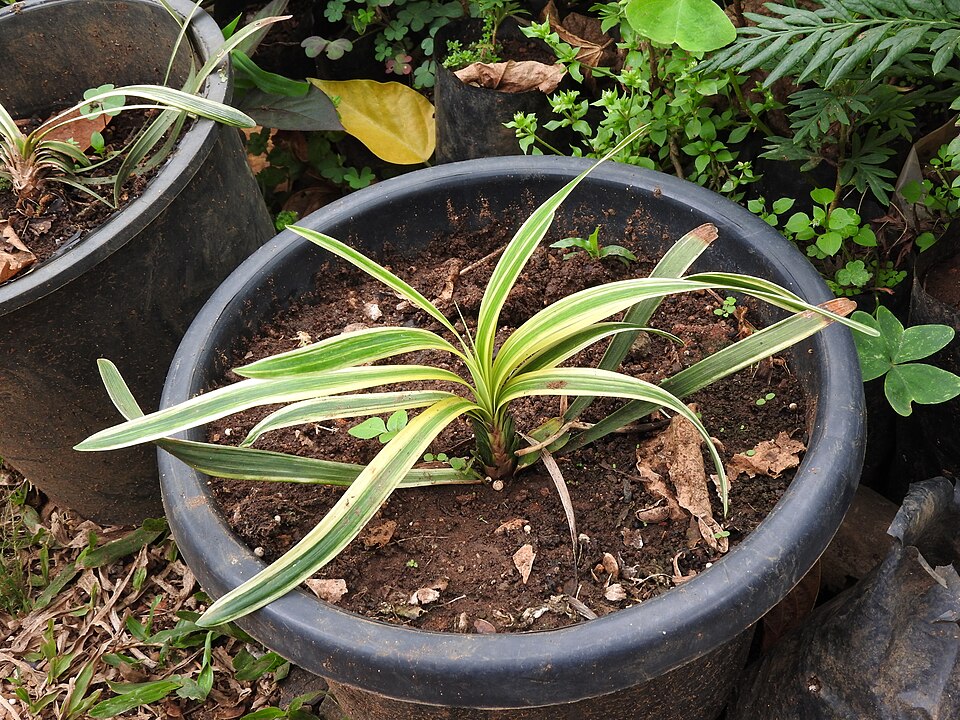
Liriope muscari 'Variegata' is a variegated lilyturf cultivar grown for its green leaves striped longitudinally with creamy-yellow to gold margins, forming a clump 10–15 inches (25–38 cm) tall and 12–18 inches (30–45 cm) wide. Each arching grass-like leaf 10–15 inches (25–38 cm) long carries a dark green central band with one or two cream-to-gold stripes along each edge that run the length of the leaf and persist year-round. Violet-blue flowers in dense spikes 6–8 inches (15–20 cm) long, similar in shape to a grape-hyacinth raceme, appear from early August through mid-September for about 4 weeks, followed by black berries that hold into winter. Mature size sits about 80 percent that of solid-green L. muscari 'Big Blue' (12–18 inches / 30–45 cm tall and 18–24 inches / 45–60 cm wide); the variegation reduces leaf chlorophyll, and the cultivar is one zone less hardy (USDA 6 vs. 5) and grows about 25 percent slower. Cultural needs: partial to full shade with 2–6 hours of filtered light. Direct afternoon sun above 6 hours bleaches and scorches the cream margins. Reverted all-green shoots emerge in about 5–10 percent of clumps over a 2–3 year period and overtake the variegated growth if not removed. The species L. muscari is native to woodland understory in China, Japan, and Taiwan. All parts contain saponins that can cause gastrointestinal upset in pets and humans. Deer and rabbits leave the foliage alone. Snail damage is common in moist shade.
Native Range
The species Liriope muscari is native to woodland understory of China, Japan, Korea, and Taiwan, where it grows in the shade of broadleaf forests on humus-rich soils. L. muscari 'Variegata' is a garden selection chosen for cream-to-gold longitudinal leaf striping.Suggested Uses
Used as a shade edging along borders and walkways, as a low ground cover under trees, in mixed shade beds, and in containers of 3 gallons (11 liters) or larger. The cream-to-gold variegation lifts dark shaded planting areas where solid-green foliage flattens visually. Combines with Hosta cultivars, Heuchera, and ferns such as Polystichum acrostichoides for shade-bed plantings.How to Identify
Appearance
Size & Dimensions
Height10" - 1'3"
Width/Spread1' - 1'6"
Bloom Information
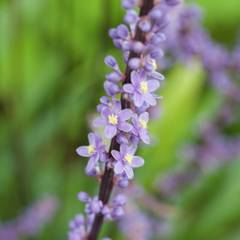
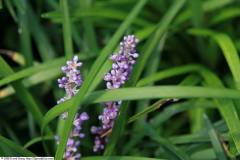
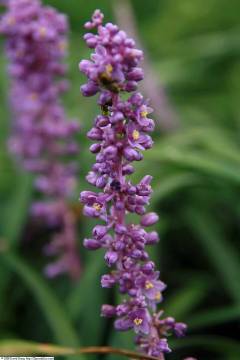
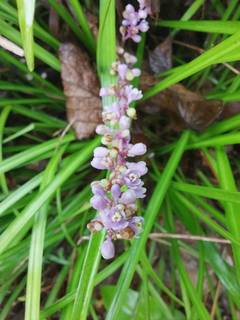
Flowers from early August through mid-September for approximately 4 weeks across USDA zones 7–9; bloom shifts about 2 weeks earlier in zone 10 and 1–2 weeks later in zone 6. Violet-blue flowers in dense spikes 6–8 inches (15–20 cm) long resemble a grape-hyacinth raceme. Black berries follow the flowers and hold into winter. Carries no perceptible fragrance.
Detailed Descriptions
Flower Description
Violet-blue in dense spikes 6-8 inches (15-20 cm) long resembling a grape-hyacinth racemeFoliage Description
Dark green central band with cream-to-gold longitudinal stripes along each margin on arching grass-like leaves 10-15 inches (25-38 cm) longGrowing Conditions
Sun Requirements
Requires 2-6 hours of direct sunlight daily
• Full Sun: 6+ hours of direct sunlight
• Partial Shade: 3-6 hours of direct sunlight
• Full Shade: Less than 3 hours of direct sunlight
Care & Maintenance
Care Guide
Plant in partial to full shade with 2–6 hours of filtered or dappled light; direct afternoon sun above 6 hours bleaches and scorches the cream-to-gold leaf margins. Soil tolerance is broad — clay, loam, and sandy loam at pH 5.5–7.5 all work, with drainage anywhere from average to moist. Water during the first season of establishment, then irrigate only during prolonged drought. Shear the entire clump back to 2–3 inches (5–8 cm) above the crown in late February or early March before new growth pushes; this removes winter-tattered foliage and triggers fresh variegated leaves for the season. Remove any all-green reverted shoots at the base as soon as they appear; ignored reverted shoots overtake the variegated growth within 2–3 seasons.Pruning
Shear the entire clump to 2–3 inches (5–8 cm) above the crown in late February or early March before new growth pushes. Remove any all-green reverted shoots at the base whenever they appear. Lift and divide every 4–5 years if the clump becomes overcrowded.Pruning Schedule
Prune: February–March
early spring
Container Growing
Suitable for container growing
Minimum container size: 3 gallons