Lepidosperma, Genus, semiteres, Species,
- Genus & species
wire rapier-sedge
Overview
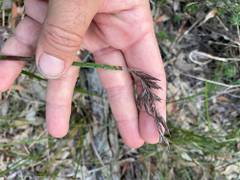
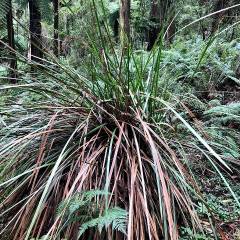
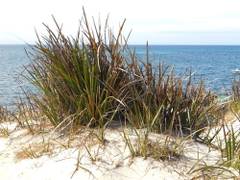
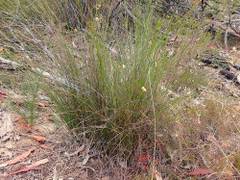
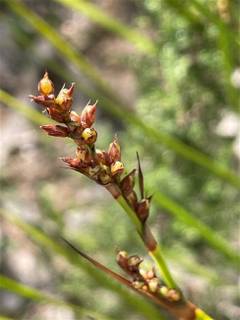
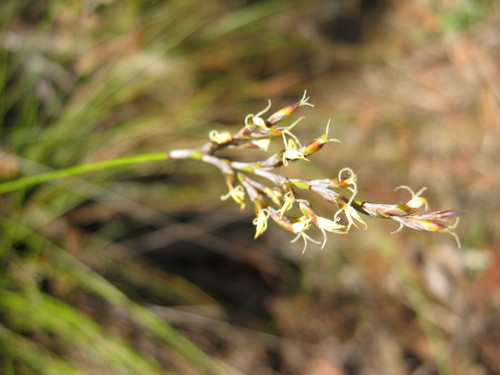
Lepidosperma semiteres is a tufted, evergreen sedge forming clumps 1-3 feet (0.3-0.9 m) tall and 1-2 feet (0.3-0.6 m) wide from short rhizomes. The culms are stiff, wiry, and half-cylindrical in cross-section, blue-green to grey-green, and stay erect through the year. True leaves are reduced, so the rounded culms form most of the plant bulk and give a narrow, vertical texture. Brown to red-brown flower spikelets are clustered in a narrow head near the culm tips, mainly in spring and summer, ripening to small hard nuts. The species grows in heath, shrubland, and open woodland on well-drained sandy and gravelly soils, often in fire-prone country where it reshoots after burning. It tolerates drought and poor soil once established but is slow to bulk up. The stiff wiry clumps hold their form without flopping, though the muted color means it reads as texture rather than display in a planting.
Native Range
Lepidosperma semiteres is native to southern Australia, occurring in southwestern Western Australia and across parts of southeastern Australia. It grows in heath, shrubland, and open woodland on sandy and lateritic soils.Suggested Uses
Planted in native, waterwise, and bushland-style gardens, on sandy banks, and in mass plantings for vertical texture. Used in revegetation and erosion control on dry slopes. Spaced 18-24 inches (45-60 cm) apart for cover.How to Identify
Appearance
Size & Dimensions
Height1' - 3'
Width/Spread1' - 2'
Colors
Bloom Information
Detailed Descriptions
Flower Description
Brown to red-brownFoliage Description
Blue-green to grey-greenGrowing Conditions
Sun Requirements
Requires 5-10 hours of direct sunlight daily
• Full Sun: 6+ hours of direct sunlight
• Partial Shade: 3-6 hours of direct sunlight
• Full Shade: Less than 3 hours of direct sunlight
Care & Maintenance
Care Guide
Lepidosperma semiteres grows in full sun to part shade in well-drained sandy or gravelly soil and tolerates drought and low fertility once established. It accepts seasonal dryness and is suited to waterwise plantings, though it also tolerates winter-wet soils that drain in summer. Cold hardiness covers light to moderate frost, roughly USDA zones 8-10. The species reshoots from the base after fire or hard cutting, which can be used to renew old clumps. No fertilizer is needed on the lean soils it favors.Pruning
Old clumps can be cut back close to the base in late winter to clear dead culms before new growth. Plants reshoot strongly from the rootstock after this renewal. Routine trimming is otherwise unnecessary.Pruning Schedule
Prune: August
winter
Container Growing
Suitable for container growing
Minimum container size: 3 gallons