Lepidosperma, Genus, laterale, Species,
- Genus & species
variable sword-sedge
Overview
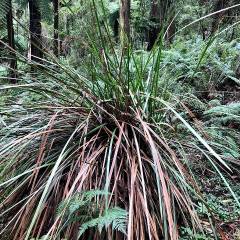
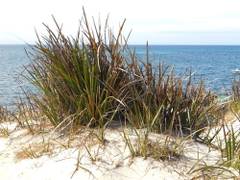
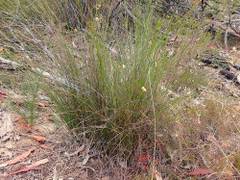
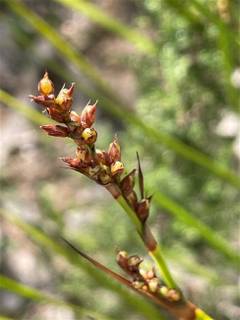
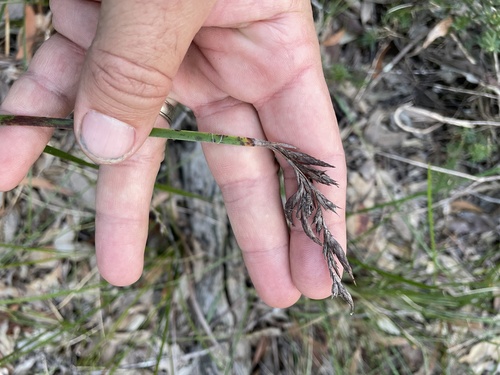
Lepidosperma laterale is a tufted, rhizomatous perennial sedge forming dense clumps of stiff, flattened culms 0.5-1.5 m (20-59 in) tall. The leaves and stems are blue-green to deep green, narrow (2-5 mm / 0.08-0.20 in wide), and sharp-edged, arising from short, woody rhizomes that let the plant spread into colonies 0.3-1 m (12-39 in) across. Branched flowering culms carry clusters of small red-brown to dark brown spikelets in spring and summer, followed by hard, nut-like fruits. The species is highly variable across its range in height, leaf width, and clump density, which accounts for its common name. It grows in a wide range of habitats, from coastal heath and dry sclerophyll forest to moist gullies and the margins of swamps, on soils ranging from sand to clay loam. Established plants tolerate drought, periodic waterlogging, and fire, regenerating from the rhizome after burning. In gardens the sharp leaf margins can cut skin, and the spreading rhizomes may extend beyond the intended planting area over several seasons.
Native Range
Native to eastern and southern Australia, occurring in Queensland, New South Wales, Victoria, Tasmania, and South Australia.Suggested Uses
Used in native and habitat gardens, on embankments for erosion control, and in rain gardens or swale plantings that experience alternating wet and dry conditions. Its tufted form suits mass plantings and informal borders. Also grown as a structural contrast among lower groundcovers.How to Identify
Appearance
Size & Dimensions
Height1'8" - 4'11"
Width/Spread1' - 3'3"
Colors
Bloom Information
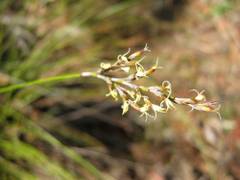
Flowering occurs mainly in spring and summer, when branched culms produce clusters of small red-brown to dark brown spikelets. The flowers lack petals and are wind-pollinated rather than insect-pollinated. Nut-like fruits ripen through summer and persist into autumn.
Detailed Descriptions
Flower Description
red-brown to dark brownFoliage Description
blue-green to dark greenGrowing Conditions
Sun Requirements
Requires 4-8 hours of direct sunlight daily
• Full Sun: 6+ hours of direct sunlight
• Partial Shade: 3-6 hours of direct sunlight
• Full Shade: Less than 3 hours of direct sunlight
Care & Maintenance
Care Guide
Grows in full sun to partial shade on soils from sand to clay loam, with a pH range of about 5.0-7.5. It tolerates both seasonal dryness and periodic waterlogging once established, making it adaptable to most garden positions. Supplemental watering helps establishment in the first season, after which the plant is largely self-sufficient. The rhizomes spread steadily, so a root barrier or periodic division contains the clump in small gardens. It is frost-hardy across its native range. Old culms can be cut back to ground level to refresh the clump.Pruning
Old or untidy clumps can be cut back to near ground level in late winter to early spring to promote fresh growth. Division every few years controls spread and rejuvenates older plants. No routine pruning is otherwise required.Pruning Schedule
Prune: August–September
winterearly spring