Lepidosperma, Genus, carphoides, Species,
- Genus & species
black rapier-sedge
Overview
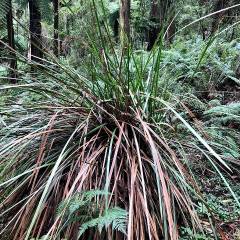
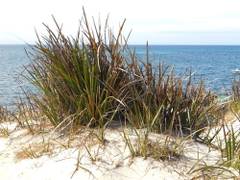
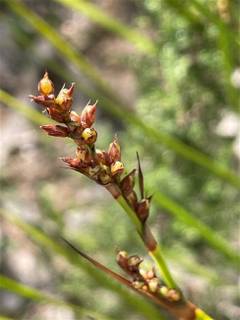
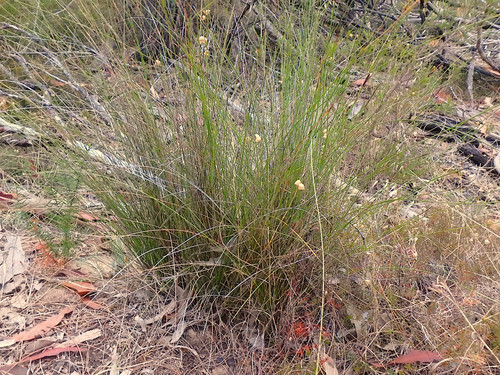
Lepidosperma carphoides is a small evergreen sedge that forms dense, low tussocks of rigid, narrow leaves 4-16 inches (10-40 cm) tall. The leaves are stiff, terete to slightly flattened, and dark green to grey-green, with a wiry texture. Flowering stems carry compact heads of small spikelets that mature to dark brown and near-black, the dark colouring giving the common name black rapier-sedge. Small hard nuts follow. L. carphoides grows in heath, dry sclerophyll forest, and rocky sites across southern Australia, on sharply drained sandy and gravelly soils. It tolerates dry, exposed positions and low-nutrient ground once established. Growth is slow, and the compact clump stays low and tidy. It grows poorly in heavy, wet soils or deep shade.
Native Range
Lepidosperma carphoides is native to southern Australia, occurring in Western Australia, South Australia, Victoria, New South Wales, and Tasmania. It grows in heath, dry sclerophyll forest, and rocky sites on well-drained soils.Suggested Uses
L. carphoides is grown in native gardens, rockeries, and low-water plantings, and as a low edging or massed groundcover on well-drained sites, spaced 8-12 inches (20-30 cm) apart. It also suits crevice and gravel gardens.How to Identify
Appearance
Size & Dimensions
Height4" - 1'4"
Width/Spread4" - 1'
Bloom Information
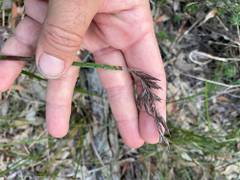
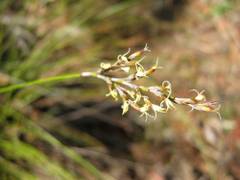
Flowering occurs in spring and early summer, roughly October to December in the native range. Compact heads of small spikelets ripen from green to dark brown and near-black on stiff stems. The dark heads persist for some time before shedding the hard nuts.
Detailed Descriptions
Flower Description
dark brown to near-blackFoliage Description
dark green to grey-greenGrowing Conditions
Sun Requirements
Requires 4-8 hours of direct sunlight daily
• Full Sun: 6+ hours of direct sunlight
• Partial Shade: 3-6 hours of direct sunlight
• Full Shade: Less than 3 hours of direct sunlight
Care & Maintenance
Care Guide
L. carphoides grows in full sun to part shade in sharply drained sandy or gravelly soils. It tolerates dry, exposed positions and low fertility once established and needs little supplementary water. It withstands light frost in USDA zones 9-10. Heavy, wet soils and deep shade reduce growth. The compact clump needs little maintenance beyond removing old foliage.Pruning
Old or untidy foliage can be cut back to near the base in late winter to refresh the clump. L. carphoides reshoots from the base after cutting. No other regular pruning is needed.Pruning Schedule
Prune: July–August
winter
Container Growing
Suitable for container growing
Minimum container size: 2 gallons