Overview
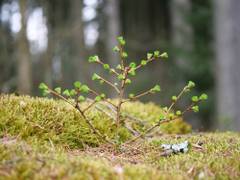
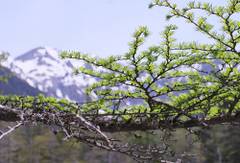
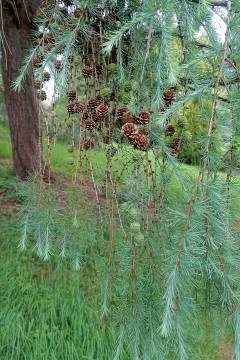
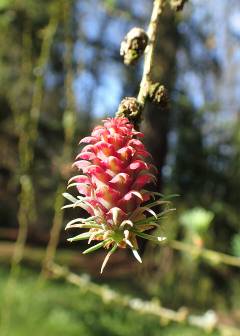
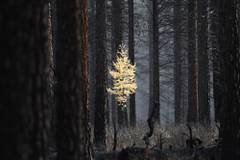
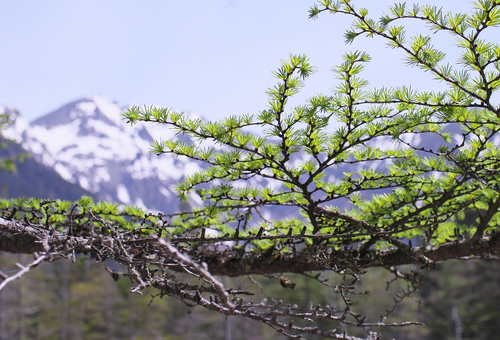
Larix is a genus of about ten to twelve species of deciduous conifers in the pine family (Pinaceae), distributed across the cold temperate and boreal Northern Hemisphere. In contrast to most conifers, larches drop their needles each autumn. Trees grow upright with a straight trunk and conical crown, reaching 50-165 feet (15-50 m) tall depending on species and site. The soft needles, 0.4-2 inches (1-5 cm) long, are borne singly on long shoots and in dense rosettes of 20 to 50 on short woody spurs. They emerge light green in spring and turn yellow to gold before falling in autumn. Larches are monoecious: small yellow male cones and red to pink young female cones appear in spring on the same tree, the female cones ripening to brown woody cones 0.4-2 inches (1-5 cm) long. The genus includes European larch (L. decidua), Japanese larch (L. kaempferi), tamarack (L. laricina), and western larch (L. occidentalis). Larches require full sun and cool climates and grow poorly in heat, humidity, and shade, which limits their use in warm regions. Larch casebearer and larch canker affect several species.
Native Range
The genus is native to the cold temperate and boreal forests of the Northern Hemisphere, including North America, northern and central Europe, Siberia, and the mountains of central and eastern Asia. Species often dominate large areas of boreal and subalpine forest.Suggested Uses
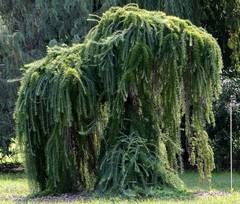
Larches are planted as specimen and timber trees in parks, large gardens, and forestry plantations in cool climates, spaced 10-20 feet (3-6 m) apart. Dwarf and weeping cultivars are grown in rock gardens and as container bonsai. The autumn needle color and bare winter form add seasonal contrast in mixed conifer plantings.How to Identify
Appearance
Size & Dimensions
Height50' - 165'
Width/Spread15' - 30'
Bloom Information
Larches are non-flowering conifers; their reproductive structures are cones rather than flowers. Male and female cones open in spring as the new needles emerge, the young female cones red to pink and the male cones yellow. Pollen is shed over one to two weeks before the female cones ripen to brown by autumn.
Detailed Descriptions
Foliage Description
light green, turning yellow-gold in autumnGrowing Conditions
Sun Requirements
Requires 6-12 hours of direct sunlight daily
• Full Sun: 6+ hours of direct sunlight
• Partial Shade: 3-6 hours of direct sunlight
• Full Shade: Less than 3 hours of direct sunlight
Care & Maintenance
Care Guide
Larix species grow in full sun in moist, well-drained, slightly acidic soils with a pH of 5.0-6.5 and need cool summers to grow well. They tolerate extreme winter cold, with several species hardy to USDA zone 1, but decline in hot, humid climates south of about zone 7. Young trees are watered through dry spells, while established trees draw on deep root systems. The genus does not tolerate shade and thins or dies when overtopped. Larch casebearer, larch sawfly, and larch canker are the main pests and diseases. Trees grow rapidly when young, adding 1-2 feet (30-60 cm) per year on good sites.Pruning
Larches need little pruning and develop a natural conical form on their own. Dead, damaged, or crossing branches are removed in late winter while the tree is leafless. Lower branches are sometimes cleared on specimen trees to expose the trunk, while the central leader is retained to keep the form.Pruning Schedule
Prune: February
winter