Overview
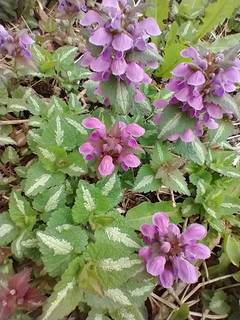
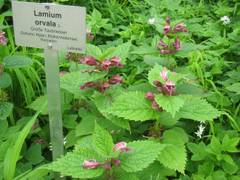
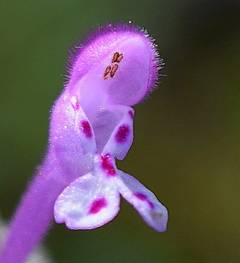
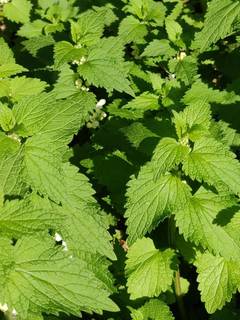
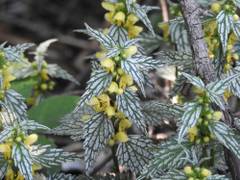
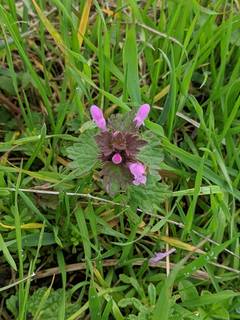
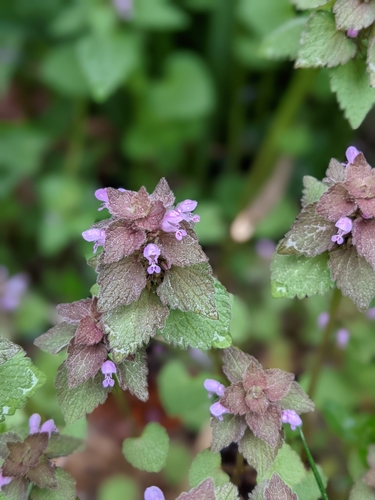
Lamium purpureum is a low winter annual in the mint family, growing 4-12 inches (10-30 cm) tall on square, often reddish stems that branch from the base. The opposite, heart-shaped leaves have scalloped margins and are downy; the lower leaves are green and long-stalked, while the upper leaves crowd together and flush purple to bronze, forming a tinted cone at the stem tip. From late winter through spring it bears whorls of small two-lipped flowers 0.4-0.7 inch (1-1.8 cm) long in shades of pink to red-purple, held among the upper leaves. The plant germinates in fall or late winter, flowers early, sets seed, and dies by early summer, completing its cycle in a single season. It grows in cultivated fields, gardens, roadsides, and other disturbed ground, often carpeting bare soil before other plants emerge. Each plant produces hundreds of seeds, and successive generations can appear within one year where conditions allow. The early flowers are visited by bees and other insects active in cool weather. Unlike the stinging nettle it superficially resembles, this species has no stinging hairs and is not related to true nettles. Foliage and stems are eaten by livestock and wildlife and are not known to be toxic.
Native Range
Lamium purpureum is native to Europe and Asia. It has naturalized across North America and other temperate regions, where it is a common weed of gardens, croplands, and disturbed soils.Suggested Uses
Lamium purpureum is rarely planted deliberately and appears mainly as a volunteer in gardens, fields, and disturbed soil. Where it is allowed to grow, it serves as an early-season nectar source for bees and quick cover on bare ground. Its low, spreading growth fills open soil in late winter before other plants emerge.How to Identify
Appearance
Size & Dimensions
Height4" - 1'
Width/Spread6" - 1'
Bloom Information
Flowering begins in late winter and continues through spring, often March to May, and may start earlier in mild climates. The pink to red-purple flowers open in successive whorls among the upper leaves and are among the earliest blooms available to foraging bees. Flowering overlaps with seed set, and plants fade by early summer.
Detailed Descriptions
Flower Description
pink to red-purpleFoliage Description
green to purple-tingedGrowing Conditions
Sun Requirements
Requires 4-8 hours of direct sunlight daily
• Full Sun: 6+ hours of direct sunlight
• Partial Shade: 3-6 hours of direct sunlight
• Full Shade: Less than 3 hours of direct sunlight
Water & Climate
Water Needs