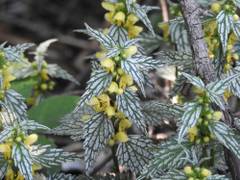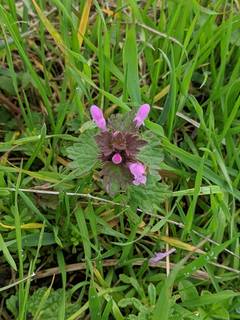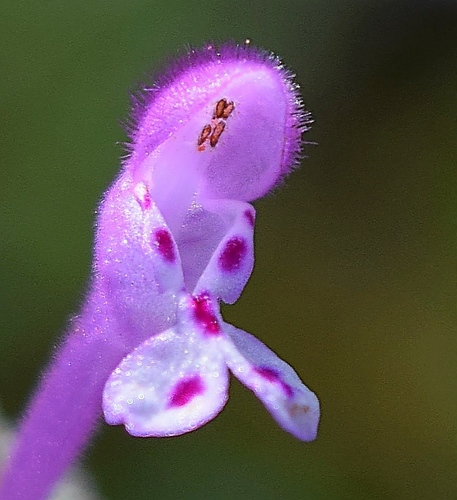
Lamium, Genus, amplexicaule, Species,
- Genus & species
henbit deadnettle
SunFull Sun – Part Shade
WaterMedium
Overview
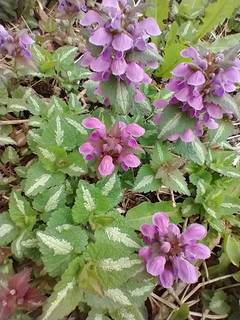
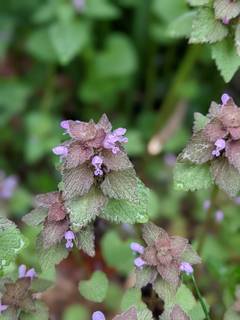
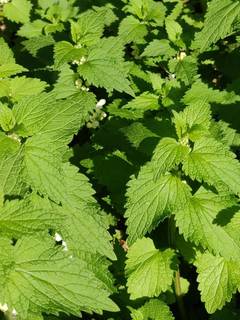
Lamium amplexicaule, henbit deadnettle, is a low winter annual in the mint family, with square, often reddish stems 4-16 inches (10-40 cm) tall that branch from the base and can root where they touch the ground. The rounded to kidney-shaped leaves are 0.4-1 inch (10-25 mm) across with scalloped margins; the lower leaves are stalked, while the upper ones clasp the stem directly, giving the species its name. From late winter into spring it carries whorls of slender, two-lipped tubular flowers about 0.5-0.7 inch (13-18 mm) long in pink to purple, with a hooded upper lip and a spotted lower lip. Some flowers never open and self-pollinate in the bud. It germinates in autumn, overwinters as a small rosette, and flowers early before setting seed and dying back by early summer. It blooms in late winter and is an early source of pollen for bees. It grows on cultivated ground, lawns, and field edges across North America. The young shoots and leaves are edible.
Native Range
Native to Europe, North Africa, and western Asia, where it grows on cultivated and disturbed ground. It has naturalized across North America and other temperate regions. It is now a common weed of lawns, gardens, and crop fields, especially on moist, fertile soil.Suggested Uses
Mostly seen as a winter weed rather than a planted species, though its early bloom feeds emerging pollinators. The young shoots and leaves are edible and sometimes foraged. It has no formal ornamental use and is usually managed in lawns and beds.How to Identify
Appearance
Size & Dimensions
Height4" - 1'4"
Width/Spread6" - 1'
Bloom Information
Flowers from late winter into mid spring, often February to May depending on climate, and sometimes again in autumn. The pink-purple flowers are visited by early bees, and some flowers self-pollinate without opening. Plants set seed quickly and die back as temperatures rise.
Detailed Descriptions
Flower Description
pink to purpleFoliage Description
greenGrowing Conditions
Sun Requirements
Requires 4-10 hours of direct sunlight daily
• Full Sun: 6+ hours of direct sunlight
• Partial Shade: 3-6 hours of direct sunlight
• Full Shade: Less than 3 hours of direct sunlight
Water & Climate
Water Needs
Care & Maintenance
Care Guide
Grows in full sun to part shade on moist, fertile, disturbed soil and is common in cultivated ground. It needs no care and germinates on its own in autumn, growing through mild winters. Because it self-sows heavily, removing plants before seed set limits its spread. It dies back naturally by early summer as the season warms. It has few pests but can host some crop viruses. As a winter annual it depends on a fresh generation from seed each year.Pruning
No pruning is needed. Plants can be pulled or hoed in early spring before they set seed, which limits the next generation. They die back on their own by early summer.Toxicity
Non-toxicPlanting Guide
Planting Methods & Timing
Planting Method
direct sow
Direct Sow Timing
Autumn
Plant Spacing
6 inches