Lamium, Genus, album, Species,
- Genus & species
white deadnettle
Overview
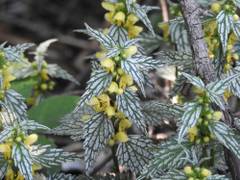
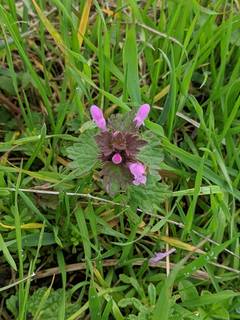
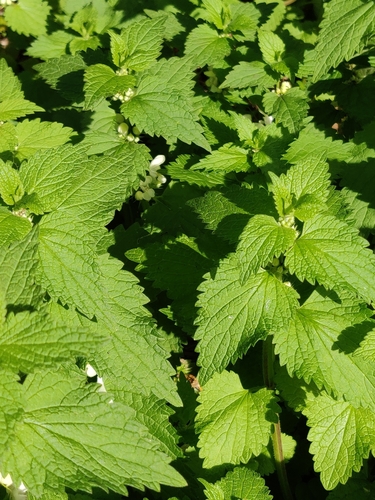
Lamium album is a rhizomatous perennial in the mint family, growing 8-24 inches (20-60 cm) tall on square, slightly hairy stems. The opposite leaves are heart-shaped to triangular, 1.5-3 inches (4-8 cm) long, with coarsely toothed margins and a wrinkled surface that closely resembles those of the stinging nettle, though they have no sting. From spring into autumn, whorls of white, two-lipped, hooded flowers about 0.6-1 inch (1.5-2.5 cm) long cluster in the leaf axils up the stem. The hooded upper lip shelters the pollen, and long-tongued bumblebees are the main pollinators. The plant spreads by creeping rhizomes and seed to form patches along hedgerows, roadsides, and waste ground. Native to Europe and temperate Asia, it has naturalized in North America and other temperate regions. It tolerates a wide range of soils and partial shade, and stays green into mild winters. Because it spreads by rhizome, it can move beyond where it is wanted, and the nettle-like foliage is sometimes mistaken for the true stinging nettle before it flowers.
Native Range
Native to Europe and temperate Asia, in hedgerows, roadsides, woodland edges, and disturbed ground. It has naturalized across much of North America and other temperate areas.Suggested Uses
Grown as groundcover in wild and woodland gardens, along hedge bases, and in pollinator plantings for bumblebees. It fills shaded, rough ground where more delicate plants struggle. Young leaves and shoots are edible cooked, much like spinach.How to Identify
Appearance
Size & Dimensions
Height8" - 2'
Width/Spread1' - 2'
Bloom Information
Blooms over a long period from spring into autumn, generally April through September. Whorls of white flowers open in the leaf axils and draw bumblebees and other long-tongued insects. Flowering continues in flushes as new shoots extend through the season.
Detailed Descriptions
Foliage Description
GreenGrowing Conditions
Sun Requirements
Requires 3-6 hours of direct sunlight daily
• Full Sun: 6+ hours of direct sunlight
• Partial Shade: 3-6 hours of direct sunlight
• Full Shade: Less than 3 hours of direct sunlight