Lactuca, Genus, serriola, Species,
- Genus & species
prickly lettuce
Europe, western Asia, northern Africa; naturalized across all 50 U.S. states, all Canadian provinces, and temperate regions globally
SunFull Sun
Overview
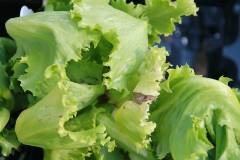
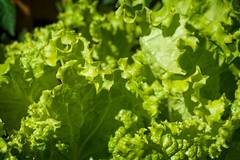
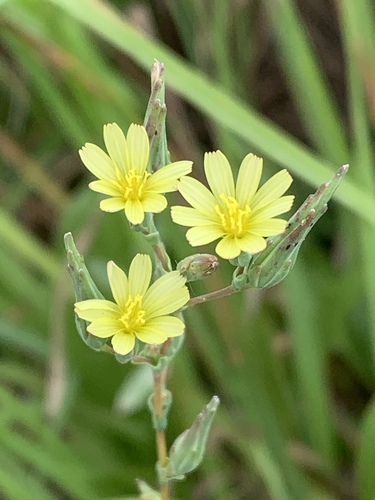
Lactuca serriola is a tall stiff winter annual or biennial weed in the daisy family (Asteraceae) reaching 24–72 inches (60–180 cm) tall and 12–24 inches (30–60 cm) wide. The species is the wild ancestor of cultivated lettuce (L. sativa) and remains a significant crop wild relative for modern lettuce breeding programs. Stems are erect, stiff, branching in the upper half, pale green, with scattered prickles along the lower stem, exuding copious milky white latex when broken. Basal leaves are oblong, 4–12 inches (10–30 cm) long, irregularly lobed to pinnatifid, with a row of stiff sharp prickles along the underside of the midrib — the principal tactile identification character, visible to the eye and felt as backward-pointing barbs when a finger is run from the tip toward the leaf base. Upper stem leaves run smaller, often unlobed, clasping the stem with pointed auricles (ear-like basal projections). In full sun, leaves orient vertically in a north-south plane, minimizing midday sun exposure — the 'compass plant' habit carried in the common name. Flower heads are small, 0.3–0.4 inch (8–10 mm) across, with 12–20 pale yellow ligulate florets, borne in large open panicles. Fruit is a flattened ribbed achene with a slender beak and white pappus. A single plant produces 2,000–10,000 seeds. Seeds germinate primarily in fall, with rosettes overwintering through the following spring. A widespread urban and agricultural weed across all temperate regions of the globe. Not known to be toxic to pets or humans.
Native Range
Lactuca serriola is native to Europe, western Asia, and northern Africa, occurring in roadsides, waste ground, cultivated fields, and urban areas from sea level to approximately 6,500 feet (2,000 m) elevation. The species is established globally as a cosmopolitan weed — present in all 50 U.S. states, all Canadian provinces, and temperate regions across South America, Australia, New Zealand, and much of Asia.Suggested Uses
Used in weed identification courses for teaching the yellow-flowered Asteraceae complex (Lactuca, Sonchus, Crepis, Hypochaeris, Taraxacum) — the prickly midrib is the primary tactile identification exercise separating Lactuca serriola from its close relatives. The compass-plant leaf orientation in full-sun positions is taught in plant ecophysiology courses on leaf-angle optimization and midday heat avoidance. The evolutionary relationship to cultivated lettuce (L. sativa) is taught in crop wild relatives and plant domestication coursework, where L. serriola supplies disease-resistance genes to modern lettuce breeding programs through interspecific hybridization.How to Identify
Appearance
Size & Dimensions
Height2' - 6'
Width/Spread1' - 2'
Bloom Information
Small flower heads 0.3–0.4 inch (8–10 mm) across with 12–20 pale yellow ligulate florets appear in large open panicles from June through September in temperate zones. Individual flower heads open for one morning and close by afternoon — a behavior shared across yellow-flowered Asteraceae. The large open panicle produces heads sequentially over a 6–8 week bloom window. The species is self-pollinating. Seeds mature 2 weeks after flowering and disperse by wind via the white pappus. In the Pacific Northwest, peak flowering runs July through August.
Detailed Descriptions
Flower Description
Pale yellow; small flower heads 0.3-0.4 inch across with 12-20 ligulate florets in large open panicles; June-SeptemberFoliage Description
Blue-green; oblong 4-12 inches long, irregularly lobed to pinnatifid, with a row of stiff sharp prickles along the underside of the midrib; upper stem leaves smaller, often unlobed, clasping with pointed auriclesGrowing Conditions
Sun Requirements
Requires 6-12 hours of direct sunlight daily
• Full Sun: 6+ hours of direct sunlight
• Partial Shade: 3-6 hours of direct sunlight
• Full Shade: Less than 3 hours of direct sunlight