Lactuca, Genus, spp., Multiple species,
- Genus
- Multiple species
wild lettuces
Temperate Northern Hemisphere, mainly Eurasia and Africa
SunFull Sun – Part Shade
Overview
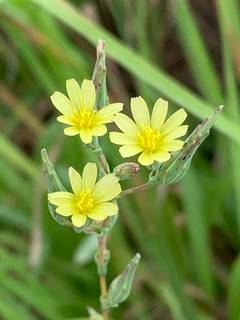
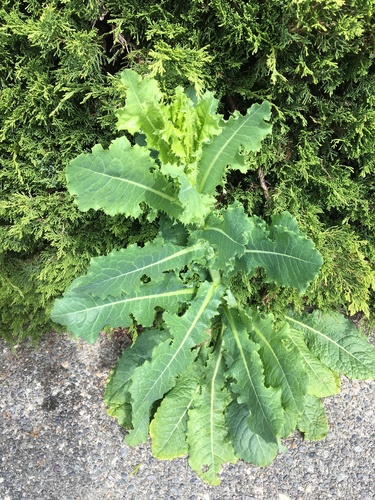
Lactuca is a genus of about 50 to 100 species of annual, biennial, and short-lived perennial herbs in the family Asteraceae, spread across the temperate Northern Hemisphere and into Africa. All carry a bitter milky latex that flows when the stems or leaves are cut. Plants begin as a basal rosette and send up branched flowering stems 1 to 7 feet (30 to 210 cm) tall, lined with lobed or toothed leaves that often clasp the stem. Small composite flower heads, each a cluster of strap-shaped ray florets, open mostly in yellow, with blue or white in some species, and close by midday. The genus includes the cultivated salad lettuce L. sativa, the widespread weed prickly lettuce L. serriola, and wild lettuce L. virosa, whose latex has been used as a mild sedative. Seeds are tipped with a parachute of white hairs and scatter on the wind. The weedy species self-sow heavily and can colonize gardens and disturbed ground.
Native Range
Lactuca is native across Europe, Asia, and Africa, with several species also native to North America. Prickly lettuce L. serriola, originally Eurasian, is now naturalized worldwide along roadsides, fields, and waste ground, while L. canadensis is a North American native of clearings and edges.Suggested Uses
Cultivated lettuces are grown as a cool-season salad crop in beds, rows, and containers, spaced 8 to 12 inches (20 to 30 cm) apart. The taller wild species are sometimes grown in wildlife and pollinator plantings, where the flowers feed small bees and the seeds feed finches. Most wild species are treated as weeds rather than ornamentals.How to Identify
Appearance
Size & Dimensions
Height1' - 7'
Width/Spread6" - 2'
Bloom Information
Flowering runs through summer into autumn, roughly July to September, with each head open only for a morning. Plants flower over many weeks as new heads form along the branched stem. The fluffy seed heads follow within a week or two of each flush.
Detailed Descriptions
Flower Description
yellow, occasionally blue or whiteFoliage Description
green, sometimes blue-green or red-tingedGrowing Conditions
Sun Requirements
Requires 6-8 hours of direct sunlight daily
• Full Sun: 6+ hours of direct sunlight
• Partial Shade: 3-6 hours of direct sunlight
• Full Shade: Less than 3 hours of direct sunlight
Water & Climate
Water Needs
Drought Tolerance
Drought tolerant when established
Care & Maintenance
Care Guide
Most Lactuca grow in full sun on moist, fertile, well-drained soil at pH 6.0 to 7.5, and the salad types run quickly to seed in heat and drought. Sow the cultivated kinds in cool weather, in early spring or late summer, since high temperatures trigger bolting and bitterness. Water steadily to keep leafy growth tender, as dry spells turn the foliage bitter and tough. The wild and weedy species tolerate poor, dry soil and need no care. Aphids, downy mildew, and slugs are the main problems on the salad crops. Removing flower stalks before seed sets limits self-sowing of the weedy kinds.Pruning
Cut salad Lactuca leaves as needed, taking the outer leaves first or harvesting the whole rosette before it bolts. Remove the tall flower stalks of the weedy species before the seed ripens to limit spread. No other trimming is needed.Container Growing
Suitable for container growing
Minimum container size: 1 gallons
Toxicity
Non-toxicPlanting Guide
Planting Methods & Timing
Planting Method
direct sow
Direct Sow Timing
Early spring as soon as the soil can be worked, or late summer for a fall crop
Days to Maturity
45–70 days
Plant Spacing
10 inches