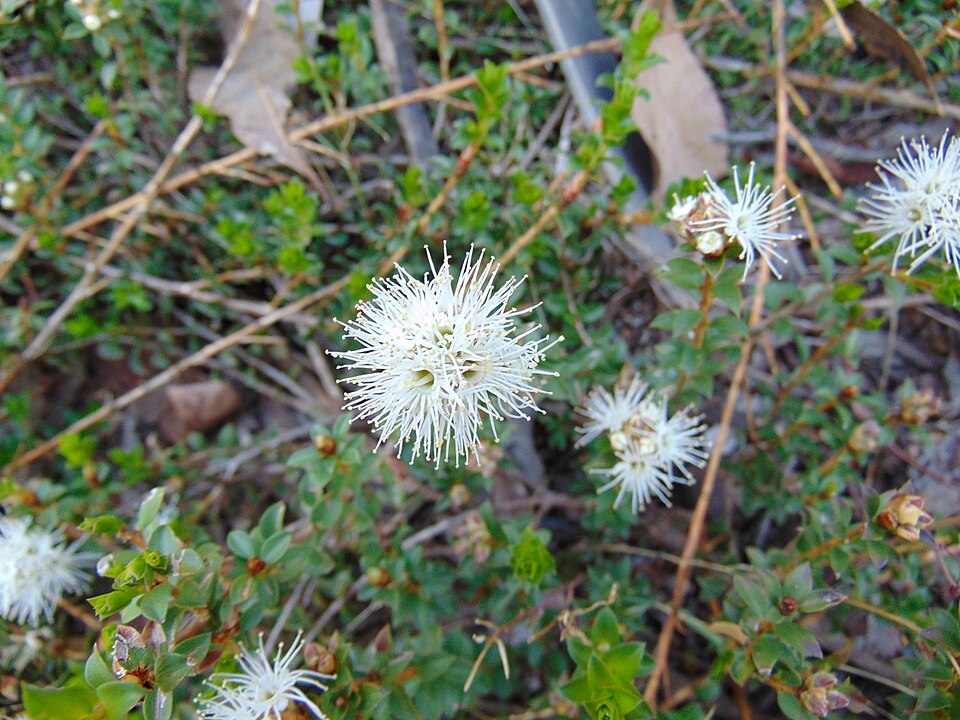
Kunzea, Genus, pomifera, Species,
- Genus & species
Muntries
Overview
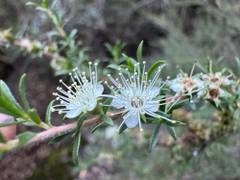
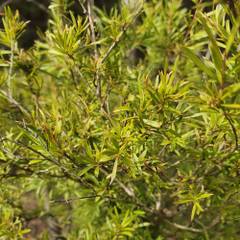
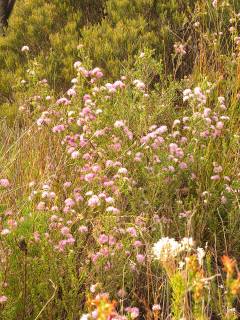
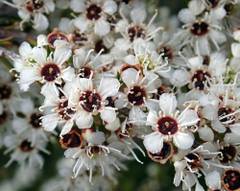
Kunzea pomifera is an evergreen, woody, prostrate to low-spreading shrub growing 4-12 inches (10-30 cm) tall and spreading 3-10 feet (0.9-3 m) wide, with trailing stems that root where they touch the ground. The small leaves are oval to wedge-shaped, 0.1-0.3 inch (3-8 mm) long, glossy dark green and crowded along the stems. Small white to cream flowers about 0.2-0.3 inch (5-8 mm) across, with five petals and many protruding stamens, open in dense clusters along the stems in late spring and summer. The fruit is a fleshy, rounded berry 0.2-0.5 inch (5-12 mm) across, green ripening to red-purple, with a sweet, spicy, apple-like flavor. Berries ripen in late summer and autumn and are harvested as a bush food. The plant forms a dense mat over soil and rock and tolerates sandy, low-fertility ground, salt-laden wind, and drought once established.
Native Range
Native to southern Australia, in South Australia, western Victoria, and far south-western New South Wales, with coastal and near-coastal populations. Grows on sandy soils and limestone in coastal heath, dune scrub, and mallee, often in exposed positions.Suggested Uses
Grown as a groundcover and bush-food crop in gardens, on banks, and in coastal plantings, spaced 3-5 feet (0.9-1.5 m) apart. The berries are eaten fresh and used in jams, sauces, and baking. The trailing habit suits rockeries, raised beds, and spilling over walls.How to Identify
Appearance
Size & Dimensions
Height4" - 1'
Width/Spread3' - 10'
Bloom Information
Detailed Descriptions
Flower Description
white to creamFoliage Description
dark greenGrowing Conditions
Sun Requirements
Requires 6-10 hours of direct sunlight daily
• Full Sun: 6+ hours of direct sunlight
• Partial Shade: 3-6 hours of direct sunlight
• Full Shade: Less than 3 hours of direct sunlight
Care & Maintenance
Care Guide
Grows in full sun on well-drained sandy or limestone soils and tolerates coastal exposure, salt wind, and drought once established. Plants grow slowly and fruit more in open, sunny positions with good airflow. Occasional deep watering during the first dry season and through fruit set supports establishment and crop size. Root rot develops in heavy or poorly drained soils. Birds take ripening berries, and the low mat can be invaded by weeds until it closes over.Pruning
Light trimming after fruiting keeps the mat dense and removes straggly stems. Plants tolerate cutting back to green growth but are slow to reshoot from bare old wood. Rooted stems can be separated to propagate new plants.Container Growing
Suitable for container growing
Minimum container size: 5 gallons