Kunzea, Genus, ambigua, Species,
- Genus & species
butterfly bush
Overview
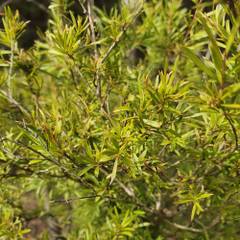
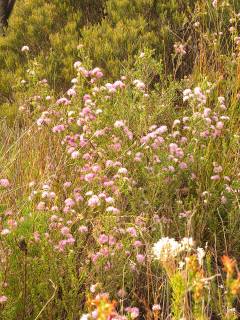
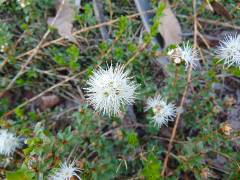
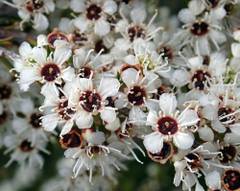
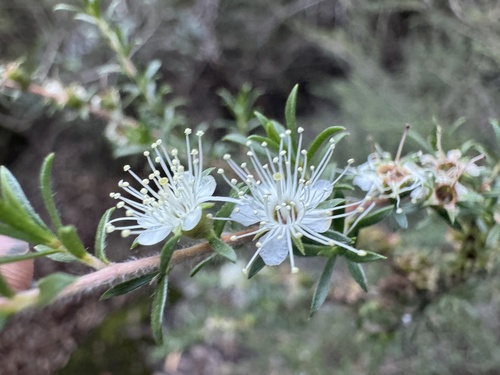
Kunzea ambigua is an evergreen shrub reaching 6-13 feet (2-4 m) tall with an arching, bushy habit and slender branches. The small leaves are linear to narrow-oblong, 0.2-0.5 inch (5-12 mm) long, crowded along the stems, and aromatic when crushed. Masses of small white flowers, each about 0.3 inch (8 mm) across with prominent stamens that give a fluffy appearance, are borne in clusters along the branches in late spring and early summer. The flowers are fragrant and rich in nectar. The fruit is a small woody capsule. Growth is fast and plants are moderately short-lived, often lasting 10-15 years. The species tolerates sandy and rocky soils, salt-laden coastal wind, and light frost but is sensitive to prolonged waterlogging.
Native Range
Native to southeastern Australia, in coastal and near-coastal New South Wales, Victoria, and Tasmania. Grows in heath, coastal scrub, and dry forest on sandy and rocky soils, often in exposed sites near the sea.Suggested Uses
Used as a screening and windbreak shrub in coastal and native gardens, spaced 5-8 feet (1.5-2.4 m) apart. The fragrant flowers suit habitat and pollinator plantings. Fast growth and short lifespan make it useful for quick screening rather than as a long-term planting.How to Identify
Appearance
Size & Dimensions
Height6' - 13'
Width/Spread6' - 13'
Bloom Information
Detailed Descriptions
Foliage Description
greenGrowing Conditions
Sun Requirements
Requires 6-10 hours of direct sunlight daily
• Full Sun: 6+ hours of direct sunlight
• Partial Shade: 3-6 hours of direct sunlight
• Full Shade: Less than 3 hours of direct sunlight
Care & Maintenance
Care Guide
Grows in full sun in sandy or rocky, well-drained soils and tolerates coastal wind and salt spray. Established plants are drought-tolerant and need watering only in extended dry spells. Light frost is tolerated, but prolonged waterlogging causes root problems. Growth is fast and plants respond to pruning with dense regrowth. Few pests affect it. Plants are moderately short-lived and may be replaced after 10-15 years.Pruning
Prune after flowering to maintain a compact shape and prolong plant life. The species tolerates moderate pruning into leafy wood and resprouts well. Regular trimming prevents the open, leggy form that develops with age.Pruning Schedule
Prune: December–January
summer