Image 1 of 5
1 / 5
© Donald Hobern from Copenhagen, Denmark, some rights reserved (CC-BY) · Wikimedia Commons
Kunzea, Genus, spp., Multiple species,
- Genus
- Multiple species
kunzea
Australia, with one species extending to New Zealand
Overview
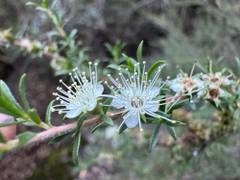
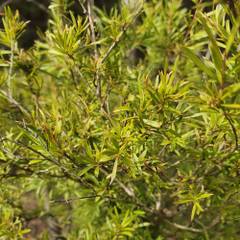
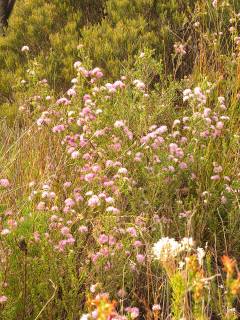
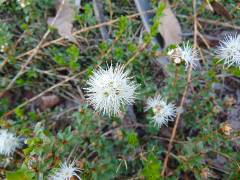
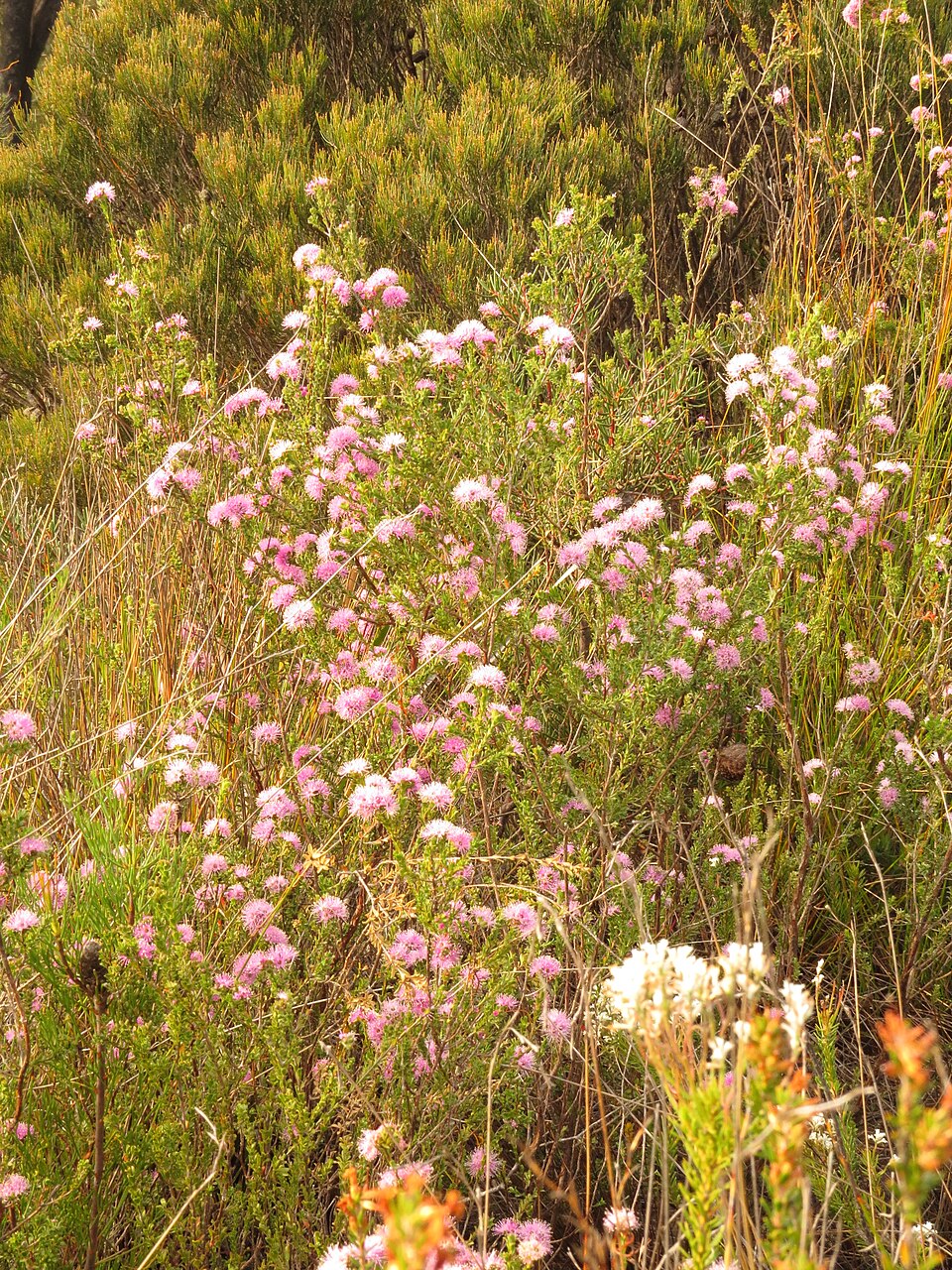
Kunzea is a genus of about 50 species of evergreen shrubs, and occasionally small trees, in the myrtle family Myrtaceae. Nearly all species are endemic to Australia; K. ericoides also occurs in New Zealand, where it is known as kanuka. Plants range from low spreading groundcovers under 12 in (30 cm) to upright shrubs reaching 16 ft (5 m). The leaves are small, narrow, and often aromatic when crushed, 0.1-0.8 in (3-20 mm) long and densely set along wiry stems. Flowers cluster at the branch tips in white, pink, or red, each small bloom carrying a brush of long stamens that gives the cluster a fluffy look, similar to the related Leptospermum and Callistemon. Blooming occurs mainly in spring and early summer. The genus grows in heath, woodland, and rocky sites on nutrient-poor soils and tolerates drought once established. Most species are frost-sensitive and grow outdoors in USDA zones 9 to 11. K. pomifera produces edible berries known as muntries, harvested in southern Australia.
Native Range
Kunzea is native to Australia, where the genus reaches its greatest diversity in the south-west and south-east. K. ericoides extends to New Zealand. Plants occur in heathland, open woodland, and rocky coastal and montane sites.Suggested Uses
Kunzea species are planted as flowering shrubs, low hedges, and groundcovers in dry and coastal gardens, and the nectar-rich flowers draw birds and insects. Prostrate forms cover banks and spill over walls. K. pomifera is grown for its edible muntrie berries.How to Identify
Appearance
Size & Dimensions
Height6" - 16'
Width/Spread1'6" - 13'
Bloom Information
Most species flower in spring and early summer, roughly September to December in their native southern hemisphere range and spring to early summer in cultivation north of the equator. Bloom lasts several weeks. Some species flower sporadically at other times.
Detailed Descriptions
Flower Description
white, pink, or redFoliage Description
greenGrowing Conditions
Sun Requirements
Requires 6-10 hours of direct sunlight daily
• Full Sun: 6+ hours of direct sunlight
• Partial Shade: 3-6 hours of direct sunlight
• Full Shade: Less than 3 hours of direct sunlight
Care & Maintenance
Care Guide
Kunzea species grow in full sun in light, free-draining, sandy or gravelly soil with a pH from about 5.0 to 7.0. They tolerate nutrient-poor ground, and established plants withstand extended dry periods. Most are frost-sensitive and grow outdoors in USDA zones 9 to 11; in colder climates they are kept in containers and protected over winter. Sharp drainage matters, as the roots are damaged by waterlogged soil. Plants respond to light trimming after flowering with denser growth. Like many Australian natives they are phosphorus-sensitive, growing in low-phosphorus conditions and harmed by standard fertilizers.Pruning
Light trimming after flowering keeps plants compact and encourages branching, since flowers form on the previous season growth. Hard cutting into bare old wood is avoided because many species do not regenerate from leafless stems. Spent flower clusters need no removal.Container Growing
Suitable for container growing
Minimum container size: 5 gallons