Jasminum, Genus, sambac, Species,
- Genus & species
Arabian jasmine
Eastern Himalaya and the Indian subcontinent
Overview
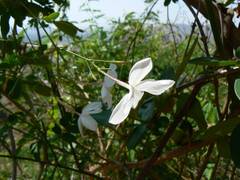
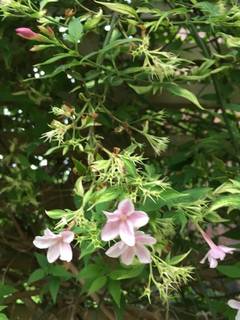
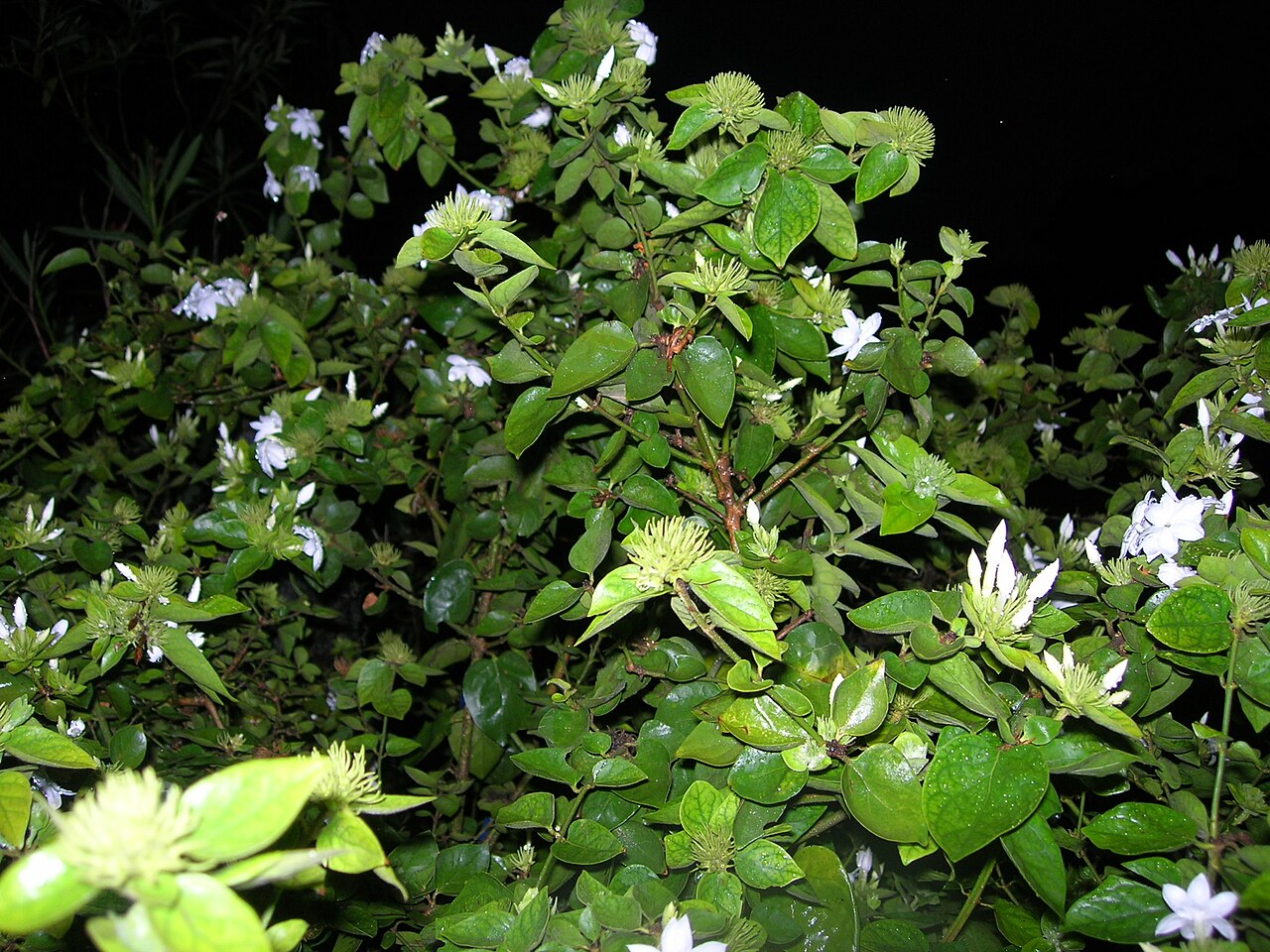
Jasminum sambac is an evergreen shrub or scrambling climber growing 3-10 feet (0.9-3 m) tall and 2-5 feet (0.6-1.5 m) wide, shifting between a mounding shrub and a loose vine depending on support and pruning. Stems are slender and terete, green when young and turning grey-brown and woody with age, with a covering of short hairs. Leaves are opposite, simple, ovate to elliptic, 1.5-4 inches (4-10 cm) long, glossy dark green above with sunken veins and hairs along the veins beneath. Flowers open white and age to pink-purple before dropping, measure 0.8-1.2 inches (2-3 cm) across, and carry a sweet scent that intensifies after dusk. Cymes hold 3-12 flowers; double-flowered forms such as J. sambac 'Grand Duke of Tuscany' rarely set fruit, while single forms occasionally produce black berries about 0.4 inch (1 cm) across. Outdoor growth is limited to USDA zones 9-11: temperatures below 28F (-2C) kill top growth and sustained frost kills the plant, which restricts use across most of North America to containers moved indoors for winter. Indoor plants held under 4 hours of direct light produce elongated stems and few flowers, and winter humidity below 50 percent commonly causes leaf drop.
Native Range
Jasminum sambac is native to the eastern Himalaya and adjacent parts of the Indian subcontinent, though its precise wild range is obscured by more than a thousand years of cultivation across tropical Asia. It has naturalized in southern China, mainland Southeast Asia, and many Pacific and Caribbean islands. It is the national flower of the Philippines and one of three national flowers of Indonesia.Suggested Uses
Grown in containers on patios and beside doorways and windows within reach of the evening scent, and trained onto trellises or low fences in zones 9-11. Flowers are picked for garlands, hair ornaments, and jasmine tea, with buds harvested before they open. In colder zones it is kept as a conservatory or houseplant in a 3-5 gallon (11-19 L) container moved outdoors after the last spring frost.How to Identify
Appearance
Size & Dimensions
Height3' - 10'
Width/Spread2' - 5'
Bloom Information
In frost-free climates J. sambac flowers repeatedly through the year, with the heaviest flushes from May to October where night temperatures stay above 65F (18C). Individual flowers open in late afternoon, release scent overnight, and wither within 24-36 hours. Container plants overwintered indoors typically pause flowering from November to March and resume once night temperatures and day length increase.
Detailed Descriptions
Flower Description
White, ageing to pink-purpleFoliage Description
Glossy dark greenGrowing Conditions
Sun Requirements
Requires 6-10 hours of direct sunlight daily
• Full Sun: 6+ hours of direct sunlight
• Partial Shade: 3-6 hours of direct sunlight
• Full Shade: Less than 3 hours of direct sunlight
Care & Maintenance
Care Guide
Growth is fastest in full sun to light shade, with 6-8 hours of direct light producing the densest flowering; under 4 hours the stems elongate and flower counts drop. Soil should be moist and free-draining with a pH of 6.0-7.5, since heavy clay that stays saturated causes root rot. Watering when the top 1 inch (2.5 cm) of the medium dries keeps the root zone evenly moist during flowering, and water use falls sharply once growth slows below 60F (16C). A balanced fertilizer applied every 4-6 weeks during active growth sustains repeat flowering, while excess nitrogen produces leafy shoots with fewer flowers. In containers a 3-5 gallon (11-19 L) pot suits a mature plant. Spider mites and mealybugs build up on plants held indoors through winter, particularly in dry air.Pruning
J. sambac flowers on new wood, so cutting stems back by one-third to one-half in late winter or early spring, before growth resumes, produces the shoots that carry the season flush. Thinning the oldest grey woody stems at the base every 2-3 years keeps the interior from becoming congested and bare. Light tip pruning after each flowering flush during the growing season triggers branching; pruning after early autumn removes wood that would otherwise flower in the following months in frost-free settings.Pruning Schedule
Prune: February–March
early spring
Container Growing
Suitable for container growing
Minimum container size: 3 gallons