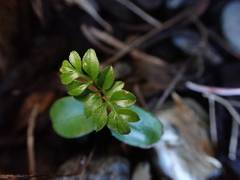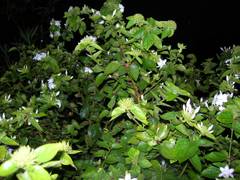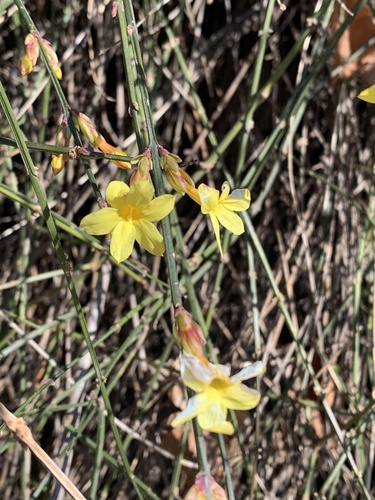
Jasminum, Genus, spp., Multiple species,
- Genus
- Multiple species
jasmine
Warm-temperate and tropical Asia, Africa, and Oceania
Overview
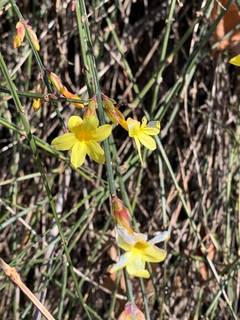
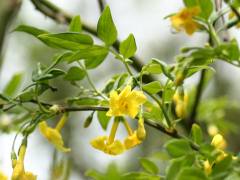
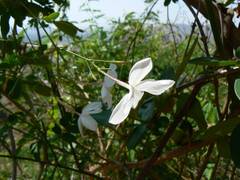
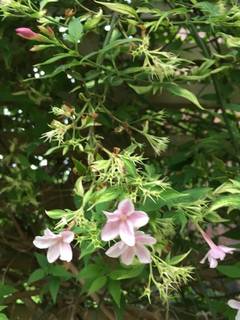
Jasminum is a genus of about 200 species of shrubs and woody climbers in the olive family (Oleaceae), native to warm-temperate and tropical regions of Eurasia, Africa, and Oceania. Habit ranges from twining vines that scramble 10–30 feet (3–9 m) through supports to self-supporting shrubs 3–7 feet (1–2 m) high. The leaves are opposite or alternate and may be simple or divided into several leaflets, and they are deciduous, evergreen, or semi-evergreen depending on the species and climate. Flowers are tubular at the base and open into a flat star of five or more lobes, most often white or yellow and in a few species flushed pink. Many species, including common jasmine J. officinale and Arabian jasmine J. sambac, carry a strong sweet scent that is used in perfume and to flavour tea; winter jasmine J. nudiflorum, by contrast, bears yellow flowers on bare stems in winter and has no fragrance. Most species flower over a long season and grow quickly once established. They need a warm, sheltered position, as many are damaged by hard frost. Jasminum grows in full sun to light shade in well-drained soil and twines around support where stems are given something to climb.
Native Range
Jasminum is native to warm regions of Asia, Africa, and Oceania, with the greatest number of species in southern and southeastern Asia. Species grow in forest margins, thickets, and rocky slopes, and several are now grown far beyond their native range.Suggested Uses
Jasminum is grown on trellises, pergolas, fences, and walls, and as a scented plant near doorways and seating. Shrubby species are planted in borders and as informal hedging, while tender kinds are grown in conservatories and pots. J. sambac is grown for cut flowers and for scenting tea.How to Identify
Appearance
Size & Dimensions
Height3' - 30'
Width/Spread3' - 15'
Bloom Information
Flowering season varies by species: summer-flowering kinds such as J. officinale bloom for many weeks from late spring into autumn, while J. nudiflorum flowers in winter on leafless stems. The scented species open in the evening and draw night-flying moths. In warm climates some species flower nearly year-round.
Detailed Descriptions
Flower Description
White, yellow, or pinkFoliage Description
GreenGrowing Conditions
Sun Requirements
Requires 4-8 hours of direct sunlight daily
• Full Sun: 6+ hours of direct sunlight
• Partial Shade: 3-6 hours of direct sunlight
• Full Shade: Less than 3 hours of direct sunlight
Water & Climate
Water Needs