Jasminum, Genus, officinale, Species,
- Genus & species
common jasmine
Caucasus through Himalayas to western China
Overview
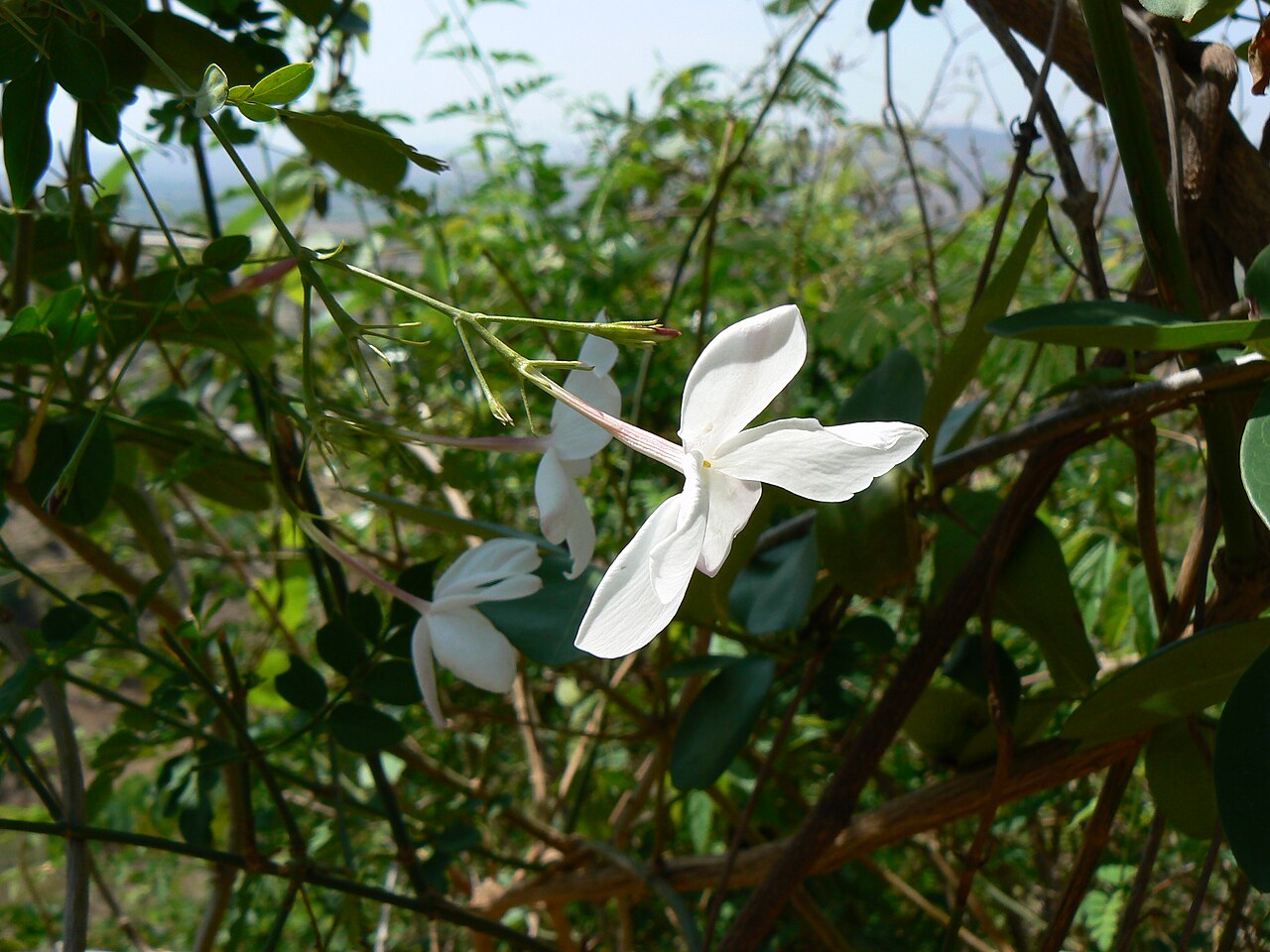
Jasminum officinale is a vigorous, twining, semi-evergreen to deciduous woody climber reaching 15–30 feet (4.5–9 m) tall with support and spreading 6–10 feet (1.8–3 m) wide. Flowers are white, tubular with 4–5 spreading lobes, 0.75–1 inch (2–2.5 cm) across, borne in terminal cymes of 3–5 from June through September over a 12–16 week bloom window. Fragrance is strong and sweet, carrying 10–20 feet (3–6 m) from the plant on still evenings; intensity peaks between dusk and midnight as temperatures cool. Leaves are pinnate with 5–9 pointed leaflets, each 1–2.5 inches (2.5–6 cm) long, medium green. Semi-evergreen in USDA zones 8–9 with partial leaf retention; deciduous in zone 7 with winter leaf drop. Twining stems wrap counter-clockwise around supports and require trellis, arbor, pergola, or wall wire. Growth rate is 6–10 feet (1.8–3 m) per year in favorable conditions, reaching mature size in 3 years. Hardy to USDA zone 7; in zone 7 with exposed winter wind the top growth can die back and regrow from the base the following spring. The species has been cultivated in the Mediterranean region since at least the 16th century for jasmine oil production and is not known to be toxic to pets or humans.
Native Range
Jasminum officinale is native from the Caucasus and northern Iran through Afghanistan, Pakistan, and the Himalayas to western China, occurring in scrublands and forest margins at 3,000–10,000 feet (900–3,000 m). The species has been cultivated in the Mediterranean region since at least the 16th century for the perfume industry.Suggested Uses
Used on arbors, pergolas, trellises, and wall wires near seating areas, doorways, and windows opened in summer evenings at 6–10 foot (1.8–3 m) spacing. The evening-peak fragrance reaches 10–20 feet (3–6 m) on still nights, making placement near outdoor dining or sleeping areas a common siting choice. Vigorous 6–10 feet (1.8–3 m) annual growth overwhelms small structures and requires yearly pruning; deciduous habit in zone 7 leaves bare twining stems in winter. The climber does not grow without support and does not tolerate exposed windy sites in zone 7 or waterlogged soils.How to Identify
Appearance
Size & Dimensions
Height15' - 30'
Width/Spread6' - 10'
Bloom Information
Terminal cymes of 3–5 white, tubular, strongly fragrant flowers 0.75–1 inch (2–2.5 cm) across appear from June through September over a 12–16 week bloom window. Individual cymes open over 7–10 days; new cymes form on current-season growth throughout the window. Fragrance intensifies after dusk and peaks between 8 PM and midnight.
Detailed Descriptions
Flower Description
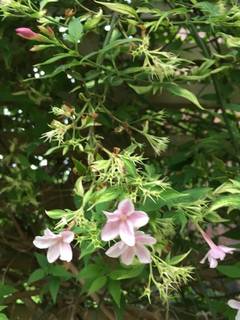
White tubular flowers 0.75-1 inch across with 4-5 spreading lobes; strongly fragrant; in terminal cymes of 3-5Foliage Description
Medium green, pinnate with 5-9 pointed leaflets, each 1-2.5 inches longGrowing Conditions
Sun Requirements
Requires 5-10 hours of direct sunlight daily
• Full Sun: 6+ hours of direct sunlight
• Partial Shade: 3-6 hours of direct sunlight
• Full Shade: Less than 3 hours of direct sunlight
Care & Maintenance
Care Guide
Grow in full sun to partial shade with 5–10 hours of direct light in average, well-drained loam, clay, or sandy soil at pH 6.0–7.5. A support structure rated for 20–50 pounds (9–23 kg) is required — an 8-foot trellis, arbor, pergola, or horizontal wall wires spaced 12 inches (30 cm) apart. Water deeply once per week during the first two growing seasons, then reduce to supplemental irrigation only during extended drought. Apply a balanced fertilizer in early spring at 1 tablespoon per square foot (30 g/m²) of root zone. Annual pruning after the main bloom flush is required to manage the 6–10 feet (1.8–3 m) of yearly growth. Hardy to USDA zone 7; exposed cold winter wind in zone 7 causes top dieback with regrowth from the base.Pruning
Prune after the main flowering flush in late August–September to thin congested growth and control size. Remove up to one-third of the oldest stems at the base annually to encourage new flowering wood. Renovation pruning to 2 feet (60 cm) in late winter is tolerated and yields full regrowth by the following summer, with reduced bloom in the recovery year.Pruning Schedule
Prune: August–September
summer