Jasminum, Genus, humile, Species,
- Genus & species
Italian jasmine
Himalayas to SW China (Afghanistan to China; open forests, rocky slopes 3000-9000 ft / 900-2700 m)
Overview
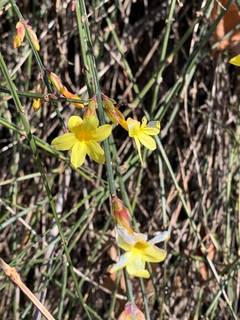
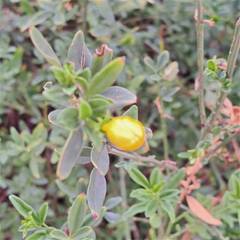
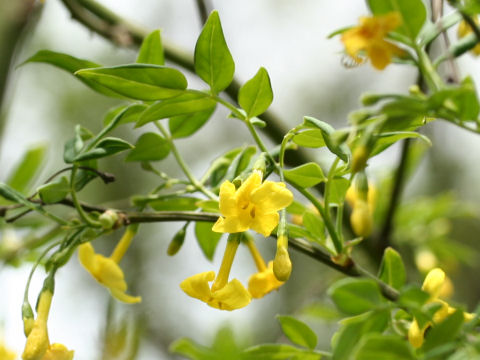
Jasminum humile is a semi-evergreen to evergreen mounding shrub reaching 4–8 feet (1.2–2.4 m) tall with a spread of 4–8 feet (1.2–2.4 m). The species separates from most of the Jasminum genus through its self-supporting shrub habit: unlike the twining climbing jasmines (Jasminum officinale, Jasminum polyanthum) that require a trellis or support structure, Jasminum humile forms an upright arching shrub without mechanical support and carries its own weight through stiff woody stems. Clusters of 3–12 bright yellow tubular flowers 0.5–0.75 inches (1.3–2 cm) across carry 5 spreading lobes in the five-petaled star arrangement typical of the genus, and the bright yellow coloration runs different from the white flowers of the climbing jasmines in general cultivation. Flowers open from June through August across a long 8–10 week summer bloom window on current-season wood. Fragrance runs scentless to faintly sweet—the intense jasmine fragrance of white-flowered species is absent, which is a limitation for gardens grown specifically for evening scent. Pinnate leaves carry 3–7 leaflets each 1–2 inches (2.5–5 cm) long, glossy dark green on the upper surface. Foliage runs semi-evergreen in mild winters (zones 8–9) and deciduous in zone 7. Growth rate is moderate to fast. Hardy to zone 7.
Native Range
Jasminum humile is native to a broad Asian range extending from the western Himalayas (Afghanistan, Pakistan, northern India) eastward through Nepal, Bhutan, and southwestern China, growing in open forests, thickets, and rocky slopes at 3,000–9,000 feet (900–2,700 m) elevation. The extensive native altitudinal and geographic range gives the species tolerance of variable garden conditions across temperate climates.Suggested Uses
Planted as a specimen shrub, informal hedge, or sloped bank cover at 4–6 foot (1.2–1.8 m) spacing in zone-7-and-warmer gardens. The self-supporting shrub habit carries the plant without the trellis infrastructure required by climbing jasmines, which opens summer yellow jasmine bloom to free-standing garden positions where a climbing support is not practical. Long 8–10 week bloom across the summer months supplies sustained yellow flower color through the garden's warm season. Absence of strong fragrance is a limitation for evening-scent gardens where the fragrant white-flowered Jasminum officinale serves that purpose better. Cold exposed sites below zone 7, wet soils, and deep shade are poor fits for the species.How to Identify
Appearance
Size & Dimensions
Height4' - 8'
Width/Spread4' - 8'
Bloom Information
Clusters of 3–12 bright yellow tubular flowers 0.5–0.75 inches (1.3–2 cm) across with 5 spreading lobes open from June through August. Flowers are scentless or only faintly fragrant. Bloom occurs on current-season wood, which means the flower display builds through the growing season on new shoots and continues across an extended 8–10 week window without the brief concentrated burst of spring-blooming jasmines. Pollinators visit the flowers for nectar through the long bloom period.
Detailed Descriptions
Flower Description
Bright yellow tubular flowers 0.5-0.75 inches with 5 lobes; clusters of 3-12; scentless or faintly fragrantFoliage Description
Glossy dark green; pinnate with 3-7 leaflets each 1-2 inchesGrowing Conditions
Sun Requirements
Requires 4-10 hours of direct sunlight daily
• Full Sun: 6+ hours of direct sunlight
• Partial Shade: 3-6 hours of direct sunlight
• Full Shade: Less than 3 hours of direct sunlight
Care & Maintenance
Care Guide
Full sun to partial shade in average well-drained soil (pH 6.0–7.5) matches the species' cultivation needs across a wide range of garden conditions. Hardy to zone 7 (0°F / −18°C). Foliage runs semi-evergreen in mild winters (zones 8–9) and deciduous in zone 7 cold conditions. Bloom on current-season wood means spring pruning does not reduce the summer flower display—new shoots carry flower buds that open within the same growing season. The species tolerates a range of soils including clay and sandy loams, and established plants accept moderate drought through summer. Cold drying winter winds in zone 7 positions cause foliage desiccation and benefit from sheltered siting.Pruning
Pruning in early spring (March–April) before new growth emerges shapes the shrub and removes winter-damaged wood without sacrificing the coming bloom, since flowers form on the current season's new shoots after spring pruning. Hard rejuvenation cutback to 12 inches tolerates renewal on leggy overgrown specimens and regrows the full form within 2–3 seasons. Thinning the oldest woody stems at ground level maintains vigor in established plants.Pruning Schedule
Prune: March–April
early spring
Container Growing
Suitable for container growing
Minimum container size: 7 gallons