1 / 5
© Famartin, some rights reserved (CC-BY-SA) · Wikimedia Commons
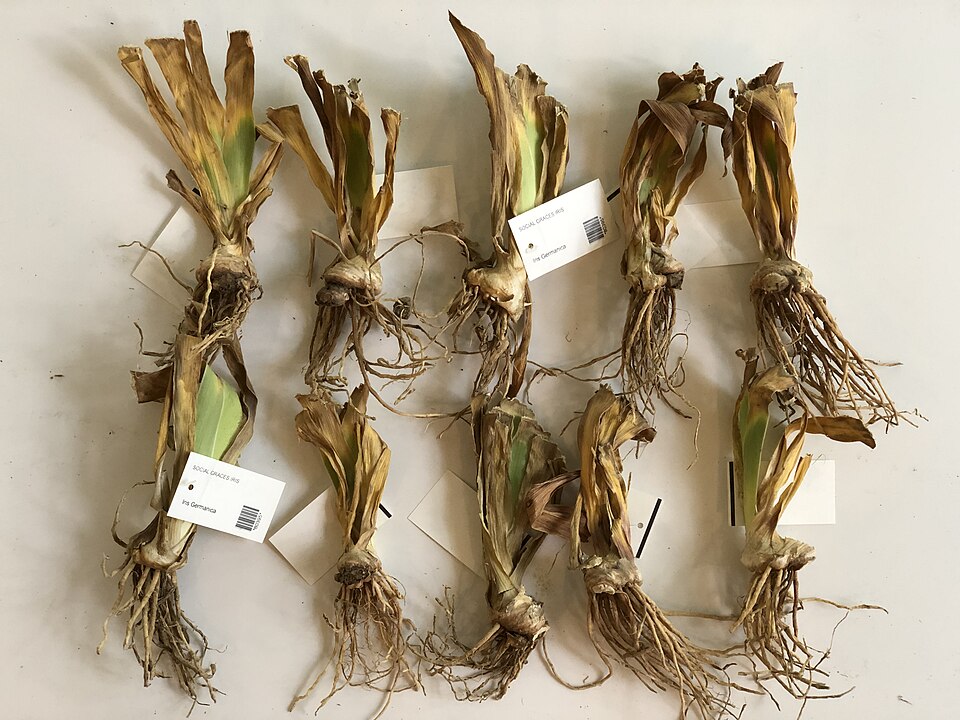
Iris germanica 'Social Graces'
Social Graces Bearded Iris
Overview
Iris germanica 'Social Graces' is a tall bearded iris reaching 32-36 inches (80-91 cm) tall in flower, with sword-shaped grey-green foliage 18-24 inches (45-60 cm) high. The semi-flaring blooms measure 5-6 inches (13-15 cm) across, with three upright standards and three downward-curving falls. Standards are pale pink; falls are white washed pink at the edges with apricot beards centered on the falls. The fan of grey-green foliage emerges from a thick rhizome that grows partly above the soil surface. Spring bloom occurs from mid-May through mid-June across zones 4-8, with each individual flower lasting 3-5 days and a flower stalk producing 6-9 buds in sequence. Rhizomes spread laterally 4-6 inches (10-15 cm) per season and form clumps 18-30 inches (45-75 cm) wide within 3-4 years. Foliage often shows leaf-spot streaking by midsummer in humid climates and yellows from the tips downward as flowering ends. Bloom is reduced in zones 9-10 where the cool dormancy period required for next-season flower initiation is insufficient. Pink-toned cultivars may bleach to white in zones 9-10 sun. All parts of the rhizome are toxic if ingested.
Native Range
Iris germanica is not a true wild species but a cultivated complex of garden hybrids derived from Iris species native to southern and central Europe. The 'Social Graces' cultivar is a garden selection and has no wild range.Suggested Uses
Used in mixed perennial borders and dedicated iris beds spaced 12-18 inches (30-45 cm) apart, where the soft pink and white blooms contribute pastel color in late spring. Container plantings use pots of at least 5 gallons (19 L) with sharp drainage; container plants need fall division more frequently than in-ground plantings. Limited to USDA zones 4-9; bloom decreases in zones 9-10 due to insufficient cool dormancy.How to Identify
Appearance
Size & Dimensions
Height2'8" - 3'
Width/Spread1'6" - 2'6"
Reaches mature size in approximately 3 years
Colors
Bloom Information
Bloom occurs from mid-May through mid-June across zones 4-8, with each individual flower lasting 3-5 days and a flower stalk producing 6-9 buds opening in sequence over 2-3 weeks. A mature clump produces 5-12 flower stalks per season. Bloom is reduced in zones 9-10 where insufficient cool dormancy limits next-season flower initiation; pink color may bleach to white under intense southern sun.Detailed Descriptions
Flower Description
pale pink standards over white falls washed pink at the edges, with apricot beardsFoliage Description
grey-greenGrowing Conditions
Sun Requirements
Requires 6-12 hours of direct sunlight daily
• Full Sun: 6+ hours of direct sunlight
• Partial Shade: 3-6 hours of direct sunlight
• Full Shade: Less than 3 hours of direct sunlight
Care & Maintenance
Care Guide
Rhizomes are planted with the top half exposed above the soil surface in midsummer through early fall, spaced 12-18 inches (30-45 cm) apart. Weekly watering during establishment supports root development; mature plants tolerate drought once foliage hardens. A low-nitrogen fertilizer applied in early spring and again after the first bloom contributes to next-season bud initiation. Iris borer (Macronoctua onusta) tunnels into rhizomes from May through July, particularly where old leaf debris accumulates around the crown. Bacterial soft rot (Erwinia carotovora) develops in waterlogged soils and warm humid weather. Clumps require division every 3-4 years in late summer when rhizomes become crowded and bloom declines.Pruning
Spent flower stalks are cut to ground level after bloom to prevent seed formation and direct energy to rhizome growth. Foliage fans are trimmed back to 4-6 inches (10-15 cm) in late autumn after frost or in early spring to remove disease-harboring leaf material. Old, damaged, or yellowing leaves cut at the base during the growing season do not affect plant vigor.Pruning Schedule
J
F
M
A
M
J
J
A
S
O
N
D
summerfall
Maintenance Level
moderateContainer Growing
✓ Suitable for container growing
Minimum container size: 5 gallons