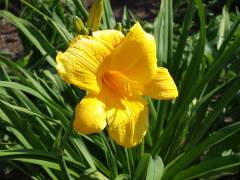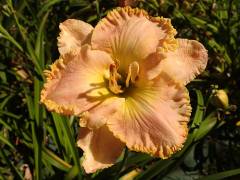
Hemerocallis, Genus, 'Moonlit Masquerade', Cultivar,
- Genus
- Cultivar
moonlit masquerade daylily
Garden hybrid; registered by Patrick Salter, 1992; Stout Silver Medal 2010
Overview
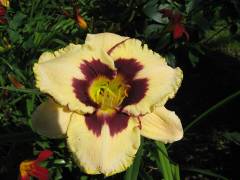
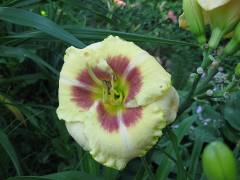
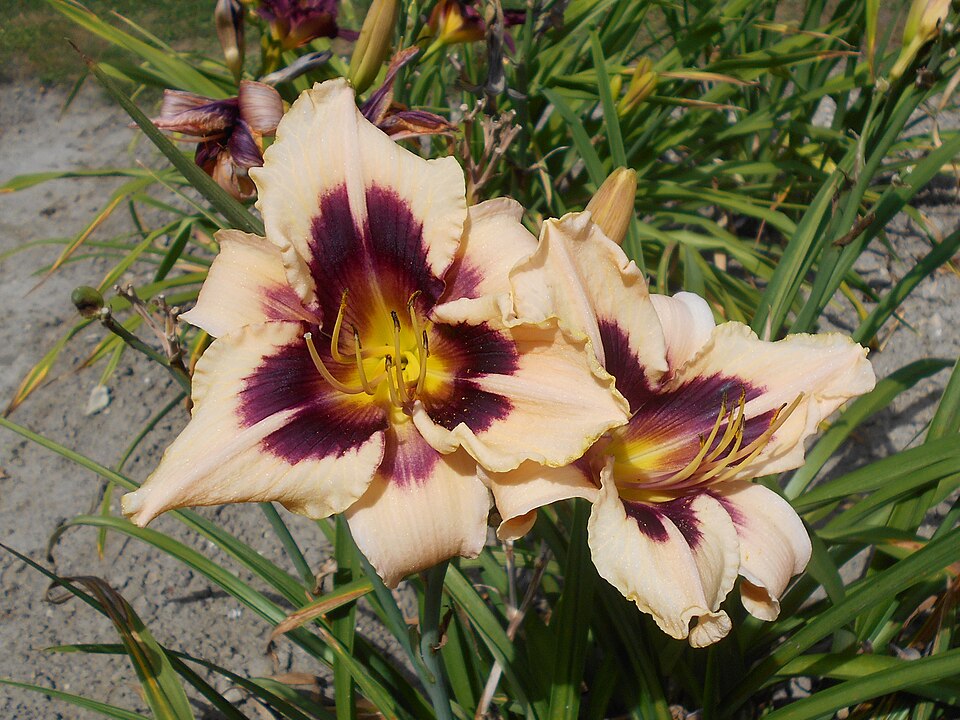
Hemerocallis 'Moonlit Masquerade' is a semi-evergreen daylily growing 24-28 inches (60-70 cm) tall and 18-24 inches (45-60 cm) wide. Creamy-white to pale ivory flowers 5.5 inches (14 cm) with a dark purple eye zone surrounding a green throat — a high-contrast bicolor pattern. Each flower lasts one day — the genus name Hemerocallis means 'beauty for a day' (Greek hemera + kallos). Fifteen to twenty or more buds per scape provide 5-7 weeks of bloom from June through August. Medium green arching strap-shaped foliage 18-24 inches (45-60 cm). In the family Asphodelaceae (formerly Liliaceae). Registered by Patrick Salter in 1992. The 2010 Stout Silver Medal winner — the highest award of the American Hemerocallis Society. Tetraploid. Semi-evergreen: the foliage persists through mild winters in zones 7-9 but goes dormant in colder zones. Not deer-resistant — deer readily browse daylily foliage and flowers. All Hemerocallis species and cultivars are toxic to cats — nephrotoxic (even small amounts of any plant part can cause kidney failure in cats). Safe for dogs and humans. Drought-tolerant once established. Tolerates clay soil. Full sun for the heaviest flowering. Zones 3-9. Growth rate is moderate to fast.
Native Range
Garden hybrid. Registered by Patrick Salter in 1992. The genus Hemerocallis is native to eastern Asia (China, Korea, Japan).Suggested Uses
Commonly planted in borders and mass plantings in zones 3-9. The high-contrast white-and-purple flowers provide 5-7 weeks of color. Tolerates clay. Not deer-resistant. Toxic to cats (nephrotoxic). Stout Silver Medal 2010.How to Identify
Appearance
Size & Dimensions
Height2' - 2'4"
Width/Spread1'6" - 2'
Bloom Information
Summer (June-August), lasting 5-7 weeks. Creamy-white flowers with dark purple eye zone, 5.5 inches (14 cm). Each flower lasts one day; 15-20+ buds per scape. Remove spent scapes after all buds open.
Detailed Descriptions
Flower Description
Creamy-white to pale ivory petals with a dark purple eye zone surrounding a green throat; 5.5 inches (14 cm)Foliage Description
Medium green, arching strap-shaped, 18-24 inches (45-60 cm)Growing Conditions
Sun Requirements
Requires 6-10 hours of direct sunlight daily
• Full Sun: 6+ hours of direct sunlight
• Partial Shade: 3-6 hours of direct sunlight
• Full Shade: Less than 3 hours of direct sunlight
Care & Maintenance
Care Guide
Full sun (6+ hours) for the heaviest flowering. Tolerates clay and a range of soil types. Drought-tolerant once established. Not deer-resistant. All Hemerocallis are nephrotoxic to cats — even small amounts cause kidney failure. Safe for dogs and humans. Remove spent scapes. Divide every 3-4 years. Zones 3-9.Pruning
Remove spent flower scapes at the base after all buds have opened. Cut back foliage in fall (September) if tattered, or in early spring (March) before new growth. Divide congested clumps every 3-4 years in spring or fall.Pruning Schedule
Prune: March & September
fallearly spring
Container Growing
Suitable for container growing
Minimum container size: 3 gallons