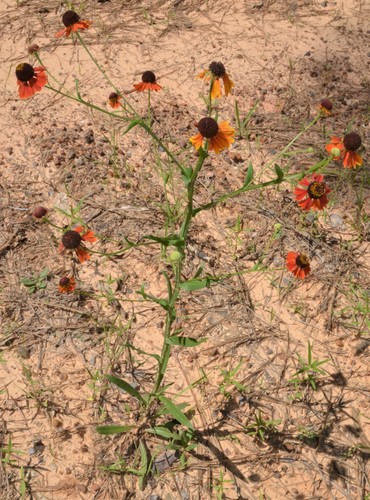
Helenium, Genus, flexuosum, Species,
- Genus & species
southern sneezeweed
Overview
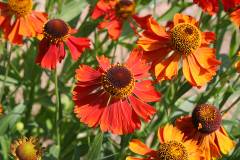
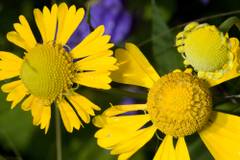
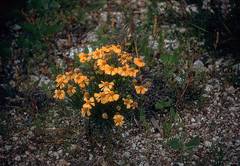
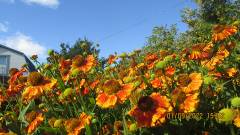
Helenium flexuosum is an erect herbaceous perennial in the aster family, growing 16-40 inches (40-100 cm) tall from a basal cluster of leaves. The stems carry narrow, lance-shaped leaves that run down the stem as thin green wings, a feature shared across the sneezeweeds. The flower heads, 1-1.5 inches (2.5-4 cm) across, have a domed central disk that is purple-brown to nearly maroon, surrounded by yellow ray petals that are wedge-shaped, three-lobed at the tip, and bend downward. Plants branch in the upper stem and carry many heads at once. Bloom runs from early summer into fall. The species grows in wet meadows, ditches, pond edges, low pastures, and moist roadsides across the eastern and southeastern United States. It tolerates seasonal flooding and heavy soils but declines in dry ground. The foliage contains bitter sesquiterpene lactones that are toxic to grazing livestock if eaten in quantity. Bees, butterflies, and other insects visit the open heads.
Native Range
Helenium flexuosum is native to the eastern and central United States, from the Great Lakes and New England south to Florida and Texas. It grows in wet meadows, marsh and pond margins, ditches, low pastures, and moist disturbed ground.Suggested Uses
Used in rain gardens, pond and stream edges, wet meadows, and moist borders within its range. The long bloom and dark-centered heads suit pollinator and native plantings on damp ground. It is kept out of grazed pasture because the foliage is toxic to livestock.How to Identify
Appearance
Size & Dimensions
Height1'4" - 3'4"
Width/Spread1' - 2'
Bloom Information
Detailed Descriptions
Flower Description
yellow with purple-brown centerFoliage Description
greenGrowing Conditions
Sun Requirements
Requires 6-12 hours of direct sunlight daily
• Full Sun: 6+ hours of direct sunlight
• Partial Shade: 3-6 hours of direct sunlight
• Full Shade: Less than 3 hours of direct sunlight
Care & Maintenance
Care Guide
Grows in full sun to light shade with six or more hours of direct light. Consistently moist to wet soils, including clay and seasonally flooded ground, suit it, and the plant tolerates standing water in spring. Dry soils cause wilting and early decline. Plants in rich, moist ground may need staking or a midsummer cut-back to stay compact. Division every few years in spring keeps clumps vigorous. Routine garden soil needs little added fertilizer.Pruning
Cutting stems back by about one-third in early summer produces shorter, bushier plants with more heads. Spent flowers can be removed to extend bloom and limit self-seeding. Dead stems are cut to the ground in late winter.Pruning Schedule
Prune: February–March
winter
Container Growing
Suitable for container growing
Minimum container size: 3 gallons