Hakea, Genus, spp., Multiple species,
- Genus
- Multiple species
pincushion trees
Overview
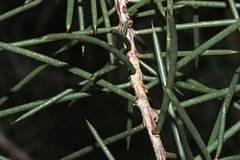
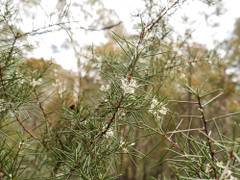
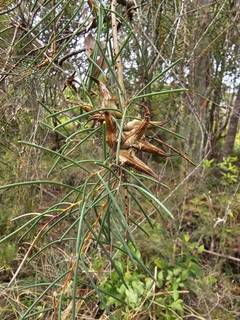
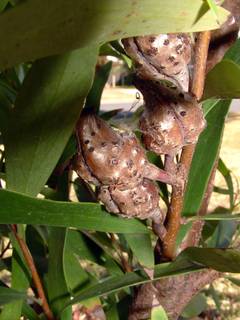
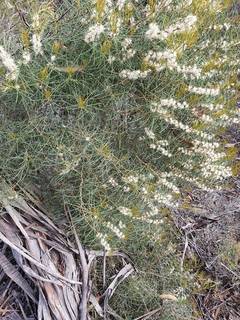
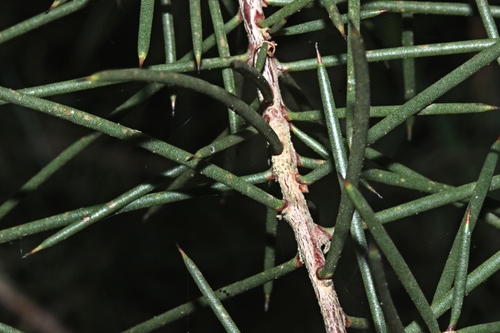
Hakea is a genus of about 150 species of evergreen shrubs and small trees in the family Proteaceae, all native to Australia. Plants range from low spreading shrubs to small trees 3-20 ft (1-6 m) tall, with foliage that is either narrow and needle-like or broad and flat, and often rigid, leathery, and sharply pointed. The flowers are small but clustered into dense rounded or spidery heads in the leaf axils, in white, cream, yellow, pink, or red, and many are sweetly scented. Woody, often gnarled seed pods follow and may stay closed on the plant for years, opening to release winged seeds after fire or the death of the branch. The genus is adapted to nutrient-poor, sandy or rocky soils and dry, fire-prone country, and like other Proteaceae it is sensitive to high phosphorus. Many species tolerate drought, wind, and coastal exposure once established. Hardiness varies, with some species taking light frost while others are frost-tender. H. laurina, the pincushion hakea, and H. salicifolia are among the species grown as ornamental shrubs, screens, and habitat plants for nectar-feeding birds.
Native Range
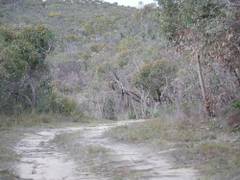
The genus is endemic to Australia, where species occur in every state and across habitats from coastal heath and woodland to arid inland scrub. The greatest diversity is in the southwest of Western Australia.Suggested Uses
Hakea is grown as an ornamental and flowering shrub, an informal or prickly barrier hedge, a windbreak, and a habitat plant for nectar-feeding birds in Australian and Mediterranean-climate gardens. Plants are spaced 5-10 ft (1.5-3 m) apart for screening. Cut stems with woody pods are used in dried arrangements.How to Identify
Appearance
Size & Dimensions
Height3' - 20'
Width/Spread3' - 15'
Bloom Information
Most Hakea flower in winter and spring, roughly June to November in their native range, though some species flower at other times. The nectar-rich clusters draw honeyeaters and other birds. Woody pods follow and can persist unopened on the plant for several years.
Detailed Descriptions
Flower Description
white, cream, yellow, pink, or redFoliage Description
green to grey-greenGrowing Conditions
Sun Requirements
Requires 6-10 hours of direct sunlight daily
• Full Sun: 6+ hours of direct sunlight
• Partial Shade: 3-6 hours of direct sunlight
• Full Shade: Less than 3 hours of direct sunlight
Water & Climate
Water Needs
Drought Tolerance
Drought tolerant when established
Care & Maintenance
Care Guide
Grow Hakea in full sun in light, sharply drained sandy or gravelly soil, with most species preferring a neutral to slightly acidic pH of 5.5-7.0. As a member of the Proteaceae, the genus is sensitive to phosphorus, so low-phosphorus or native-plant fertilisers suit it, or none at all. Water young plants through the first summer, then reduce watering, since established plants tolerate drought but rot in wet, poorly drained ground. Most species regrow poorly from old leafless wood, so light, regular pruning works better than hard cutbacks. Frost hardiness varies by species, from frost-tender to hardy against light frost. The prickly-leaved species are positioned away from paths because of their sharp foliage.Pruning
Light tip pruning of Hakea after flowering keeps plants dense and shapely. Most species regrow slowly or not at all from old leafless wood, so hard renovation cuts often fail. Pruning also removes the woody pods, which some growers leave on the plant for effect.Pruning Schedule
Prune: November–December
late spring