Hakea, Genus, rostrata, Species,
- Genus & species
beaked hakea
Overview
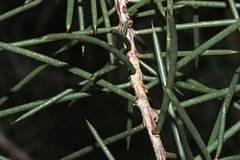
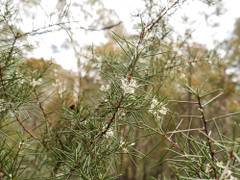
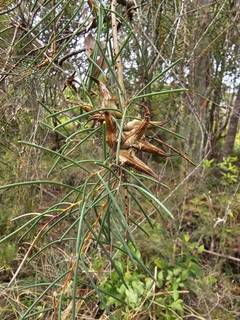
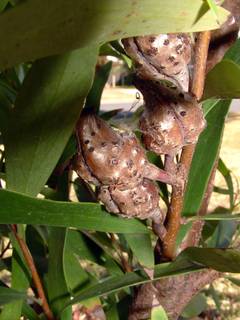
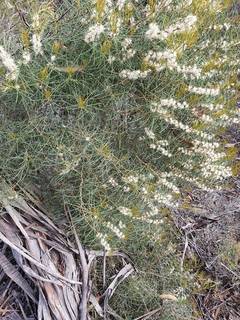
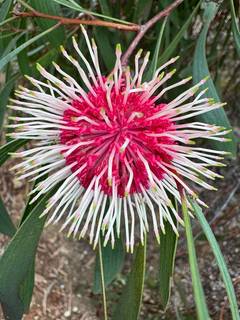
An evergreen shrub reaching 5-13 feet (1.5-4 m) tall and 5-10 feet (1.5-3 m) wide, with a dense, rounded to spreading habit. Leaves needle-like and terete, rigid and sharp-pointed, 1-3 inches (2.5-7.5 cm) long and about 0.04 inch (1 mm) wide, gray-green, held stiffly along the branches. Flowers small, cream to white, scented, clustered in dense axillary bundles along the stems from late winter into spring. Fruit a woody follicle 0.8-1.2 inches (2-3 cm) long ending in a curved beak, persisting closed on the branches for years and opening after fire or branch death to release two winged seeds. Growth rate is moderate. The rigid pointed foliage forms an impenetrable mass. Lower stems become bare with age in shaded positions.
Native Range
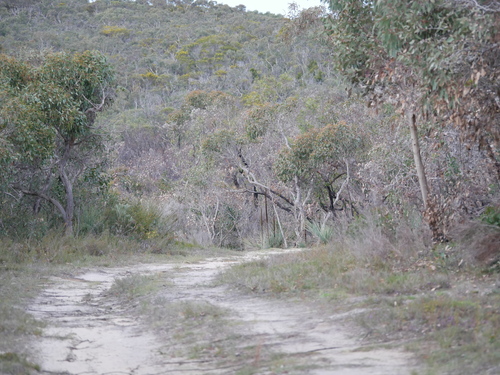
Native to southern Australia in South Australia and western Victoria. Grows in mallee, heathland, and dry sclerophyll woodland on sandy and rocky well-drained soils, often in low-rainfall districts.Suggested Uses
Planted as a screening or barrier shrub and in low-water native gardens at 5-8 foot (1.5-2.4 m) spacing. The dense prickly habit suits boundary and wildlife plantings. Tolerates coastal exposure and alkaline soils.How to Identify
Appearance
Size & Dimensions
Height5' - 13'
Width/Spread5' - 10'
Colors
Bloom Information
Flowers July through October in its native range, peaking in late winter and early spring. Cream-white flowers cluster tightly along the stems and carry a light honey scent. The display lasts 4-6 weeks. Cooler inland sites flower later than coastal ones.
Detailed Descriptions
Flower Description
Cream to whiteFoliage Description
Gray-greenGrowing Conditions
Sun Requirements
Requires 6-10 hours of direct sunlight daily
• Full Sun: 6+ hours of direct sunlight
• Partial Shade: 3-6 hours of direct sunlight
• Full Shade: Less than 3 hours of direct sunlight
Care & Maintenance
Care Guide
Water occasionally through the first summer to establish; mature plants are drought tolerant and need little to no irrigation in temperate climates. Grows in full sun on free-draining sandy or rocky soils and tolerates alkaline ground. Prolonged waterlogging causes root rot. High-phosphorus fertilizers can damage the roots, a sensitivity shared across the Proteaceae. Few pests occur in dry, open sites.Pruning
Prune lightly after flowering to maintain density, cutting within green foliage. Tip-pruning young plants encourages branching. Cutting into old bare wood produces slow or no regrowth. The persistent woody fruit can remain on pruned branches.Pruning Schedule
Prune: October–November
spring