Hakea, Genus, lissosperma, Species,
- Genus & species
mountain needlewood
Overview
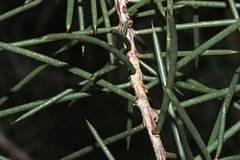
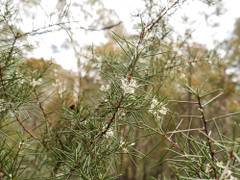
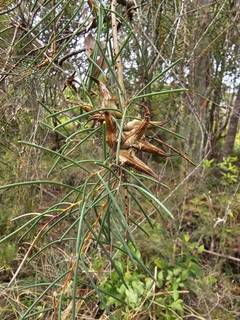
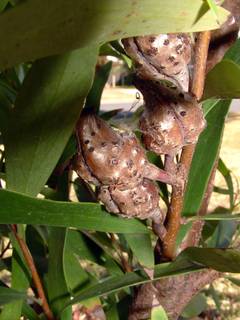
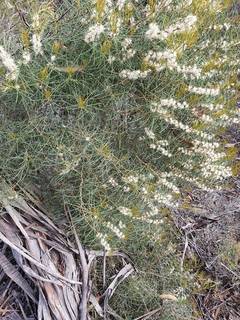
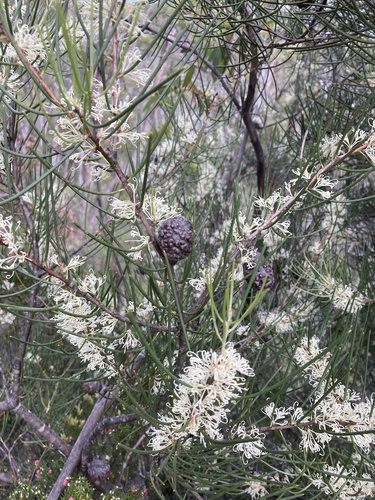
Hakea lissosperma is an evergreen shrub to small tree of the mountains of southeastern Australia, growing 6.5–20 feet (2–6 m) tall with a dense, upright habit. The rigid, needle-like leaves are 1–3 inches (2.5–8 cm) long, grey-green, and tipped with a sharp point. Small clusters of white to cream flowers form in the leaf axils in spring, each cluster crowded with the curved flower parts typical of the protea family. After flowering, woody, beaked seed capsules about 1 inch (2.5 cm) long develop and persist on the branches, splitting to release winged seeds. Hakea lissosperma grows in subalpine and montane woodland, heath, and forest margins, often on poor, rocky soils, in Tasmania, Victoria, and New South Wales. It is frost-hardy and tolerates cold, wind, and snow, but is sensitive to humid, poorly drained, or warm lowland conditions. Its dense, prickly habit lends itself to use as a screen, windbreak, and barrier hedge in cool climates.
Native Range
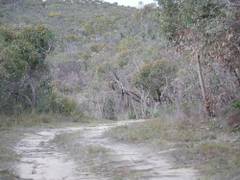
Native to the mountains of southeastern Australia, in Tasmania, Victoria, and New South Wales. It grows in subalpine and montane woodland, heath, and forest margins, often on poor, rocky soils.Suggested Uses
Hakea lissosperma is used as a screen, windbreak, and prickly barrier hedge in cool-climate and mountain gardens. Its dense, spiny habit also supplies shelter and nesting sites for small birds.How to Identify
Appearance
Size & Dimensions
Height6'6" - 20'
Width/Spread5' - 13'
Bloom Information
Flowering occurs in spring, mainly September to November, when clusters of white to cream flowers open in the leaf axils. The flowers draw nectar-feeding birds and insects. Woody capsules form after flowering and remain closed on the plant for long periods.
Detailed Descriptions
Flower Description
white to creamFoliage Description
grey-greenGrowing Conditions
Sun Requirements
Requires 5-9 hours of direct sunlight daily
• Full Sun: 6+ hours of direct sunlight
• Partial Shade: 3-6 hours of direct sunlight
• Full Shade: Less than 3 hours of direct sunlight