Hakea, Genus, decurrens, Species,
- Genus & species
bushy needlewood
Overview
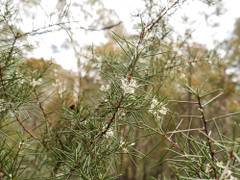
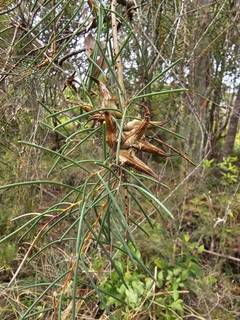
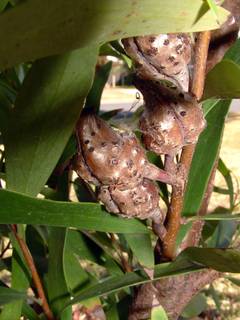
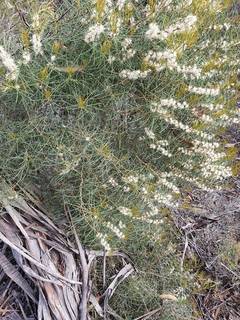
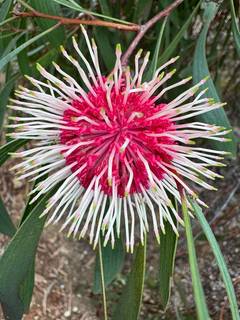
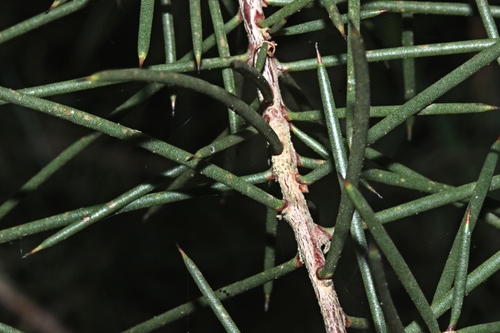
Hakea decurrens is an evergreen shrub reaching 3-10 feet (1-3 m) tall with a dense, bushy habit and rigid branches. The leaves are needle-like, terete, 0.4-1.6 inches (1-4 cm) long, ending in a sharp point, and arranged closely along the stems. Clusters of small flowers appear in the leaf axils from autumn through winter; the flowers are white to pale pink, fragrant, and grouped 4-12 together along the branches. The woody fruit is an egg-shaped follicle 0.6-1 inch (15-25 mm) long with a short beak, opening to release two winged seeds after fire or branch death. Growth is moderate. Plants form a prickly, dense thicket used by small birds for shelter and nesting. The species tolerates poor sandy soils, drought, and frost but is sensitive to prolonged waterlogging and phosphorus-rich fertilizers.
Native Range
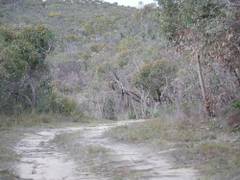
Native to southeastern Australia, in New South Wales, Victoria, and Tasmania. Grows in dry sclerophyll forest, woodland, and heath on sandy and gravelly soils, often on ridges and in exposed sites.Suggested Uses
Used as a barrier or screening shrub and in habitat plantings for small birds, spaced 4-6 feet (1.2-1.8 m) apart. The prickly habit suits boundary and security plantings on dry sites. Sharp foliage limits its use near paths and play areas.How to Identify
Appearance
Size & Dimensions
Height3' - 10'
Width/Spread3' - 8'
Bloom Information
Detailed Descriptions
Flower Description
white to pale pinkFoliage Description
greenGrowing Conditions
Sun Requirements
Requires 6-10 hours of direct sunlight daily
• Full Sun: 6+ hours of direct sunlight
• Partial Shade: 3-6 hours of direct sunlight
• Full Shade: Less than 3 hours of direct sunlight
Care & Maintenance
Care Guide
Grows in full sun in sandy or gravelly, well-drained soils of low fertility. Established plants are drought- and frost-hardy and need watering only in extended dry spells. Phosphorus-rich fertilizers damage the roots, as with most plants in the protea family. Poorly drained soils cause root rot. Few pests affect it. Plants tolerate hard pruning and resprout from the base.Pruning
Tolerates hard pruning and resprouts from old wood and the base. Prune after flowering to maintain a dense shape and limit size. Regular light trimming keeps the thicket compact.Pruning Schedule
Prune: September–October
spring