Hakea, Genus, teretifolia, Species,
- Genus & species
dagger hakea
Overview
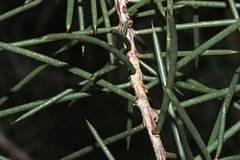
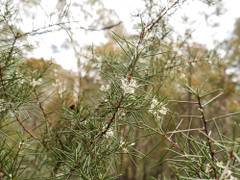
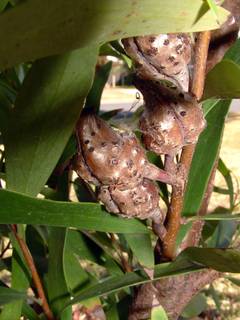
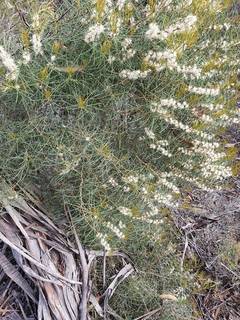
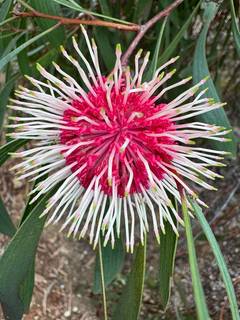
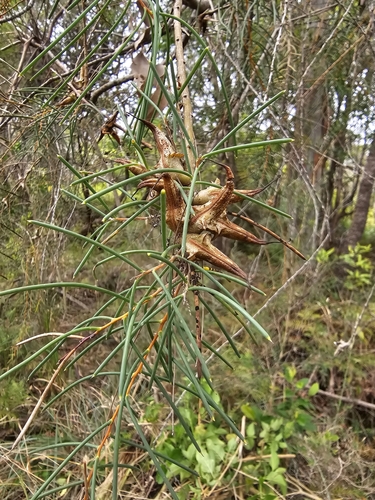
Hakea teretifolia is an evergreen shrub in the Proteaceae family reaching 3-8 feet (1-2.5 m) tall and 3-6 feet (1-1.8 m) wide, with an upright, densely branched habit. Leaves are terete, meaning cylindrical in cross-section, 0.4-2 inches (1-5 cm) long, and end in a rigid sharp point. White to cream flowers are small and grouped in clusters along the stems, opening from late winter through spring. The woody seed follicles measure 0.8-1.6 inches (2-4 cm) long and taper to a narrow point; they remain closed on the plant for several years until heat from fire or the death of the branch releases the seed. Growth is slow to moderate, with plants reaching mature size in 4-6 years. The rigid pointed leaves can pierce skin on contact, which limits placement near paths. The species grows in nutrient-poor sandy soils and tolerates seasonal waterlogging, but is susceptible to Phytophthora cinnamomi root rot where drainage is poor in cultivation.
Native Range
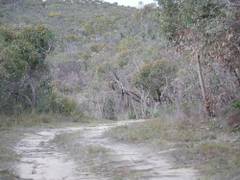
Native to southeastern Australia, occurring in New South Wales, Victoria, and Tasmania. Grows in heathland, dry sclerophyll woodland, and swamp margins on sandstone-derived sandy soils, from sea level to about 3,000 feet (900 m).Suggested Uses
Planted as an informal screen or barrier hedge, spaced 3-5 feet (0.9-1.5 m) apart, where the spiny foliage forms a dense thicket. Used in habitat and bird gardens on sandy soils. The sharp leaves limit its use near paths and play areas.How to Identify
Appearance
Size & Dimensions
Height3' - 8'
Width/Spread3' - 6'
Colors
Bloom Information
Detailed Descriptions
Flower Description
white to creamFoliage Description
green to grey-greenGrowing Conditions
Sun Requirements
Requires 6-10 hours of direct sunlight daily
• Full Sun: 6+ hours of direct sunlight
• Partial Shade: 3-6 hours of direct sunlight
• Full Shade: Less than 3 hours of direct sunlight
Care & Maintenance
Care Guide
Grows in full sun on free-draining sandy or gravelly soil. Water during the first 1-2 summers while roots establish; established plants tolerate dry periods of several weeks. Proteaceae are sensitive to phosphorus, so phosphorus-rich fertilizers can cause leaf yellowing and dieback. Root rot from Phytophthora cinnamomi develops in soils that stay wet, causing wilting and plant death. Recovery from cutting into old leafless wood is slow.Pruning
Light tip pruning after flowering keeps the form compact and encourages branching. Cutting into old leafless wood regenerates slowly and may leave bare gaps. Spent follicles persist on the stems and can be removed by hand.Pruning Schedule
Prune: November–December
late springsummer