Grindelia, Genus, stricta, Species,
- Genus & species
Oregon Gumplant
Overview
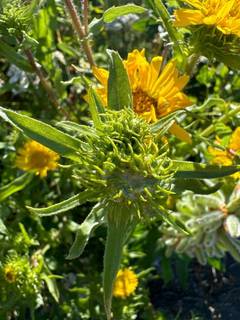
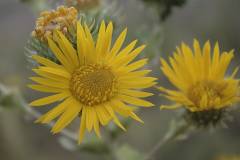
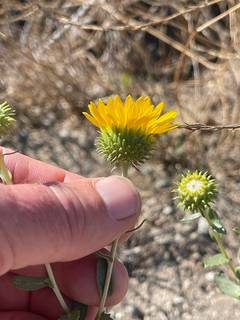
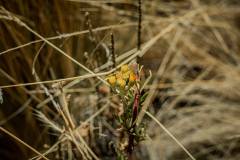
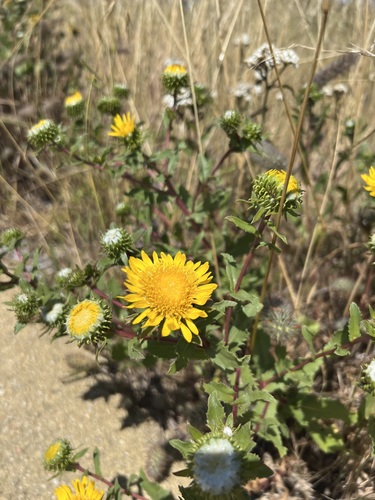
Grindelia stricta is a low, spreading herbaceous perennial in the aster family, with stems 1-3 feet (30-90 cm) long that often sprawl along the ground before turning up at the tips. The thick, somewhat fleshy leaves are 1-4 inches (2.5-10 cm) long with toothed margins and clasp the stem. Yellow daisy-like flower heads, 1.5-2 inches (4-5 cm) across, top the stems from summer into fall; their green bracts curve back and exude a sticky white resin, especially on the unopened buds, which gives the plant its common name gumweed. The seed heads form fluffy tufts. It grows on coastal bluffs, salt marshes, dunes, and beach edges along the Pacific coast of North America, tolerating salt spray and brief flooding by seawater. The resinous foliage and sprawling habit suit exposed coastal sites, though the loose, spreading form can look untidy in formal beds.
Native Range
Grindelia stricta is native to the Pacific coast of North America, from southern California north through Oregon and Washington to British Columbia and southern Alaska. It grows in coastal salt marshes, on bluffs, dunes, and beach margins.Suggested Uses
Used in coastal gardens, dune and bluff restoration, dry meadows, and pollinator plantings on lean, well-drained soil. The summer flowers draw bees, butterflies, and other insects. Space plants 2-3 feet (60-90 cm) apart to allow the spreading stems room.How to Identify
Appearance
Size & Dimensions
Height1' - 3'
Width/Spread2' - 4'
Bloom Information
Detailed Descriptions
Foliage Description
greenGrowing Conditions
Sun Requirements
Requires 6-12 hours of direct sunlight daily
• Full Sun: 6+ hours of direct sunlight
• Partial Shade: 3-6 hours of direct sunlight
• Full Shade: Less than 3 hours of direct sunlight
Care & Maintenance
Care Guide
Grows in full sun on sandy, rocky, or saline soil with a pH near 6.0-8.0, and tolerates salt spray, brief seawater flooding, and drought. Sharp drainage suits it, and it declines in rich, constantly wet, or shaded ground. It needs little supplemental water once established and no routine feeding. The sprawling stems can root where they touch soil, widening the clump over time. In gardens away from the coast it grows in any lean, well-drained bed in full sun.Pruning
Cut back the stems in late winter or early spring to tidy the clump and remove dead growth. Removing spent flower heads can extend bloom and limit self-sowing. Hard pruning every few years keeps the sprawling habit compact.Pruning Schedule
Prune: February–March
winterearly spring
Container Growing
Suitable for container growing
Minimum container size: 2 gallons