Grindelia, Genus, spp., Multiple species,
- Genus
- Multiple species
gumplants
Western North America and South America
SunFull Sun
Overview
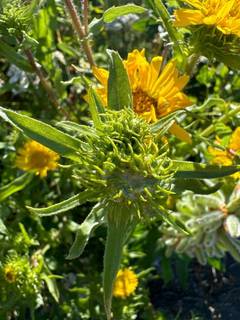
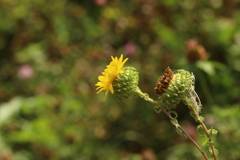
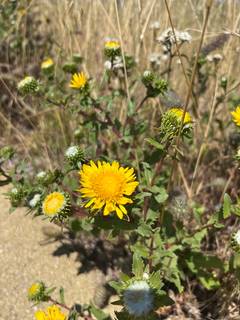
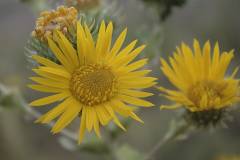
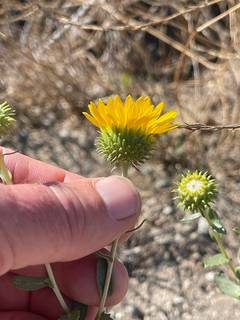
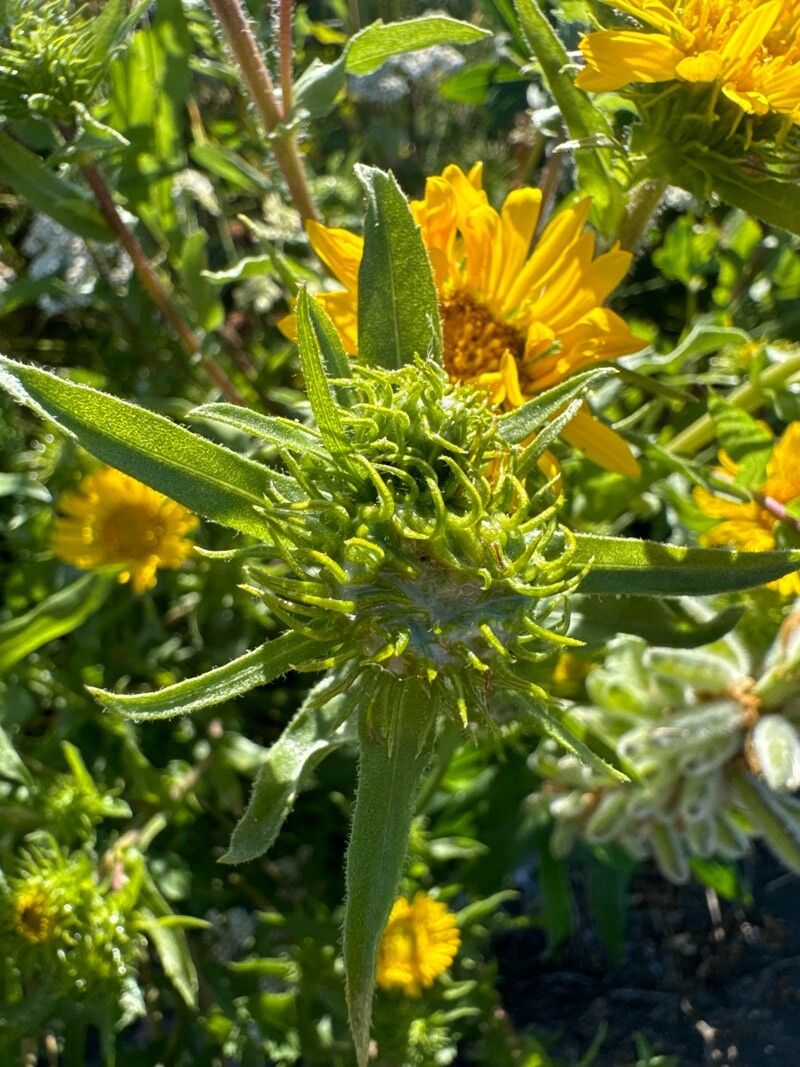
Grindelia is a genus of about 60 species of annual, biennial, and perennial herbs and subshrubs in the daisy family (Asteraceae), known as gumplants for the sticky resin coating their flower buds. Plants grow 1–5 feet (30–150 cm) tall on branching stems with stiff, often toothed leaves that clasp the stem and range from green to grey-green. The yellow flower heads measure 1–2 inches (2.5–5 cm) across, with ray florets surrounding a domed disc; before opening, the involucre is covered in a white, milky gum. The genus is native to open, dry habitats of western North America and South America, including prairie, coastal bluff, roadside, and saline flats. Plants tolerate drought, salt, and poor soil, and several species colonize disturbed ground. Most are short-lived, persisting two to five years, and self-seed where conditions suit them. The resinous foliage is avoided by browsing mammals. G. squarrosa and G. robusta are among the species grown in native and pollinator plantings. Flowering extends through summer into autumn, drawing bees, butterflies, and other insects to the open heads.
Native Range
The genus is native to the Americas, with the greatest concentration of species in western North America and in temperate South America. Grindelia grows in prairie, coastal bluff, alkaline flat, and disturbed roadside ground. Plants favor open sites with full sun and free drainage.Suggested Uses
Grindelia is grown in native-plant gardens, pollinator borders, and dry or saline sites where many perennials fail, spaced 18–24 inches (45–60 cm) apart. The yellow heads draw bees and butterflies through late summer. Salt and drought tolerance suit the genus to coastal and roadside plantings.How to Identify
Appearance
Size & Dimensions
Height1' - 5'
Width/Spread1' - 3'
Colors
Bloom Information
Flowering runs from early summer into autumn, roughly June through October depending on species and climate. The resin-covered buds open over a long season, with individual heads lasting one to two weeks. Bloom continues longest where soil moisture persists into late summer.
Detailed Descriptions
Foliage Description
green to grey-greenGrowing Conditions
Sun Requirements
Requires 6-12 hours of direct sunlight daily
• Full Sun: 6+ hours of direct sunlight
• Partial Shade: 3-6 hours of direct sunlight
• Full Shade: Less than 3 hours of direct sunlight
Water & Climate
Water Needs
Drought Tolerance
Drought tolerant when established
Care & Maintenance
Care Guide
Plants grow in full sun on free-draining sand, loam, clay, or rocky soil, including saline and alkaline ground. Established plants withstand drought and need little supplemental water. Rich soil and shade produce weak, floppy stems and fewer flowers. Most species are short-lived but renew from self-sown seed in open ground. Cutting plants back after flowering limits unwanted spread of seedlings.Pruning
Spent stems are cut to the base after flowering to keep the clump tidy and reduce self-seeding. Removal of faded heads before seed sets curbs spread in cultivated beds. Plants resprout from the crown the following spring.Container Growing
Suitable for container growing