Overview
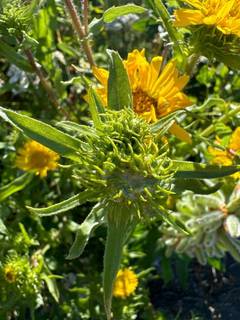
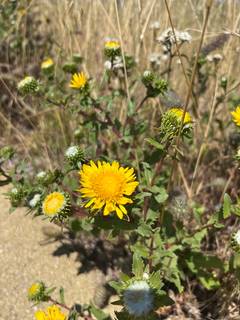
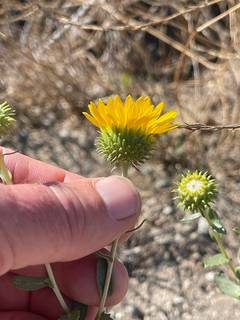
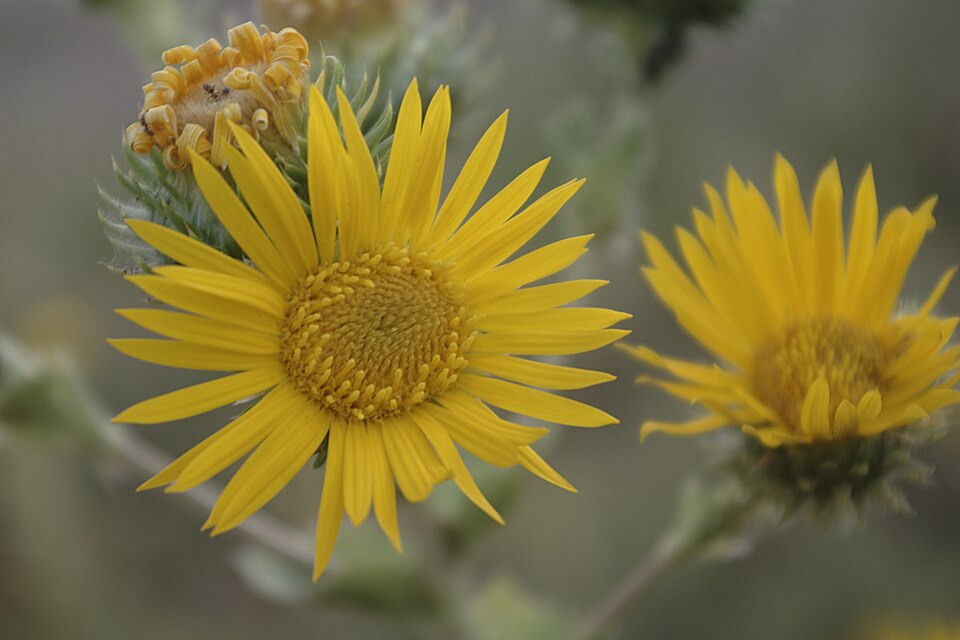
An annual or biennial growing 1–3 feet (30–90 cm) tall, branching in the upper half into a rounded, leafy plant. Stems are smooth and often reddish. Leaves are alternate, oblong to lance-shaped, 1–3 inches (2.5–8 cm) long, with toothed, bristle-tipped margins and a slightly sticky surface. Yellow daisy-like flower heads, 1–1.5 inches (2.5–4 cm) across, have 25–40 ray florets around a yellow disk, set on a cup of green bracts coated in a sticky white resin typical of gumweeds. Bloom occurs from July to October. The resinous buds and bracts are gummy to the touch. Dry single-seeded fruits with a few bristles follow. The plant grows from a taproot, flowers in its first or second year, and dies after setting seed. It reseeds where soil is open. Lower leaves dry and drop as flowering proceeds.
Native Range
Native to the south-central United States, centered on the southern Great Plains from Kansas and Colorado south to Texas. Grows in prairies, plains, disturbed ground, roadsides, and dry open soils in full sun.Suggested Uses
Grown in native plantings, prairie restorations, and dry meadows at 12–18 inch (30–45 cm) spacing. Used in pollinator plantings, where the late-season flowers support bees and butterflies. Suited to hot, dry, disturbed sites rather than rich, irrigated beds.How to Identify
Appearance
Size & Dimensions
Height1' - 3'
Width/Spread1' - 2'
Bloom Information
Detailed Descriptions
Foliage Description
GreenGrowing Conditions
Sun Requirements
Requires 6-12 hours of direct sunlight daily
• Full Sun: 6+ hours of direct sunlight
• Partial Shade: 3-6 hours of direct sunlight
• Full Shade: Less than 3 hours of direct sunlight
Water & Climate
Water Needs
Drought Tolerance
Drought tolerant when established
Care & Maintenance
Care Guide
Grows in full sun in dry, well-drained soils, including poor, sandy, or alkaline ground. Water is rarely needed once seedlings establish, and the plant tolerates heat and drought. It grows in disturbed and low-fertility soils where many plants struggle. It reseeds where ground is bare. The resinous foliage is largely avoided by browsing animals. Few pests or diseases affect it.Pruning
No structural pruning is needed for this short-lived plant. Spent stems can be cut and removed at the end of the season. Removing seed heads before they ripen limits self-seeding. No other pruning applies.Toxicity
Non-toxicPlanting Guide
Planting Methods & Timing
Planting Method
direct sow
Direct Sow Timing
Fall or early spring
Plant Spacing
15 inches