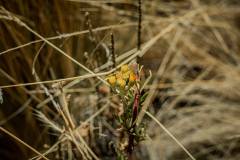
Grindelia, Genus, squarrosa, Species,
- Genus & species
curlycup gumweed
Overview
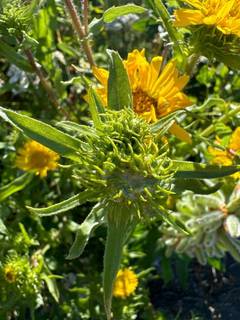
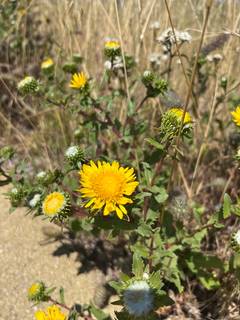
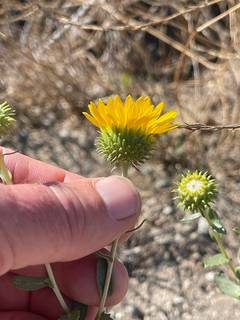
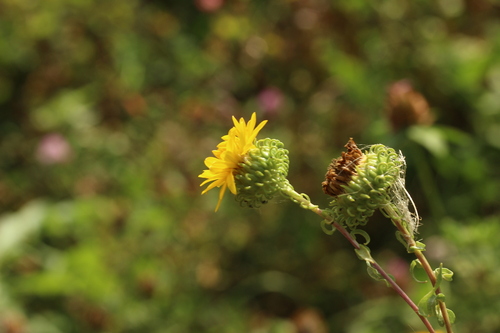
Grindelia squarrosa is a biennial to short-lived perennial in the aster family, growing 12-36 inches (30-90 cm) tall from a stout taproot, with a branched, upright form. The stiff stems carry alternate, oblong leaves 1-2.5 inches (2.5-6 cm) long with toothed margins that clasp the stem; the gray-green foliage is coated in a sticky resin. Flower heads are 1-1.5 inches (2.5-4 cm) across, with 25-40 yellow ray florets surrounding a yellow disk. The involucre beneath each head is its most recognizable feature: the green bracts curl sharply backward and exude a white, gummy resin, giving the plant its common name. Bloom runs from midsummer into fall. The species grows in disturbed soils, prairies, roadsides, and overgrazed rangeland across much of central and western North America, tolerating drought, heat, and alkaline or saline ground. It accumulates selenium from soils where that element is present, which can make the foliage toxic to grazing livestock in quantity. Plants self-seed readily and can colonize bare ground. Limitations include a weedy tendency in irrigated settings and a short lifespan, with most plants flowering and dying within two to three years. The taproot makes established plants difficult to move.
Native Range
Grindelia squarrosa is native to central and western North America, from the Canadian prairie provinces south through the Great Plains and Rocky Mountain states into northern Mexico. It grows in prairies, plains, roadsides, and other open, disturbed habitats.Suggested Uses
Grown in dry meadow, prairie restoration, and pollinator plantings on lean or alkaline soils. Used for erosion control on disturbed banks and roadsides. Suited to low-water and xeriscape gardens where its self-seeding is acceptable.How to Identify
Appearance
Size & Dimensions
Height1' - 3'
Width/Spread1' - 2'
Bloom Information
Flowering begins in midsummer, generally July, and continues into September or October. Heads open over a long period as the branched stems extend, so flowers and developing seed heads often appear together. Each head lasts about one to two weeks. The resin-coated buds are conspicuous before the rays open.
Detailed Descriptions
Foliage Description
Gray-green, resin-coatedGrowing Conditions
Sun Requirements
Requires 6-12 hours of direct sunlight daily
• Full Sun: 6+ hours of direct sunlight
• Partial Shade: 3-6 hours of direct sunlight
• Full Shade: Less than 3 hours of direct sunlight
Care & Maintenance
Care Guide
Grows in full sun and dry, well-drained soil, including clay, sand, gravel, and alkaline or mildly saline ground. Established plants are drought tolerant and need no supplemental water in regions with 12 inches (30 cm) or more annual rainfall. A pH range of 6.0-8.0 suits the species, and lean soils produce sturdier plants than rich, irrigated ground. Hardy in USDA zones 3-9, overwintering as a basal rosette before flowering. Plants self-sow, so clearing spent heads limits unwanted seedlings. The deep taproot supports drought survival but makes transplanting difficult once established.Pruning
Cut back spent flowering stems in late fall or winter to limit self-seeding. Plants need no other pruning. Clearing the basal rosette is unnecessary, as the foliage dies back on its own after seed set.Pruning Schedule
Prune: November
fallwinter