Grevillea, Genus, speciosa, Species,
- Genus & species
red spider flower
Overview
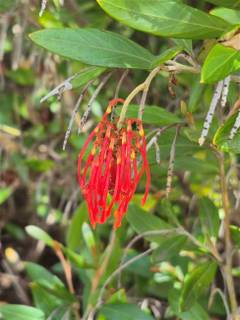
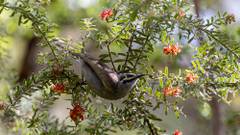
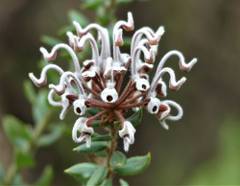
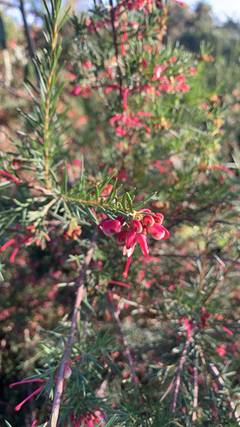
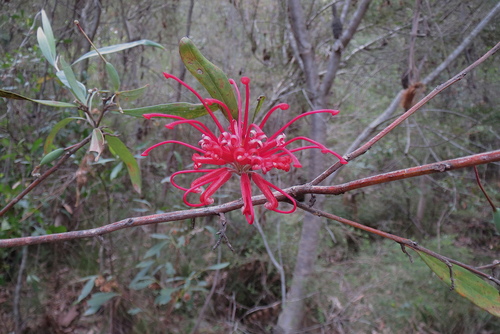
Grevillea speciosa is an evergreen shrub reaching 3-7 feet (0.9-2 m) tall and 3-6 feet (0.9-1.8 m) wide, with an upright to spreading habit and rusty-hairy young stems. Leaves are oval to elliptic, 0.8-2 inches (2-5 cm) long, dark green above and densely hairy beneath, with margins that are flat to slightly rolled. Clusters of red spider-like flowers form at the stem tips, each cluster 1-2 inches (2.5-5 cm) across, with long curved styles that give the spidery appearance. Flowering occurs over much of the year, with a peak from winter into spring. The flowers produce nectar that draws honeyeaters and other nectar-feeding birds. Growth is moderate to fast, and plants are short-lived, often persisting 6-10 years. It grows in sandy, well-drained, low-phosphorus soils and is sensitive to phosphorus-rich fertilizers and prolonged waterlogging. Contact with the foliage and flowers can cause skin irritation in sensitive individuals.
Native Range
Native to New South Wales, Australia, where it grows on sandstone soils in heath and dry sclerophyll woodland in the Sydney region and nearby coastal districts. Found on well-drained, low-nutrient sandy soils from near sea level to about 1,600 feet (500 m).Suggested Uses
Used in native and bird-attracting gardens, on sandy banks, and as an informal screen, spaced 3-6 feet (0.9-1.8 m) apart. Suited to low-phosphorus coastal gardens where nectar-feeding birds are wanted. Grows in containers of at least 5 gallons (19 L) with a low-phosphorus, free-draining mix.How to Identify
Appearance
Size & Dimensions
Height3' - 7'
Width/Spread3' - 6'
Bloom Information
Detailed Descriptions
Foliage Description
dark greenGrowing Conditions
Sun Requirements
Requires 5-9 hours of direct sunlight daily
• Full Sun: 6+ hours of direct sunlight
• Partial Shade: 3-6 hours of direct sunlight
• Full Shade: Less than 3 hours of direct sunlight
Care & Maintenance
Care Guide
Grows in full sun to light shade in sandy, sharply drained, low-phosphorus soil. Water during establishment; established plants tolerate dry periods but decline in wet, heavy ground. Phosphorus-rich fertilizers damage the roots, so only low-phosphorus or native-plant feeds are used. It tolerates light pruning and regrows from leafy stems. Plants are short-lived, often replaced after 6-10 years. Root rot from Phytophthora develops in poorly drained sites.Pruning
Tip-prune from a young age and trim lightly after the main flush of flowering to keep a dense habit. The shrub tolerates removal of up to one-third of the leafy growth but reshoots poorly from bare old wood. Remove dead or damaged stems as they appear.Pruning Schedule
Prune: October–November
spring
Container Growing
Suitable for container growing
Minimum container size: 5 gallons