Grevillea, Genus, alpina, Species,
- Genus & species
mountain grevillea
Overview
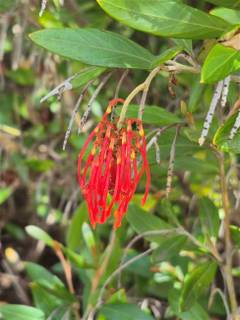
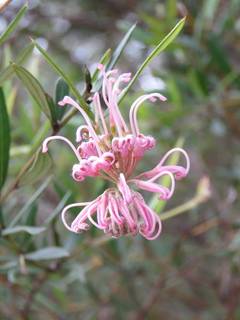
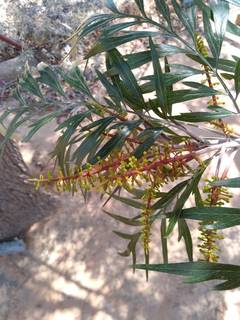
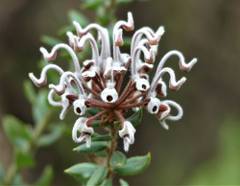
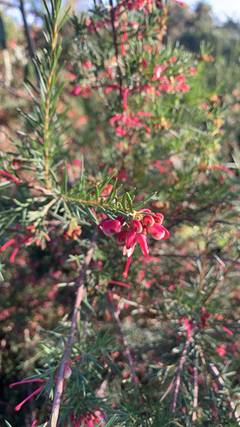
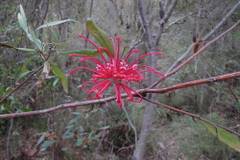
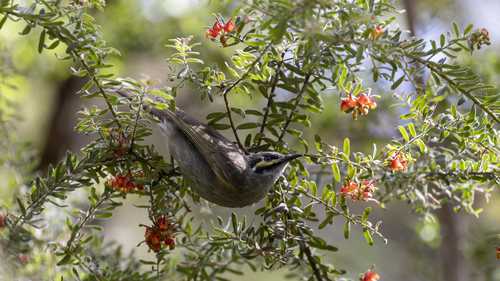
Grevillea alpina is a highly variable evergreen shrub growing 0.3-2 m (1-6.5 ft) tall and 0.5-2 m (1.6-6.5 ft) wide, native to hills and ranges of south-eastern Australia. Its habit ranges from low and spreading to erect and rounded depending on the population. The small leaves are 0.5-2 cm (0.2-0.8 in) long, narrow to oval, often grey-green and softly hairy beneath, with margins rolled under. Clusters of tubular spider flowers hang at the branch tips through the cooler months, their curled styles giving the spidery look; colour varies widely between forms, from red and yellow through orange and pink, often with two tones on the one flower. The flowers hold nectar taken by honeyeaters and other birds. It grows in open forest and heath on well-drained sandy or gravelly soils and tolerates frost and dry periods once established. Many forms are short-lived and become woody and open with age, and the species is intolerant of heavy, poorly drained soils and high-phosphorus fertiliser. Contact with the foliage and flowers causes skin irritation in some people.
Native Range
Native to south-eastern Australia, mainly Victoria and southern New South Wales, growing in dry open forest, woodland, and heath on hills and tablelands, often on rocky or gravelly slopes.Suggested Uses
Used in native and habitat gardens, low informal hedges, rockeries, and bird-attracting plantings. Low forms suit banks and container culture. Spaced 0.8-1.5 m (2.5-5 ft) apart in groups.How to Identify
Appearance
Size & Dimensions
Height1' - 6'7"
Width/Spread1'8" - 6'7"
Bloom Information
Spider flowers appear mainly from late autumn through spring, roughly May to November, with the heaviest show in winter and early spring. Some forms carry a few flowers in other seasons. Colour and timing differ markedly between the many wild forms.
Detailed Descriptions
Flower Description
variable: red, yellow, orange, or pinkFoliage Description
grey-greenGrowing Conditions
Sun Requirements
Requires 6-9 hours of direct sunlight daily
• Full Sun: 6+ hours of direct sunlight
• Partial Shade: 3-6 hours of direct sunlight
• Full Shade: Less than 3 hours of direct sunlight
Care & Maintenance
Care Guide
Grow in full sun to light shade on light, sharply drained sandy, gravelly, or rocky soil of low to moderate fertility. Water to establish, then rely largely on rainfall, as the plant tolerates dry spells and rots in wet ground. Use low-phosphorus native fertiliser only, since members of the family are damaged by phosphorus. A light trim after the main flush keeps growth dense and prolongs the plant life. It withstands frost and exposure on hillsides. Contact with foliage can cause skin irritation in sensitive people.Pruning
Tip prune lightly after the main flowering flush to keep the bush compact and encourage fresh flowering wood. The species reshoots from semi-hard wood but responds poorly to hard cutting into bare old stems. Replace woody, sparse plants rather than cutting them back hard.Pruning Schedule
Prune: November–December
spring
Container Growing
Suitable for container growing
Minimum container size: 5 gallons